Showing posts with label foreign. Show all posts

Monday, April 3, 2017

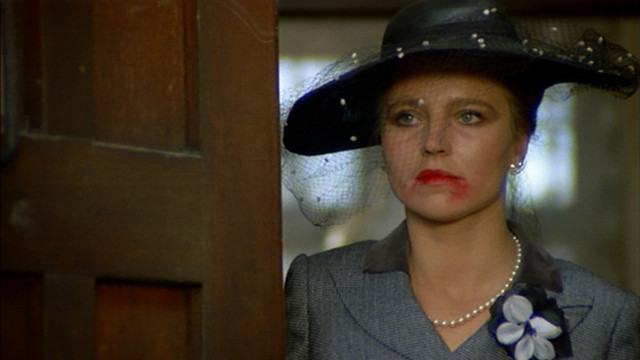
Deep Red (1975)


When I think of Dario Argento films, I think of unbelievably thick latex. I remember all the kills in a particular film, but I remember them as these walled-off, insert shots where hatchets cut into foam-latex that is inches thick and only skin-colored on the outer layer. Divorced from the rest of the film it's rather comical. But when it's actually unfolding on screen, you find yourself imagining those things happening to your actual, non-latex skin. Within the context of the film, at 24 fps, it hurts. And that is why Dario Argento is a master. He can make you feel for a hunk of rubber like it was your own neck.

Thursday, March 23, 2017

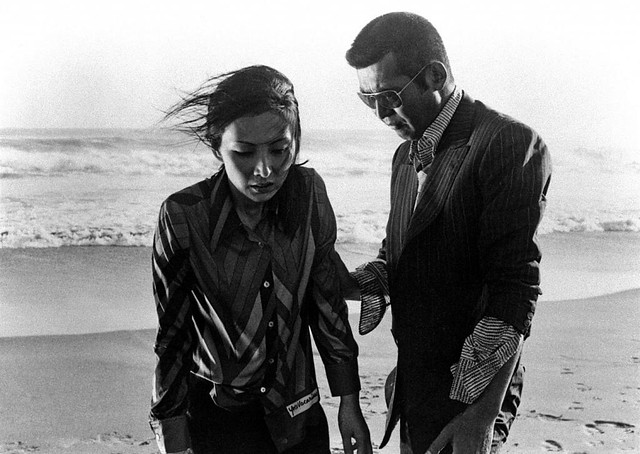
Black Sun (1964)


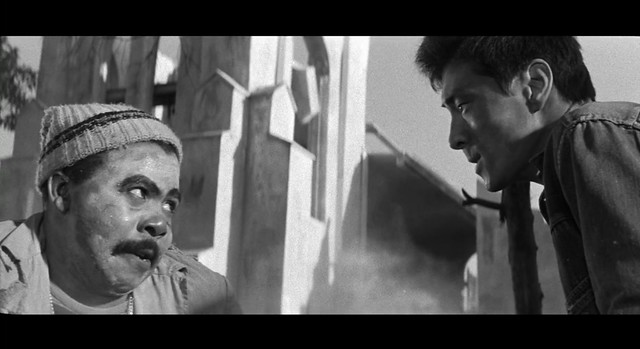
This was an interesting one. It reminded me a lot of a Sam Fuller movie, in that it is the cinematic equivalent of performing surgery with a sledgehammer. It's blunt and it's pulpy, but that doesn't mean that it can't get at some tough and interesting truths. The truly interesting part about this film is the language barrier. This isn't a movie where people have to talk out their differences, because neither speaks the other's language. All they are able to go off of is tone, facial expressions and body language. And somehow they come to understand each other like one does a jazz song or a silent film. Perhaps the Tower of Babel was not meant to separate us, but rather to force us to unite on a deeper, more human level?

Monday, March 13, 2017

Good Morning (1959)


Roughly 500 years ago, Leonardo da Vinci declared that, "Art is never finished, only abandoned." From apocryphal stories about artists breaking into houses to tweak the color of a painting, to George Lucas' continual futzing with the Star Wars films, it's been notoriously difficult for creative individuals to accept that a work is done. Even artists who have moved on from one particular piece, will often return to that style or those themes in another work as a way to get another bite at the apple. And of course there are directors who literally remake their own films.

Sometimes the results can be as astounding as Michael Mann's reworking of the TV Movie, L.A. Takedown into Heat. Other times the resultant film can be as awful as George Sulizer's English-language remake of his own chilling, Dutch-French co-production, The Vanishing. But most of the time it results in an enjoyable film that is no better or worse than its previous incarnation. Such is the case with Ozu's pleasant, family film Good Morning.

Thursday, March 2, 2017

Lights in the Dusk (2006)


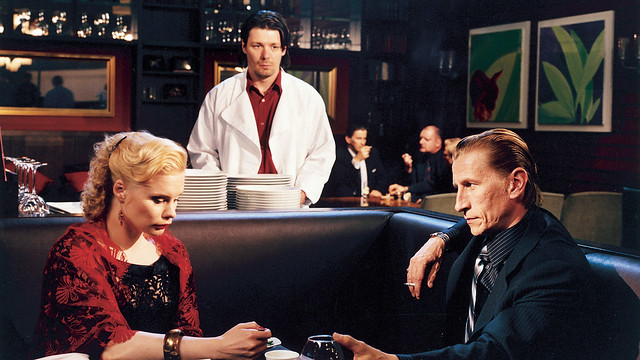
This film feels like it was made on a dare. It feels like the type of challenge Lars Von Trier would lay down in The Five Obstructions: make a Film Noir - without guilt.

Unlike a traditional Film Noir, where the world is working against the protagonist as some sort of self-fulfilling, guilt manifestation, the hero of this film is guilty of nothing. He doesn't even have an opportunity to become guilty. People are hating him from the very start and for no stated reason. And it's not even some Kafka-esque exercise in paranoia because our hero is oblivious to all the ways in which people are conspiring against him. He's also equally oblivious to the few people out there who give a damn about him.

So is this Film Noir? No. But it is an Aki Kaurismäki film. And that's certainly something to savor.

Thursday, February 16, 2017

Black Girl (1966)


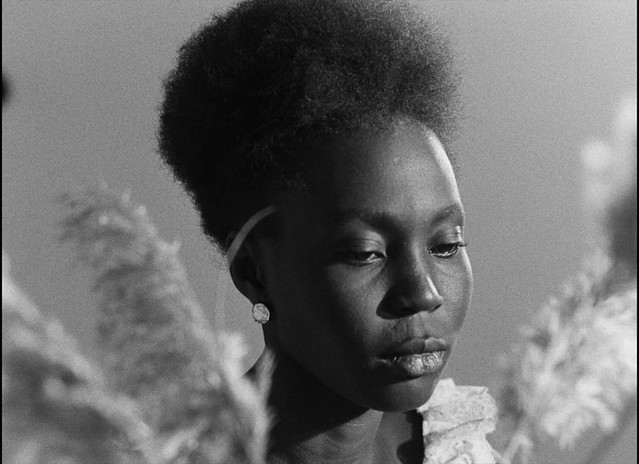
Straight and to the point. This is European colonialism in a microcosm. If the ending takes you by surprise, you weren't paying attention. It's not overt racism that does the real damage to someone's self-worth. It's indifference and self-interest that hold an entire People back from their true potential. Racial slurs and physical violence are certainly abhorrent and hurtful, but a lifetime filled with people taking advantage of you simply because of your situation, combined with others who are either indifferent to that situation or who do only the bare minimum, is what can really destroy a soul.

Monday, February 13, 2017

I Fidanzati (1962)


Stylistically this film hits a real sweet spot for me. It's a perfect balance between the Neo-Realism of early Rossellini and the over-the-top stylings of late Fellini. It is a beautiful portrait of mid-century  Sicily that relishes in the subtle details of day to day life, but with its very particular shot choices and radical cutting patterns, it is also extremely constructed. The leaps forward and backward in time, and the way they are tied together by the dancehall sequence is masterful and predates Nicolas Roeg by several years. And thanks to the "stranger in a strange land" narrative as well as the primarily silent protagonist, the digressions into the particulars of finding lodging and getting a late night meal do not feel extraneous. Ermanno Olmi is capable of making the extremely difficult seem effortless. For him, it probably was.

Thursday, February 2, 2017

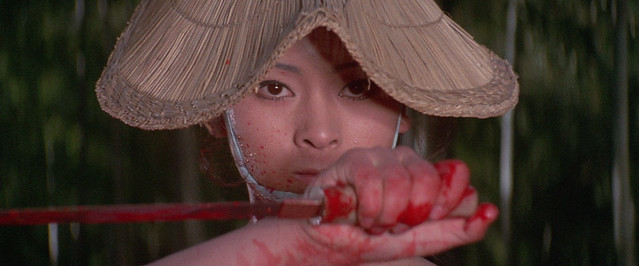
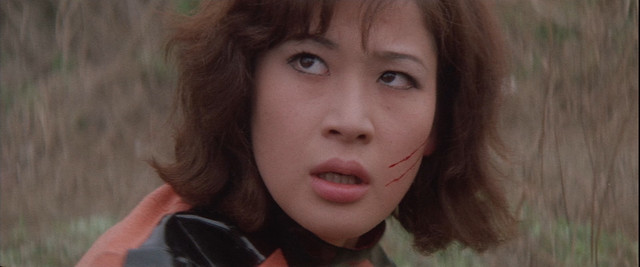
Female Prisoner #701: Scorpion (1972)


As Michael Bay can surely attest, an over-abundance of style can easily paper over a great many deficiencies. If it's flashy looking, you won't notice the cardboard characters, plot holes and dubious politics because you are being constantly bombarded with spectacle. But style can also help distract from the fact that you do not have a budget. Pretty much all of Female Prisoner #701: Scorpion takes place in one location and good chunks take place in a large dirt field, yet it is one of the most visually inventive films you will ever encounter. Even something as subtle as a colored light can make something cheap look interesting. The participation of a leading lady as magnetic as Meiko Kaji also helps too. I'm really excited to see where this series goes!

Monday, January 9, 2017

Train to Busan (2016)


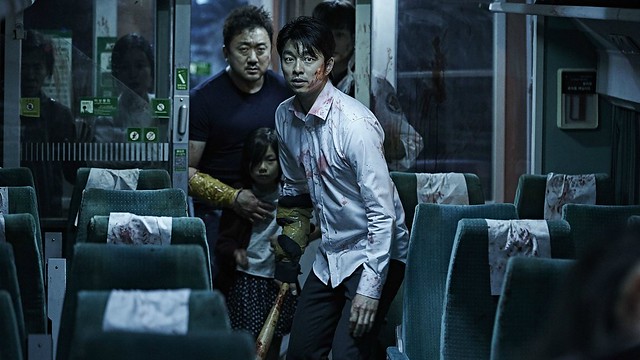
There's just something inherently cinematic about trains. From the Lumière Brothers' film of one arriving, to Edwin S. Porter's Great Train Robbery, to the Cinerama splendors of How the West was Won, and beyond, trains and moving pictures have been inextricably linked. It makes sense. If you're making a movie, you want things to move. Also, the continuous forward motion mirrors the driving narrative of a well-told story. And let's not forget the fact that trains also make stops.

Sure this train is headed to Busan, but there are plenty of stops to make along the way, and it's these stops that help give the viewer some variety. And not just variety of location and action either. This "horror" film makes protracted stops at the "family drama" station, the "teen romance" station, and the "slapstick comedy" station on the way to its conclusion. At one point it even becomes an extremely current allegory for the plight of refugees. This movie gets that the journey is just as important as the destination.

Thursday, December 15, 2016

Lone Wolf and Cub: Baby Cart in Peril (1972)


This film made me feel a very specific type of cinephile shame. Of the four Lone Wolf and Cub films that I've seen so far, I like this one best. So where does shame come into the equation? My shame comes from the fact that this is the first film in the series not directed by the legendary Kenji Misumi, who in addition to directing the bulk of this series, also directed six of the Zatoichi films. This is the one and only film in the series directed by Buichi Saito whose filmography is filled with films only an aficionado in Japanese cinema might recognize. I swear I'm not saying all of this to be a contrarian. I'm not trying to be "that guy" who prefers Lou Reed's Metal Machine Music to Transformer. I'm not even saying it is a masterpiece. Like the other films it suffers from not being able to successfully balance the ongoing story with the "adventure of the week". But thanks to Saito's particular use of pans, tracking shots and push-ins, my attention was maintained throughout the litany of endings. Perhaps I should track down more Buichi Saito films. Maybe I'll be the guy who "discovers" this forgotten master! Or maybe I'll just be that contrarian guy.

Monday, December 5, 2016

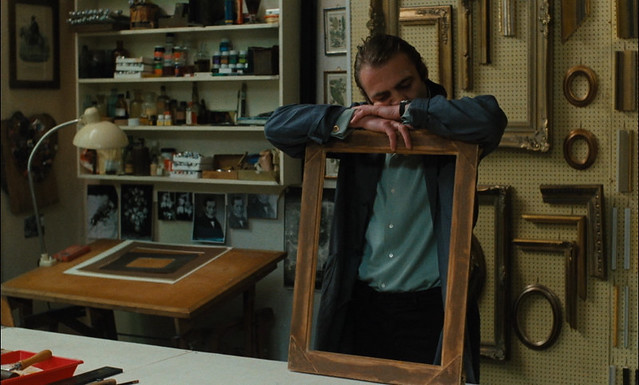
The American Friend (1977)


This is an interesting one. It feels the most autobiographical of the Wim Wenders films I've seen. The cameos by Sam Fuller and Nicholas Ray, the dedication to Henri Langlois and the inclusion of early optical toys clearly indicate that Wenders wants us to be thinking about cinema itself. Viewed in this context, the forgery subplot seems like a knowing nod towards his early career, where Wenders himself acknowledges that his directing "style" consisted of little more than approximating Hitchcock and Cassavetes. Even the Zimmerman character agreeing to serve as a hired gun seems to pre-sage the difficulties Wim would later encounter trying to work for Francis Ford Coppola on Hammett. Yet by placing all of this within the context of a "crime picture", Wenders is able to sidestep the indulgence of making a "struggling artist picture". It's not an entirely perfect marriage, but it sure makes for some interesting images, ideas and an amazing train sequence.

Thursday, October 6, 2016

Yakuza Graveyard (1976)


I love the way that Kinji Fukasaku uses handheld. Lots of people do it his way nowadays (The Wrestler, Narc, The Bourne Series, etc.) but back then it was new. The only other filmmaker with a similar style was his American contemporary William Friedkin. It's not documentary and it's not French New Wave, it's something different. The camera is always in precisely the right place. It's never in danger of missing any crucial storytelling information. Yet, by virtue of the camera being handled, it's able to pull off all sorts of crazy shots to get an audience's adrenaline pumping. The camera swings wildly and can tilt or twirl at any moment. One could say that it's just as chaotic as the unpredictably violent world Fukasaku depicts in film after film. The perfect melding of style and substance.

Thursday, September 29, 2016

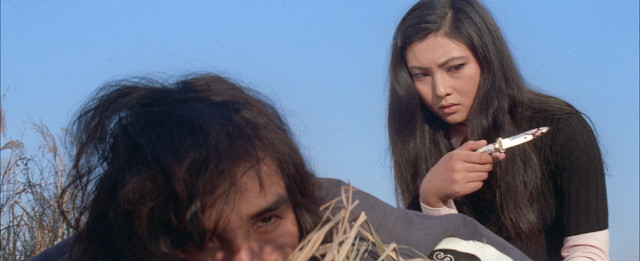
Stray Cat Rock: Beat '71 (1971)


I was a little nervous going into this final Stray Cat Rock film seeing as it was directed by Toshiya Fujita who also directed the series low-point, Wild Jumbo. Why not finish it out with series-starter Yasuharu Hasebe who directed all the other entries? Thankfully all my fears were for naught. While not the out and out masterpiece of Lady Snowblood (which Fujita would go on to direct two years later) Beat '71 is a solid film and also a fitting end to this weird little series. There's a lot of loaded imagery in that final battle where Eastern Culture is literally doing battle with Western Culture - in a Wild West Town no less! Perhaps for others this will come off as heavy handed, but for me, when you throw in the reprise of that Mops song and those poetic closing images of Maabô, cinema doesn't get much better.

Monday, September 26, 2016

Stray Cat Rock: Machine Animal (1970)


Since all five of theses films were released within eight months of each other, you can't really say that each factored in the audience's response to the previous installment, but it kind of feels like it. Wild Jumbo tried doing something wildly different from Delinquent Girl Boss by having a mostly male cast and then in Sex Hunter they seem to have learned that the less men the better. Gratefully, Machine Animal seems to have learned from Sex Hunter that loads of rape tends to undercut your political messaging. They even seem to be addressing it with dialogue before the opening brawl. Watching these filmmakers and actors actively figuring out what does and does not work via trial and error is a very interesting experience. I have only one film left in the series. Will it be the masterpiece where everything truly comes together? Probably not! But that doesn't mean this hasn't been a pretty wild and enjoyable ride so far.

Thursday, September 22, 2016

Stray Cat Rock: Delinquent Girl Boss (1970)


Oh man! Where has this series been all my life? It's so alive with cinematic energy! Like Steven Soderbergh with the Ocean's films, this film is willing to try anything to get your attention. Color, music, editing, swinging cameras - nothing is off-limits. One gag leads to another and before you know it the movie is over and you had a great time. It's ludicrous that a film this wild was able to be made by the same studio that had just fired Seijun Suzuki for being too wild. Perhaps they were too preoccupied with Suzuki's lawsuit against them to really know what was going on? Who knows! I just know that I can't wait to check out the rest of this series!

Thursday, June 16, 2016

The Marriage of Maria Braun (1979)


For better or worse, when you make a period piece you are judging the past. Often the judgement is positive. Weren't things so much better back in the day? This rose colored perspective almost always ignores the various horrors that were going on during the time period in question. As a German man born almost immediately after the end of World War II, Rainer Werner Fassbinder has nothing good to say about the past. Using Maria Braun as a stand-in for the entire country, Fassbinder paints a very bleak portrait of post-war Germany. Not only is Maria an opportunist who will do anything to move forward financially, she also continues to carry a torch for her missing/imprisoned Nazi husband. An entire Nation doesn't just suddenly change their prejudices or impulses overnight and the "progress" of today is often built on a rotten foundation. We are forever wedded to the past. Fassbinder never wants us to forget that.

Monday, March 14, 2016

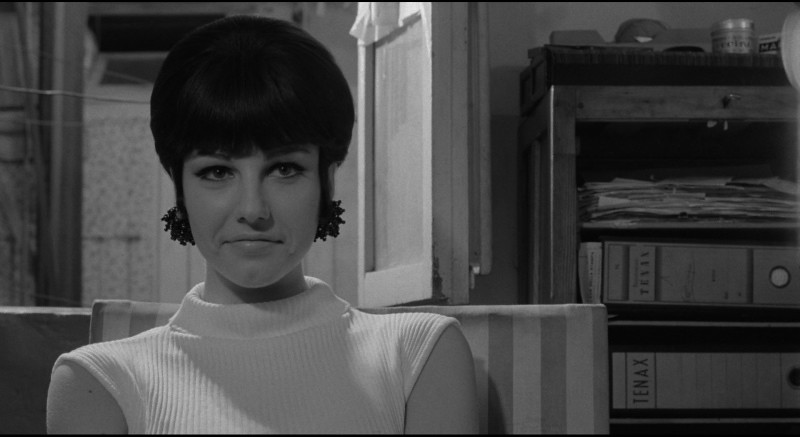
I Knew Her Well (1965)

I've been obsessed with the aesthetic of mid-century Italy for longer than I can remember. Whether it's an authentic period film like La Dolce Vita or a loving reconstruction like The Talented Mr. Ripley, I've always responded to the whole look and attitude of impeccably styled people having a good old time. After twenty years of Fascism and a World War, can you blame a country for wanting to just cut loose? But underneath that impeccable surface, there was also an emptiness. There was a void that everyone was trying to fill with clothes, cars, music and money. This is what Fellini and Antonioni were making films about. It's also what this film is about. Actress Stefania Sandrelli is the perfect embodiment of that impeccable surface. She's gorgeous and goofy and no matter what life throws at her, she keeps up this chipper fun-loving surface. You're given little indication of the turn things will take in the end. But when you think of all the ways she's been used and abused throughout the film, how could she not? Like all the mournful pop songs that provide the soundtrack, the film itself is underscored with immense sadness.

Thursday, March 10, 2016

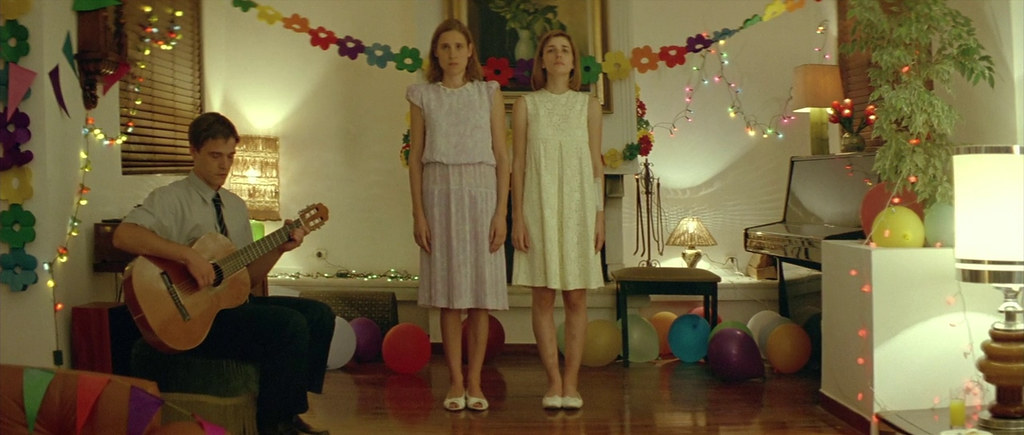
Dogtooth (2009)


Beneath the political, sexual and familial layers at play in Dogtooth, this film is first and foremost about control and how hard it is to maintain. Logically, the film is told in a very controlled manner. The camera very seldom moves and the entire production was shot with a single lens which gives a subconscious feeling of uniformity. Yet, in spite of that rigid visual structure, the viewer is given a lot of freedom with regards to various aspects of the narrative and are thus allowed to find their own interpretation of them. When you are shown only very specific moments from very specific angles, it is on you to come up with what happens outside the frame and in-between the scenes. Like Christina, we are that little bit of chaos that is being thrown into the mix. Merely by watching this family, we are throwing them into absolute chaos with our judgements and observations. They were all so much happier before we came along and ruined everything.

Thursday, December 31, 2015

Europa '51 (1952)


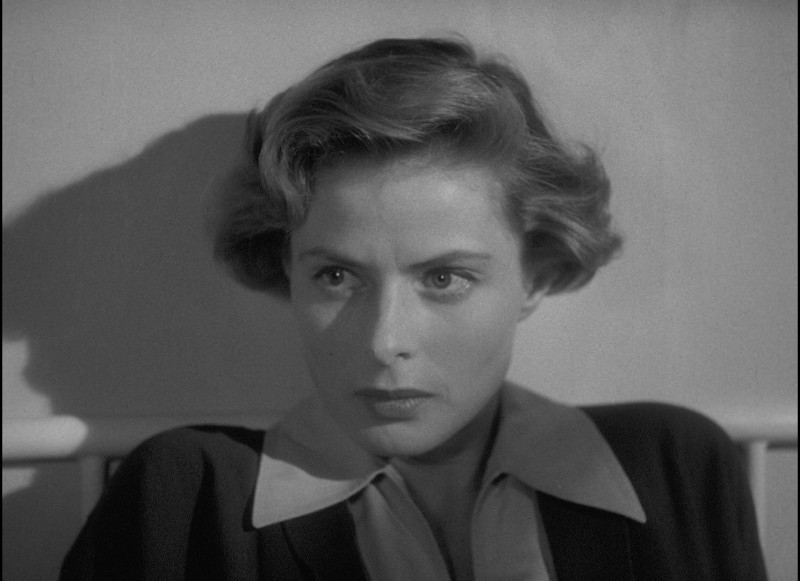
Though he very openly denounced ostentatious style in the filmmaking of others, I'm pretty certain nobody could consider Roberto Rossellini's cinema to be lacking in style. It's a very subtle style, yet also extremely effective. Without the help of fancy camera moves he is able to place us in the shoes of his protagonist. We see Ingrid Bergman, we see what she sees, we see how she reacts to what she saw. Near the end of the film things switch and Bergman is now the thing being looked at. Doctors and police officers are trying to understand her. Yet we do not identify with her observers. We don't know these people. Those reaction shots have conditioned us to identify with Bergman. And so, in the end, they are not staring at her, they are staring at us. We are the ones being judged and it is not a comfortable feeling. Rossellini's style is cinematic sleight of hand of the highest order.

Monday, November 16, 2015

Salò, or the 120 Days of Sodom (1975)

On 11/12/2015 Craig got to introduce a screening of this film at The Frida Cinema in Santa Ana. Here's what he said.
Movies like this are both easy and difficult to discuss. They're easy in that there is an unending amount of fertile topics to explore. They're difficult in that by limiting yourself to one or two, you are inevitably leaving dozens more un-addressed. When The Criterion Collection put this film out on home video a few years back, rather than the traditional single essay for the booklet, they included six different essays and the topic overlap was next to nil. But I'm sure even that tactic left some stones un-turned.

Understandably, the two most popular topics of discussion after a Salò screening are politics and censorship. When the film in question is based on the Marquis de Sade's most notorious work and it features promising young boys and girls being tortured by fascists, how can you possibly avoid those topics? But my personal favorite angle on this film is less intellectual and more emotional in nature.

Though he does not appear in Salò, the presence of actor Ninetto Davoli can still be felt in every frame. This is because in addition to appearing in seven of Pasolini's films, Davoli was also the director's "long term companion" for nearly a decade. So of course Pier Paolo chose to tackle a story about torture as his first film after Ninetto left him and married a woman. Suddenly, the filmmaker who had just completed a joyously perverse trilogy about all the impulses and bodily functions which unite us as human beings, was gone. Pasolini was no longer interested in life. In his own words he wanted to make a film, "about death".

In pop music, there's this great tradition of albums made after a breakup. Albums like Bob Dylan's Blood on the Tracks and Beck's Sea Change are so raw with emotion that listeners cannot help but empathize. If we were to generate a similar canon of great breakup films, Salò would certainly place at or near the top. As revolting as many of the images in this film are, I cannot help but ache for the wounded heart that was compelled to put them on celluloid.

Monday, September 28, 2015

Le Samouraï (1967)

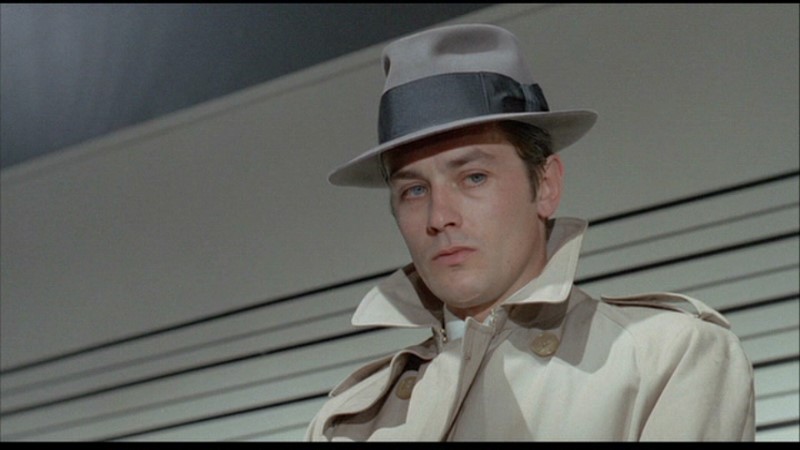
I miss how international the cinema was in the 60's and 70's. It's somewhat coming back with studios making an effort to appeal to foreign markets by inserting one or two international actors into some Tom Cruise super-production...as minor stooges. But back in the day you would have French actors turn up in Italian films, Italian actors turn up in French films and directors of any nationality were more than happy to go wherever the money was.

I know that the Italians and their love of dubbing played a huge part in this, but I also feel like there might have been a greater focus on visual storytelling back then. Filmmakers like Alfred Hitchcock, Bernardo Bertolucci and Jean-Pierre Melville made films that could easily be watched silently. The story is being told with camera movement, editing, color palette and costuming. In this approach, the actors are more akin to a blank canvas on which both filmmaker and audience can project whatever they need to. Alain Delon is the king of this blank canvas style of acting. And I mean that as a compliment.