Showing posts with label japan. Show all posts

Thursday, March 23, 2017

Black Sun (1964)


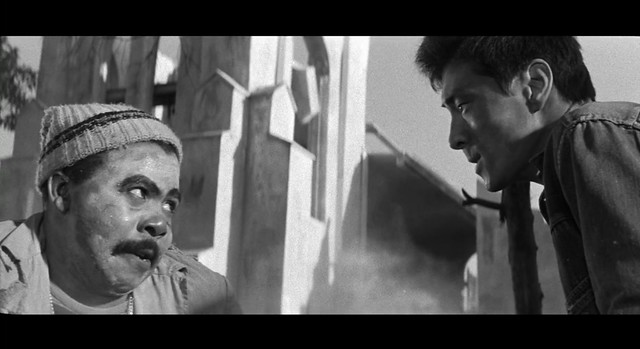
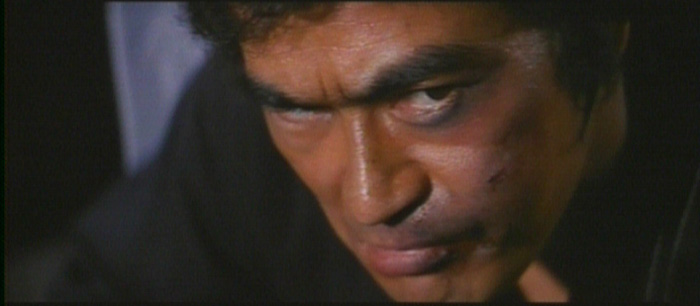
This was an interesting one. It reminded me a lot of a Sam Fuller movie, in that it is the cinematic equivalent of performing surgery with a sledgehammer. It's blunt and it's pulpy, but that doesn't mean that it can't get at some tough and interesting truths. The truly interesting part about this film is the language barrier. This isn't a movie where people have to talk out their differences, because neither speaks the other's language. All they are able to go off of is tone, facial expressions and body language. And somehow they come to understand each other like one does a jazz song or a silent film. Perhaps the Tower of Babel was not meant to separate us, but rather to force us to unite on a deeper, more human level?

Monday, March 13, 2017

Good Morning (1959)


Roughly 500 years ago, Leonardo da Vinci declared that, "Art is never finished, only abandoned." From apocryphal stories about artists breaking into houses to tweak the color of a painting, to George Lucas' continual futzing with the Star Wars films, it's been notoriously difficult for creative individuals to accept that a work is done. Even artists who have moved on from one particular piece, will often return to that style or those themes in another work as a way to get another bite at the apple. And of course there are directors who literally remake their own films.

Sometimes the results can be as astounding as Michael Mann's reworking of the TV Movie, L.A. Takedown into Heat. Other times the resultant film can be as awful as George Sulizer's English-language remake of his own chilling, Dutch-French co-production, The Vanishing. But most of the time it results in an enjoyable film that is no better or worse than its previous incarnation. Such is the case with Ozu's pleasant, family film Good Morning.

Thursday, February 2, 2017

Female Prisoner #701: Scorpion (1972)


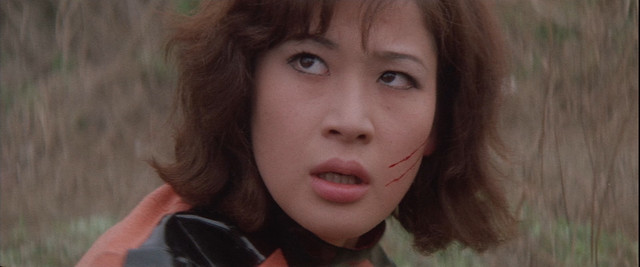
As Michael Bay can surely attest, an over-abundance of style can easily paper over a great many deficiencies. If it's flashy looking, you won't notice the cardboard characters, plot holes and dubious politics because you are being constantly bombarded with spectacle. But style can also help distract from the fact that you do not have a budget. Pretty much all of Female Prisoner #701: Scorpion takes place in one location and good chunks take place in a large dirt field, yet it is one of the most visually inventive films you will ever encounter. Even something as subtle as a colored light can make something cheap look interesting. The participation of a leading lady as magnetic as Meiko Kaji also helps too. I'm really excited to see where this series goes!

Thursday, December 15, 2016

Lone Wolf and Cub: Baby Cart in Peril (1972)


This film made me feel a very specific type of cinephile shame. Of the four Lone Wolf and Cub films that I've seen so far, I like this one best. So where does shame come into the equation? My shame comes from the fact that this is the first film in the series not directed by the legendary Kenji Misumi, who in addition to directing the bulk of this series, also directed six of the Zatoichi films. This is the one and only film in the series directed by Buichi Saito whose filmography is filled with films only an aficionado in Japanese cinema might recognize. I swear I'm not saying all of this to be a contrarian. I'm not trying to be "that guy" who prefers Lou Reed's Metal Machine Music to Transformer. I'm not even saying it is a masterpiece. Like the other films it suffers from not being able to successfully balance the ongoing story with the "adventure of the week". But thanks to Saito's particular use of pans, tracking shots and push-ins, my attention was maintained throughout the litany of endings. Perhaps I should track down more Buichi Saito films. Maybe I'll be the guy who "discovers" this forgotten master! Or maybe I'll just be that contrarian guy.

Thursday, October 6, 2016

Yakuza Graveyard (1976)


I love the way that Kinji Fukasaku uses handheld. Lots of people do it his way nowadays (The Wrestler, Narc, The Bourne Series, etc.) but back then it was new. The only other filmmaker with a similar style was his American contemporary William Friedkin. It's not documentary and it's not French New Wave, it's something different. The camera is always in precisely the right place. It's never in danger of missing any crucial storytelling information. Yet, by virtue of the camera being handled, it's able to pull off all sorts of crazy shots to get an audience's adrenaline pumping. The camera swings wildly and can tilt or twirl at any moment. One could say that it's just as chaotic as the unpredictably violent world Fukasaku depicts in film after film. The perfect melding of style and substance.

Thursday, September 29, 2016

Stray Cat Rock: Beat '71 (1971)


I was a little nervous going into this final Stray Cat Rock film seeing as it was directed by Toshiya Fujita who also directed the series low-point, Wild Jumbo. Why not finish it out with series-starter Yasuharu Hasebe who directed all the other entries? Thankfully all my fears were for naught. While not the out and out masterpiece of Lady Snowblood (which Fujita would go on to direct two years later) Beat '71 is a solid film and also a fitting end to this weird little series. There's a lot of loaded imagery in that final battle where Eastern Culture is literally doing battle with Western Culture - in a Wild West Town no less! Perhaps for others this will come off as heavy handed, but for me, when you throw in the reprise of that Mops song and those poetic closing images of Maabô, cinema doesn't get much better.

Monday, September 26, 2016

Stray Cat Rock: Machine Animal (1970)


Since all five of theses films were released within eight months of each other, you can't really say that each factored in the audience's response to the previous installment, but it kind of feels like it. Wild Jumbo tried doing something wildly different from Delinquent Girl Boss by having a mostly male cast and then in Sex Hunter they seem to have learned that the less men the better. Gratefully, Machine Animal seems to have learned from Sex Hunter that loads of rape tends to undercut your political messaging. They even seem to be addressing it with dialogue before the opening brawl. Watching these filmmakers and actors actively figuring out what does and does not work via trial and error is a very interesting experience. I have only one film left in the series. Will it be the masterpiece where everything truly comes together? Probably not! But that doesn't mean this hasn't been a pretty wild and enjoyable ride so far.

Thursday, September 22, 2016

Stray Cat Rock: Delinquent Girl Boss (1970)


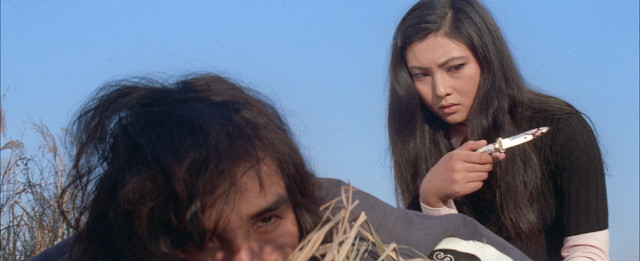
Oh man! Where has this series been all my life? It's so alive with cinematic energy! Like Steven Soderbergh with the Ocean's films, this film is willing to try anything to get your attention. Color, music, editing, swinging cameras - nothing is off-limits. One gag leads to another and before you know it the movie is over and you had a great time. It's ludicrous that a film this wild was able to be made by the same studio that had just fired Seijun Suzuki for being too wild. Perhaps they were too preoccupied with Suzuki's lawsuit against them to really know what was going on? Who knows! I just know that I can't wait to check out the rest of this series!

Monday, January 18, 2016

Lady Snowblood (1973)


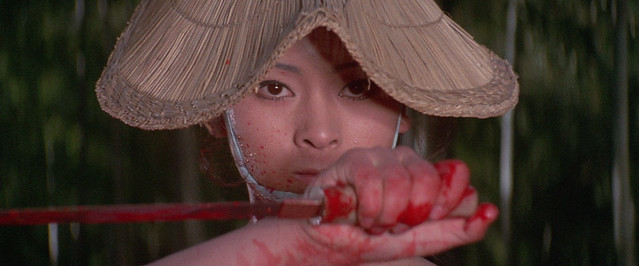
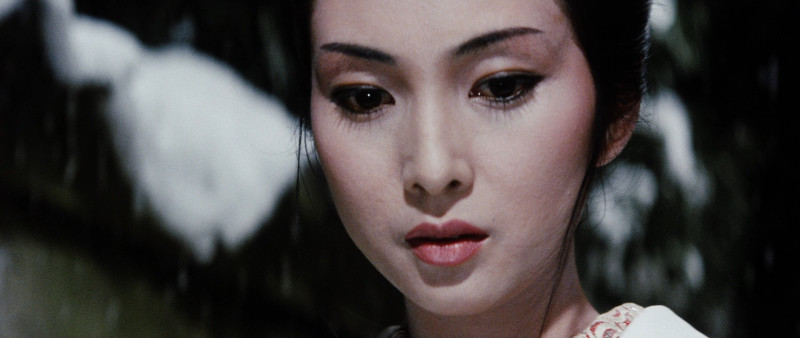
This movie really had me flashing back to my film school days. As a screenwriting major, I'm well acquainted with the unique hurdle that is exposition. There's no fool-proof method for revealing necessary information to the audience. Do you put it right up front? Do you divvy it out in little bursts? Do you use flashbacks? Voiceover? Newspaper headlines? For the makers of Lady Snowblood, the answer to all of those questions is a resounding ,"YES!"

It's impossible for this film to get boring because the course of the narrative is constantly changing. You're given the most basic set-up right at the beginning, but before you know it, things have changed. More information is learned and as a result things change again. Right up until the end we are learning more and more, and as a result our interest never waivers. It helps that the action scenes are amazing. This movie should be taught in film schools. A cool professor would.

Thursday, June 11, 2015

Branded to Kill (1967)

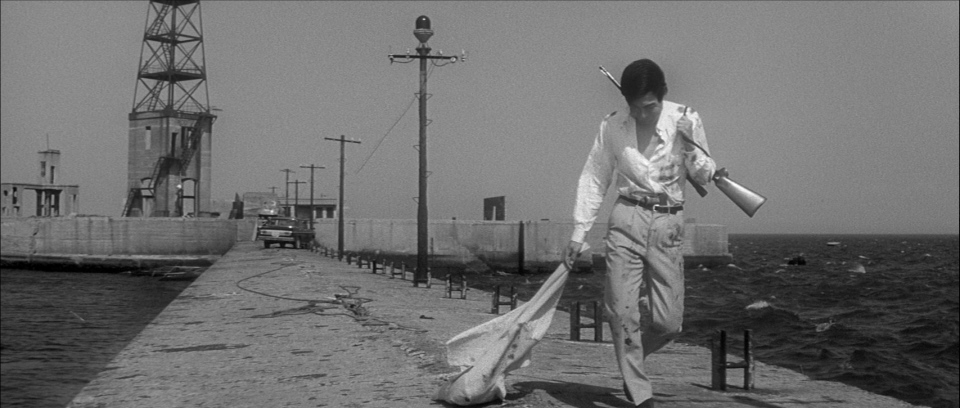
After unleashing the psychedelic, technicolor, yakuza film Tokyo Drifter upon an unsuspecting public and studio, director Seijun Suzuki was warned to play it safe on his next film. They even forced him to shoot black and white in hopes that this might curtail some of his wilder impulses. Under pressure like this, most filmmakers would go out of their way to toe the company line and make their next film as generic as possible. Seijun Suzuki is not like most filmmakers. Suzuki instead turned his awkward situations into a psycho-sexual allegory the likes of which nobody had seen. Sure this film might seem tame in comparison to the current output of filmmakers like Takashi Miike, but you have to remember that nobody was doing stuff like this in 1967. A film about a hitman who gets off on the smell of boiling rice? A film about a hitman undergoing a complete psychological breakdown from the pressure of being hunted by another hitman as punishment for botching a job? Of course Suzuki was promptly fired and blacklisted from the Japanese film industry for a decade. But he survived and has made 11 films since. One of them was a gender-swapped remake of Branded to Kill titled Pistol Opera which he directed at the age of 80. The true rebel spirit never dies.

Tuesday, May 26, 2015

Sight & Sound Challenge: Seven Samurai (1954)


Film: Seven Samurai (7/250)
Critics Poll: 17th
Directors Poll: 17th
First Time/Rewatch: First Time


The first time I saw any of this movie was in my college film history class, just about ten years ago. The teacher showed us a half hour of it, and then a half hour of The Magnificent Seven. I don't know what the point of teasing us like that was, but until I finally watched Seven Samurai recently, I hadn't gotten around to revisiting either film. Maybe the run-time was putting me off...at 3 hours and 28 minutes, this film is no joke. I happened to have a free evening at home with no distractions and a roommate willing to get pizza so not even dinner prep could distract me from this undertaking.

I love how this film looks. The photography is beautiful and every shot looks intentional. I especially love the final shot and the scenes leading up to it. Like I said, the run-time is intimidating, but once you settle in, it carries you right along. The characters are memorable, their world makes sense, and you really root for the warriors to prevail.

Okay, confession time: I have a hard time getting through movies. "WHAT??? But that's your THING!!" you are undoubtedly thinking. The thing is I wake up at 5 AM for work every day, and even on weekends I seem to be incapable of sleeping in or taking proper naps. So when I'm nice and comfy on the couch watching a movie, no matter how amazing it is, that's when my brain decides that it's naptime. Oftentimes I combat it by whipping out my phone and "Interneting" while movie watching to stay awake and alert, but it's sadly left me with a diminished attention span. Something I'm working on with this challenge is really devoting my full attention to the film that I'm watching with minimal distractions, as best as I can. I won't beat myself up if I slip now and again, especially with films I've seen before, but it's something I'm actively working on. Seven Samurai tested me a bit on that, but I successfully stayed awake the whole time and there was only one scene that I had to go back and rewatch because I was busy reading something on my phone! However I got through it, I'm glad I finally saw this and I'm excited to revisit one of Kurosawa's other films on the list, Rashomon (which I most definitely slept through the last time, sigh!)

Thursday, May 7, 2015

The Hidden Fortress (1958)


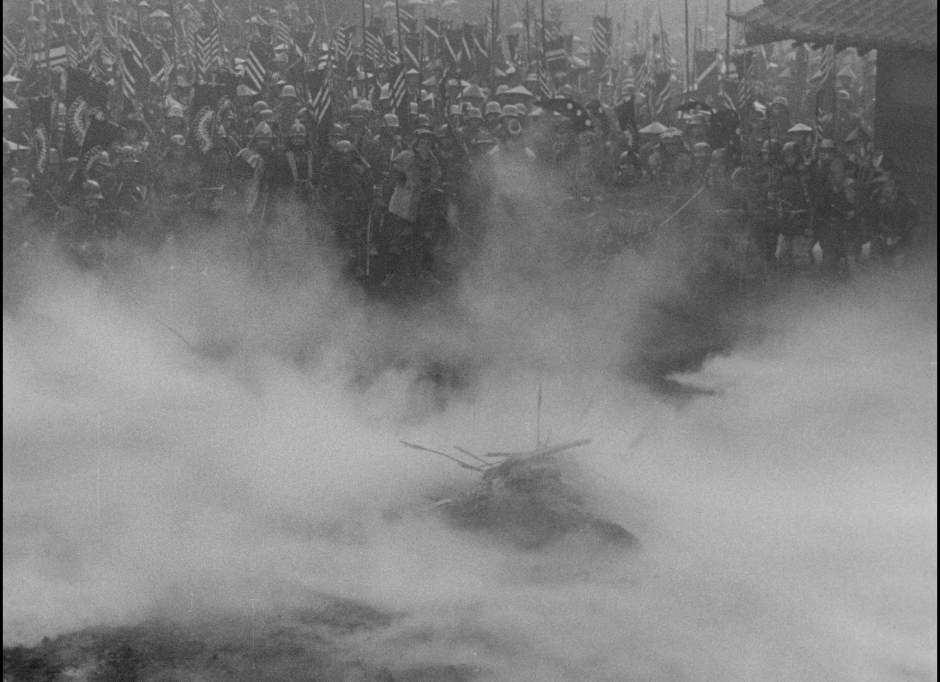
Filmmakers don't have to make chamber dramas about death to be great. John Ford made westerns, Alfred Hitchcock made thrillers and Akira Kurosawa made samurai films. There's something to be said about a director working in the popular vernacular. You are provided with a huge canvas, and if done right, you can reach untold millions. Who would ever have thought that a Japanese film from the 50's (that was itself inspired by the westerns of John Ford) would wind up inspiring generations of kids to take up filmmaking? But it did! After seeing this movie in film school, George Lucas was inspired to tell his own epic adventure from the perspective of two lowly characters. While this film might not be a one-to-one analogue for Star Wars, you can see what drew Lucas to this film: the adventure, the action, the characters, the scale, even the use of wipes to signify the passing of time. And that right there is the power of influence. John Ford inspires Akira Kurosawa who inspires George Lucas who inspires THE WHOLE WORLD!

Monday, March 2, 2015

Fall Guy (1982)


Boy did this movie really turn me around. I was absolutely hating the first fifteen minutes or so. It was so loud, so broad and so 80’s. What might have worked for John Waters or Pedro Almodóvar was not working for Kinji Fukasaku. I started to wonder why Criterion would have possibly acquired this film. Was it just because of the director? But since I also have a policy of always seeing movies through to the end, I soldiered on. Even if it is God-awful there is something that can be gleamed from a bad film. And like they say: You can’t appreciate sweet unless you have tasted sour. I just didn’t expect to get that entire experience within the running-time of the same movie.

Once the conceit of Yasu marrying Konatsu is set up and Yasu begins risking life and limb for their future, it becomes an entirely different movie. It becomes sweet, tender, angry and insightful. By the time of the big stunt at the end, I was absolutely riveted. Perhaps this was all intentional? Had Fukasaku deliberately made the opening so insufferable? Perhaps I wouldn’t have liked the latter half so much if I hadn’t disliked the early half so intensely? Who knows? All I really know is that I’d love to see this film on a double-bill with François Truffaut’s equally effusive cinema love-letter, Day for Night.

Tuesday, February 24, 2015

Princess Mononoke (1997)


I know Spirited Away is supposed to be the Miyazaki masterpiece, but I just love this one so much more. I think it's the fact that this is an action movie. Spirited Away is lovely, imaginative and emotional, but this one has kick-ass action that happens at a furious pace without losing any of its beauty. Call me base if you will but I'm seriously a sucker for well choreographed action. And then there's the environmental message, and all the gooey/icky parts and the fact that this story isn't morally black and white. All of that crammed into a film in a medium that people still insist is "for kids". This ain't Totoro. This will probably give your kid nightmares. And that's a good thing.

Monday, March 24, 2014

Throne of Blood (1957)


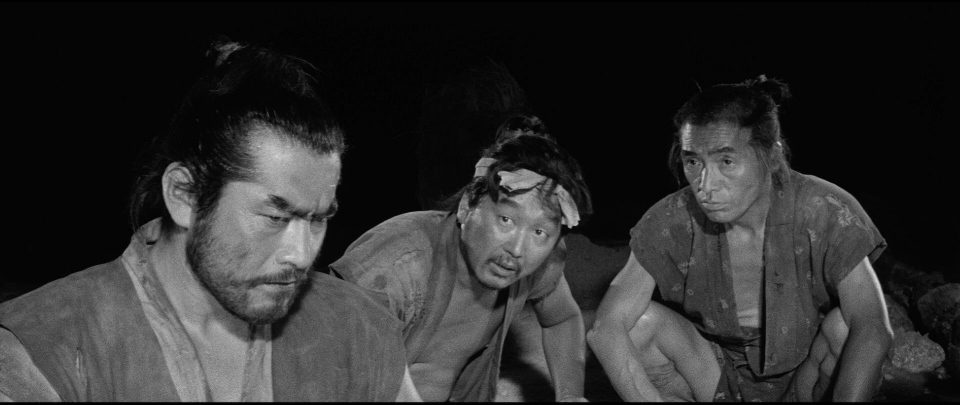
I think it would be interesting to see a sci-fi Macbeth. The inciting incident of the story already hinges on magic, so why not just replace that with science? When you really think about it, this is a time travel story, minus the time travel. It's about a character who is given insight as to what the future holds in store for him followed by his attempts to both embrace and counteract that future. That's why this story has stood the test of time. It's the eternal question of whether fate is malleable or written in stone. It's also Looper, Back to the Future and 12 Monkeys...among other things. If this story can work in feudal Japan and the current ganglands of Melbourne, why not try setting it in the not too distant future? Just gotta make sure you have a lead as badass as Toshirô Mifune. Good luck finding one.

Monday, April 15, 2013

The Streetfighter (1974)

After turning down a kidnapping job because the money isn't good enough, mercenary Terry (Sonny Chiba) becomes a marked man and must take down his would-be employers.

*      *      *

If you only know Sonny Chiba from his brief role as samurai swordsmith Hattori Hanzo in the Kill Bill films, boy are you missing out. For my money Chiba can stand toe-to-toe with the great Toshirô Mifune when it comes to sheer charismatic bad-assery. If you find yourself looking for a good entry point to this living legend's fifty-year career, look no further than the classic that is The Streetfighter, the first film ever rated X for violence! Need more incentive? This is the film Clarence is watching in True Romance when he first meets Alabama! I knew that last bit would really sell you on this!

Now when you finally decide to inject this movie into your life, be careful you aren't acquiring either of the awful live-action adaptations of the similarly titled Street Fighter video games. If you start the movie and see either Jean-Claude Van Damme or Kristin Kreuk on your screen, you fucked up royally. Actually, let me make things easy for you. Since the film is public domain, not available on Netflix and can most often be found in the dollar bin, here's a link to the entire film on Youtube. Surely not the ideal way to experience any film, but until Criterion or somebody issues a pristine, anamorphic, Blu-ray transfer, this will have to do. Now don't say I never gave you anything. You're welcome.

Thursday, March 21, 2013

Audition (1999)

A the urging of a friend, a middle-aged widower (Ryo Ishibashi) agrees to hold a faux film addition so that he might find a new wife to share his life with. He may have found the perfect woman in Asami (Eihi Shiina), or maybe not...

*      *      *

A lot has been made of Takashi Miike's recent forays into samurai films. Nearly every review for both 13 Assassins and Hara-Kiri: Death Of A Samurai brought up how classically styled and restrained they were. How could the man who perpetrated Ichi The Killer and Gozu be capable of directing slow-moving tracking shots and subtle performances? To me this is really no big surprise. Look no further than the first half of Audition. If it weren't for the cover art and quotes on the box, I think it would take quite a while for most viewers to realize that something demented was afoot. The early parts of this film play out like an average family drama about a widower trying to re-enter the dating pool. In fact, the low-key opening only helps to make the final reveal all the more shocking and disturbing. Any hack can go for shocking. It takes a true master to know when to hold back. I'm glad that Hara-Kiri got to screen in competition at Cannes. After twenty years and ninety films, the snootier cineastes of the world are finally waking up to the greatness of Takashi Miike!

Friday, February 24, 2012

The Bad Sleep Well (1960)


A vengeful man (Toshirô Mifune) seeks to bring down the corporation responsible for his father's death, from the inside.

*      *      *

It makes perfect sense that this film was remade for Japanese television in 2010. 50 years later the story is still relevant. The "bad" continue to "sleep well". I kind of wish this film was in English so that more people would see it. Perhaps a remake with George Clooney? Too similar to Michael Clayton? Ok, how about Matt Damon? I don't know, I'm just spit-balling here. But this could totally work, because at it's core, this is a revenge story. And who doesn't love a good revenge story? It doesn't matter if you're eating it with a fork or chopsticks, so long as it's served cold.

Thursday, September 1, 2011

Youth of the Beast (1963)


A wild and crazy gangster (Joe Shishido) blows into town and ruffles feathers playing opposing Yakuza bosses against each other.

*      *      *

Watching a film directed by Seijun Suzuki is an experience. It's loud, it's violent, it's beautiful, it's psychotic.  As the film unspools you find yourself wondering how a film like this was ever able to be made! But then you stop and just appreciate the fact that it was made at all. Nobody makes films like Suzuki-san. Sure his films don't always make sense, but they ARE consistently engaging. There's always something beautiful or insane to look at. This man really knew where to put his camera. Though of course I recommend actually watching his films, I wouldn't hold it against you if you just let them play on the TV at a party.


Thursday, July 7, 2011

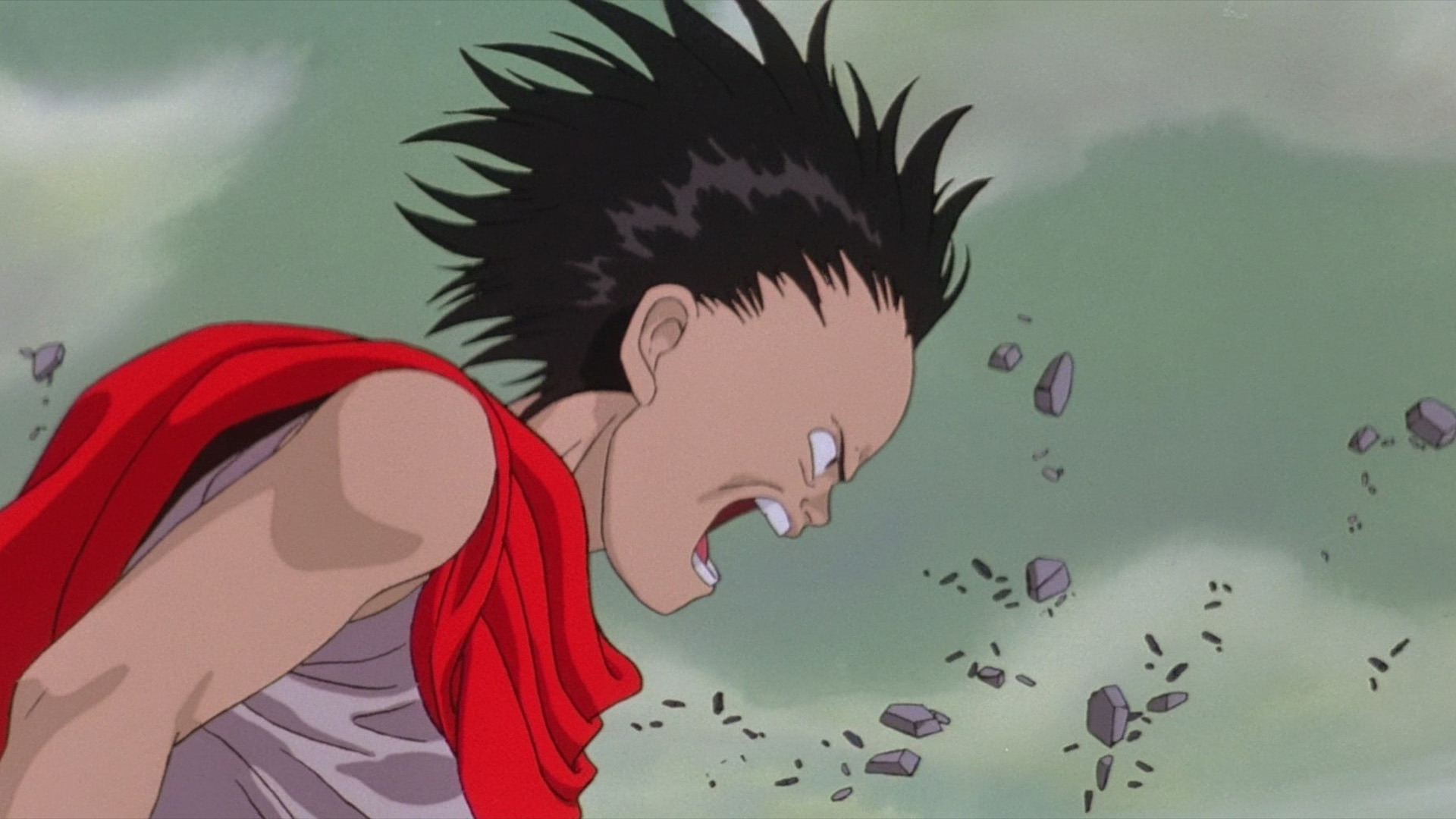
AKIRA (1988)


31 years after WWIII, Neo-Tokyo is a crime ridden city filled with rival gangs. One day...man I don't even know how to attempt a plot description of this film. Just see the damn thing.

*      *      *

I know this sounds irresponsible but: I think this is a film that needs to be seen when you're young so that it can make a maximum impression on your psyche. Even if the plot is a little hard to follow/incomprehensible, the power of Akira cannot be denied. From the opening bike chase to the final climactic showdown at the stadium, this film has you glued to the screen. The sheer visual power of this film is astounding. The images effortlessly wedge themselves into your brain. And let's not forget that score! This movie hits you on a primal level.

For years there has been talk about making a live-action adaptation. Let's not and say we did. I mean we kind of already went down that road with Kanye West's Hype Williams directed Stronger video.