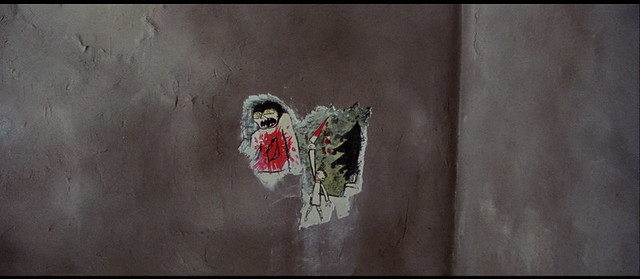
When I think of Dario Argento films, I think of unbelievably thick latex. I remember all the kills in a particular film, but I remember them as these walled-off, insert shots where hatchets cut into foam-latex that is inches thick and only skin-colored on the outer layer. Divorced from the rest of the film it's rather comical. But when it's actually unfolding on screen, you find yourself imagining those things happening to your actual, non-latex skin. Within the context of the film, at 24 fps, it hurts. And that is why Dario Argento is a master. He can make you feel for a hunk of rubber like it was your own neck.
Showing posts with label italy. Show all posts
Monday, April 3, 2017
Monday, February 13, 2017
I Fidanzati (1962)
Stylistically this film hits a real sweet spot for me. It's a perfect balance between the Neo-Realism of early Rossellini and the over-the-top stylings of late Fellini. It is a beautiful portrait of mid-century Sicily that relishes in the subtle details of day to day life, but with its very particular shot choices and radical cutting patterns, it is also extremely constructed. The leaps forward and backward in time, and the way they are tied together by the dancehall sequence is masterful and predates Nicolas Roeg by several years. And thanks to the "stranger in a strange land" narrative as well as the primarily silent protagonist, the digressions into the particulars of finding lodging and getting a late night meal do not feel extraneous. Ermanno Olmi is capable of making the extremely difficult seem effortless. For him, it probably was.
Monday, March 14, 2016
I Knew Her Well (1965)
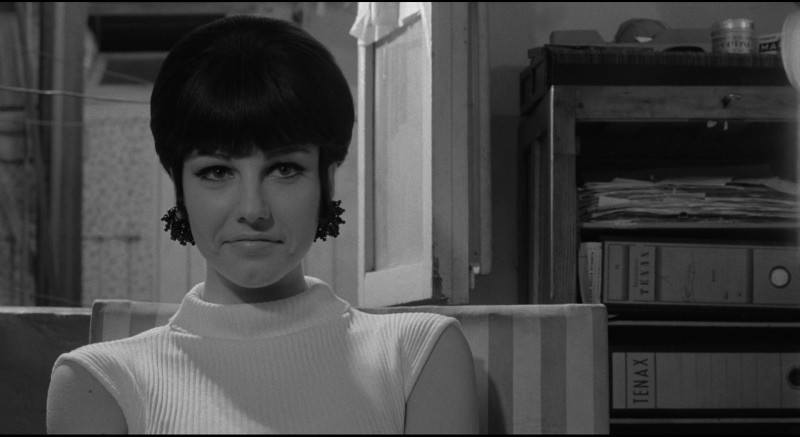
I've been obsessed with the aesthetic of mid-century Italy for longer than I can remember. Whether it's an authentic period film like La Dolce Vita or a loving reconstruction like The Talented Mr. Ripley, I've always responded to the whole look and attitude of impeccably styled people having a good old time. After twenty years of Fascism and a World War, can you blame a country for wanting to just cut loose? But underneath that impeccable surface, there was also an emptiness. There was a void that everyone was trying to fill with clothes, cars, music and money. This is what Fellini and Antonioni were making films about. It's also what this film is about. Actress Stefania Sandrelli is the perfect embodiment of that impeccable surface. She's gorgeous and goofy and no matter what life throws at her, she keeps up this chipper fun-loving surface. You're given little indication of the turn things will take in the end. But when you think of all the ways she's been used and abused throughout the film, how could she not? Like all the mournful pop songs that provide the soundtrack, the film itself is underscored with immense sadness.
Thursday, December 31, 2015
Europa '51 (1952)
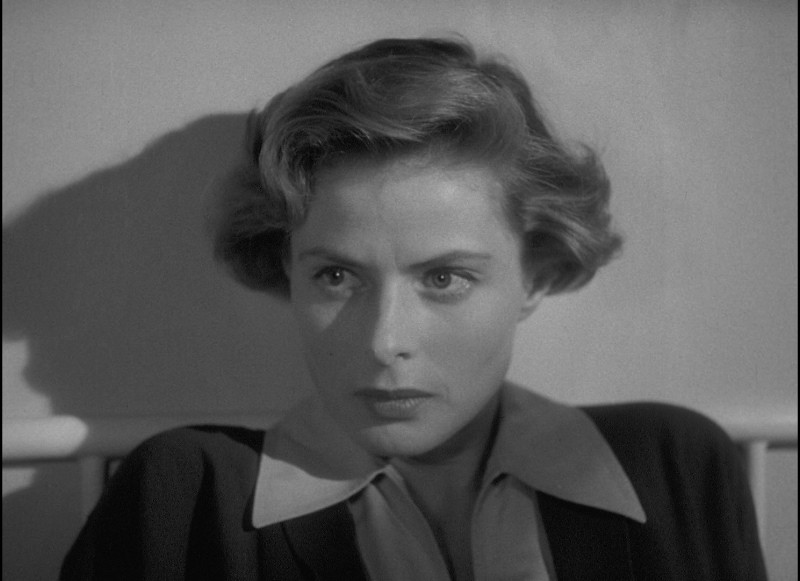
Though he very openly denounced ostentatious style in the filmmaking of others, I'm pretty certain nobody could consider Roberto Rossellini's cinema to be lacking in style. It's a very subtle style, yet also extremely effective. Without the help of fancy camera moves he is able to place us in the shoes of his protagonist. We see Ingrid Bergman, we see what she sees, we see how she reacts to what she saw. Near the end of the film things switch and Bergman is now the thing being looked at. Doctors and police officers are trying to understand her. Yet we do not identify with her observers. We don't know these people. Those reaction shots have conditioned us to identify with Bergman. And so, in the end, they are not staring at her, they are staring at us. We are the ones being judged and it is not a comfortable feeling. Rossellini's style is cinematic sleight of hand of the highest order.
Monday, November 16, 2015
Salò, or the 120 Days of Sodom (1975)
On 11/12/2015 Craig got to introduce a screening of this film at The Frida Cinema in Santa Ana. Here's what he said.
Movies like this are both easy and difficult to discuss. They're easy in that there is an unending amount of fertile topics to explore. They're difficult in that by limiting yourself to one or two, you are inevitably leaving dozens more un-addressed. When The Criterion Collection put this film out on home video a few years back, rather than the traditional single essay for the booklet, they included six different essays and the topic overlap was next to nil. But I'm sure even that tactic left some stones un-turned.
Understandably, the two most popular topics of discussion after a Salò screening are politics and censorship. When the film in question is based on the Marquis de Sade's most notorious work and it features promising young boys and girls being tortured by fascists, how can you possibly avoid those topics? But my personal favorite angle on this film is less intellectual and more emotional in nature.
Though he does not appear in Salò, the presence of actor Ninetto Davoli can still be felt in every frame. This is because in addition to appearing in seven of Pasolini's films, Davoli was also the director's "long term companion" for nearly a decade. So of course Pier Paolo chose to tackle a story about torture as his first film after Ninetto left him and married a woman. Suddenly, the filmmaker who had just completed a joyously perverse trilogy about all the impulses and bodily functions which unite us as human beings, was gone. Pasolini was no longer interested in life. In his own words he wanted to make a film, "about death".
In pop music, there's this great tradition of albums made after a breakup. Albums like Bob Dylan's Blood on the Tracks and Beck's Sea Change are so raw with emotion that listeners cannot help but empathize. If we were to generate a similar canon of great breakup films, Salò would certainly place at or near the top. As revolting as many of the images in this film are, I cannot help but ache for the wounded heart that was compelled to put them on celluloid.
Tuesday, July 7, 2015
Sight & Sound Challenge: Journey to Italy (1954)
Film: Journey to Italy (19/250)
Critics Poll: 41st
Directors Poll: 67th
First Time/Rewatch: First Time
This was a new one to me. I love both Ingrid Bergman and George Sanders, so it was pretty much a given that I was going to like it. What could have been a pretty humdrum story about a husband and wife drifting apart is elevated by the beautiful Italian setting. This feels like a travel documentary in a lot of ways, showing the stoic beauty of a postwar country steeped in history, art, and tragedy. It highlights the quiet destruction of their relationship, and the potential for new life amidst the rubble. Very subtle, very moving, and very fine filmmaking...
I suddenly want to book a trip to Italy! Maybe Craig and I can go together and we can fight and then threaten divorce and then reunite, but hey, we'll be in Italy!
Labels:
'becca'lise,
italy,
sight & sound
Tuesday, May 19, 2015
Sight & Sound Challenge: L'Avventura (1960)
Film: L'Avventura (5/250)
Critics Poll: 21st
Directors Poll: 30th
First Time/Rewatch: First Time
This has been on my watch list for ages. It was one of those titles that you know you're supposed to see, you know that it's supposed to be a great movie, or at least an important one. This film is also one of the main reasons I went with the Sight & Sound top 250 instead of some of my other movie challenge contenders, like the AFI Top 100. I wanted to make sure I was seeing plenty of new-to-me foreign films as well.
For me, this film is less about the plot and more about the style and the mood. I'm biased towards Italian films from the 60s; everything just looks so cool. All the people lounging on the yacht, on the rocks, not a care in the world, until one of them disappears. Then life carries on...
Monica Vitti has a great face, one that carries this film. There's a handsomeness to it, a strength and a vulnerability. I could watch a whole movie of her gazing out at the ocean. I really enjoyed relaxing and sinking into this one. It's great for a lazy afternoon and I'm really glad I finally got around to watching it.
Labels:
'becca'lise,
italy,
sight & sound
Thursday, May 8, 2014
Il Sorpasso (1962)
I think this might be the ultimate Craig Duffy film. I’m pretty sure that I was genetically predisposed to like this film. In terms of the things I respond to in cinema, Il Sorpasso checks all the boxes. It’s a road movie that luxuriates in the settings and side characters, it expertly balances comedy and drama, it features a passive main character who is propelled along by a charismatic rascal, the pop songs are expertly placed and the photography is beautiful. The fact that it’s set in Italy during that La Dolce Vita/L’Avventura period where modernity was rapidly eclipsing the old world only serves as icing on the cake. Is it coincidence that Alexander Payne saw this film shortly before he directed Sideways which propelled him into my personal pantheon of favorite working directors? Seriously, if you were to take several of my favorite films and make a collage of them, it would look like Il Sorpasso. I can’t believe it took me so long to discover this film. God bless Criterion for bringing this film to my attention and giving it such a loving treatment. Highly recommended!
Thursday, January 9, 2014
Rome Open City (1945)
In the wake of World War II millions were dead and much of Europe lay in ruins. The devastation was so intense that we are still dealing with the fallout today. Knowing all of this it is hard to believe that Roberto Rossellini was able to produce and release this film within five months of V-E Day - but he did. Out of the ruble of war, Rossellini and his collaborators were able to make a work of great emotion and rugged beauty that has gone on to inspire filmmakers in impoverished and desolated countries the world over. The artistic spirit is a resilient one. You don't need millions of dollars and beautiful sets to make a great film, all you need is a camera and passion.
Thursday, October 31, 2013
Red Desert (1964)
After a car accident and a brief stay in a clinic, a woman (Monica Vitti) has become increasingly sensitive to the environment of the industrial town that she lives in.
* * *
Long ago humankind had to adapt to its environment. Nature was harsh and cruel and we as a species evolved to survive. Eventually we gained the ability to adapt our environment to us. Thanks to scientific advancement we can now literally pave paradise and put up a parking lot, or a strip mall, or a nuclear power plant. We are now the masters! Or are we? What does being surrounded by all this artificiality do to a person? All this noise and pollution has to have an effect doesn't it? Like white moths who turn grey to match the trees stained with ash from a local factory, are we too are changing in subtle ways to match our increasingly sick and contaminated environment?
Call Michelangelo Antonioni boring all you want, this film is a subjective masterpiece. Through careful use of sound, composition and color, he is able to put us right in Giuliana’s stylish shoes. This film works a spell on you. When it’s over, you cannot help but feel uneasy about the world you live in. Green Peace should use it as a recruitment film.
Labels:
art,
craig,
experimental,
italy
Monday, September 30, 2013
Journey To Italy (1954)
* * *
Some of the most fascinating scenes in Roberto Rossellini’s Journey to Italy are the driving ones. Inside the car you have two iconic Hollywood stars discussing their marital woes and moving the faux-steering wheel far too much. Outside the car is living and breathing Italy. The contrast is rather startling: Artifice juxtaposed with reportage. Separated only by a thin metal shell. And once that shell is punctured, there is no going back. The chemistry of this couple cannot help but be altered by this outside influence of this ancient land where the past and the present commingle. Each voyage out yields new revelations. Revelations that cannot be simply brushed aside. Revelations that must be confronted. As in many of the best narratives, the two characters at the end of this film are not the same ones we met at the beginning. They have been forever changed. Only here, it's not the work of some contrived plot you've seen a million times before. Here it's something far more ineffable. And that's precisely what makes this a journey worth taking.
Thursday, April 4, 2013
Arabian Nights (1974)
A bawdy and joyous adaptation of a few of the Arab folk-tails commonly known as One Thousand and One Nights.
When it was originally released in the early/mid-70's Pier Paolo Pasolini's "Trilogy of Life" (The Decameron, The Canterbury Tales and Arabian Nights) was meant as a celebration of humanity via the bodily functions we have in common. Taro Gomi got it right with the title to the classic children's book Everyone Poops. An alternate title for these films could easily have been: Everyone Pees, Poops, Farts and Has Sex. But as cool and hippie as this message was for its time, I would argue that it is even more important now. Since 9/11, anti-Muslim/anti-Arab sentiment has been at record highs. Conservative media and religious leaders add to this by spending so much time detailing the sundry ways in which the two cultures are different. It's much easier to hate someone you feel you have nothing in common with. During The Cold War we had The Reds to serve as the exotic "other" to be feared, now it's Muslims. Too bad Arabian Nights is rated NC-17, I think prudish, ignorant hate-mongers would really get something out of it. They'd finally learn the simple fact that everyone poops, everyone pees, everyone farts, everyone has sex, and (most importantly) everyone loves.
* * *
When it was originally released in the early/mid-70's Pier Paolo Pasolini's "Trilogy of Life" (The Decameron, The Canterbury Tales and Arabian Nights) was meant as a celebration of humanity via the bodily functions we have in common. Taro Gomi got it right with the title to the classic children's book Everyone Poops. An alternate title for these films could easily have been: Everyone Pees, Poops, Farts and Has Sex. But as cool and hippie as this message was for its time, I would argue that it is even more important now. Since 9/11, anti-Muslim/anti-Arab sentiment has been at record highs. Conservative media and religious leaders add to this by spending so much time detailing the sundry ways in which the two cultures are different. It's much easier to hate someone you feel you have nothing in common with. During The Cold War we had The Reds to serve as the exotic "other" to be feared, now it's Muslims. Too bad Arabian Nights is rated NC-17, I think prudish, ignorant hate-mongers would really get something out of it. They'd finally learn the simple fact that everyone poops, everyone pees, everyone farts, everyone has sex, and (most importantly) everyone loves.
Monday, April 2, 2012
La vita è bella (Life is Beautiful) (1997)
Buon giorno, Principessa!
Roberto Benigni plays Guido, a Jewish waiter, eternal optimist, and lover of life. He meets and falls in love with Dora (Nicoletta Braschi, his wife in real life) and eventually marries her. Their happy life with their son is interrupted when the family is sent away to a concentration camp, and Guido must go to astonishing lengths to protect his young son from the horrors of World War II.
This film is, you guessed it, beautiful. It doesn’t really get into the true horrors of the concentration camp, but it’s a view that Guido wants his son to see. To his little son, it’s just a game. Not a fun game, but certainly one that he’s safe inside. Guido does everything in his power to reach his wife anyway he can, to let her and his son know that he loves them and would do anything to keep their spirits up. Benigni’s Guido has a Chaplin-esque quality to him: funny, a little mischievous, and quick on his feet. He won an Oscar for his role, and it was well deserved.
Yes, this film is sad (there are a couple of scenes that absolutely WRECK me), but it’s life-affirming too. The music, the sweet little boy, the way everything comes together...it’s perfect. What a wonderful movie!
Enjoy, and don’t forget the tissues! Oh, and watch it in Italian. Grazie!
Labels:
'becca'lise,
comedy,
drama,
historical,
italy,
war
Tuesday, November 15, 2011
8 1/2 (1963)
Guido Anselmi (Marcello Mastroianni) is knee-deep in pre-production on his latest films, the only problem is that he has no clue what it's going to be about.
* * *
Though they might claim otherwise, all creative people crave success. If for no other reason than the fact that being successful means you get to continue creating. But as we all know, there is also a dark side to success. It creates anticipation and expectation. It attracts hangers-on and provides plentiful distractions that keep you from creating. Often, success can even cause you to lose touch with the very thing which made you want to create in the first place. Throw in some serious Catholic guilt and a king-sized helping of women troubles, and you have Federico Fellini's mental state after the release of La Dolce Vita. Yet rather than allowing it all to break him, Fellini instead fashioned this "bella confusione" into one of the greatest films ever made. What doesn't kill you makes you stronger.
Subscribe to:
Posts (Atom)