Showing posts with label crime. Show all posts

Monday, February 5, 2018

Monster (2003)


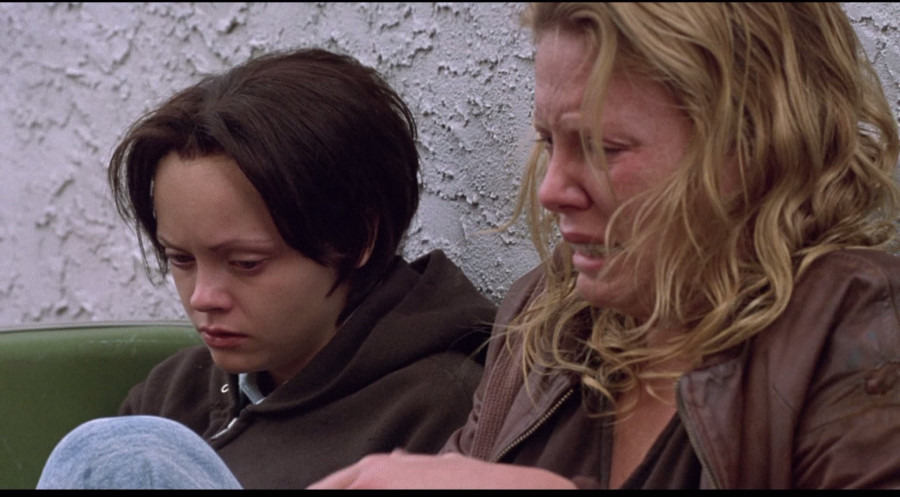
This film is much more than Charlize Theron’s excellent performance. If this movie had been directed by a man, that director’s filmography would absolutely be longer than two feature films in fourteen years. Patty Jenkins gets so much out of such a short runtime. AND SHE WROTE IT TOO! Meanwhile, people like Josh Trank and Colin Trevorrow are just handed millions of dollars after debuts with nowhere near the same tonal complexity as Monster. How Patty Jenkins didn’t go on her own rampage during the past fourteen years is completely beyond me. Well at least Trank and Trevorrow got fired from huge gigs while she is gonna make a huge payday for the second Wonder Woman. Now if only we could get Hollywood to consider Ms. Jenkins as something other than a fluke...

Monday, December 4, 2017

Logan Lucky (2017)


If one were trying to describe the Cinema of Steven Soderbergh in a single word, “political” probably wouldn’t be the first adjective to spring to mind. But if you look at his filmography, the overwhelming majority of his output has dealt with issues of class. Even his “sexy” movies (Magic Mike and The Girlfriend Experience) are first and foremost about commodification and wealth. So, while Logan Lucky appears to have sprung from the same mold as The Cannonball Run, it is first and foremost about Middle America. But unlike the first Magic Mike, it isn’t cold and clinical. In fact, If I had to sum this film up in a single word, that word would be, “compassionate”. And we could all certainly use a lot more of that in this day and age.

Thursday, May 25, 2017

Heat (1995)


While I certainly don't agree with Pauline Kael's opinion that the Auteur Theory was a way for film-bros to label the genre films of their youths as "art", Heat certainly gives me similar feelings. As much as I enjoy this film, there's nothing deep about it. It has nothing new to say about cops and criminals, and the "insights" it has about men and women are equally reductive. But that doesn't stop people from trying to read more into it. Why do people feel the need to graft deep thoughts onto this film? Does a work really need to be filled with soul-shattering insight in order to be great? Can't an expertly crafted piece of Pop Cinema just be enough? The photography, choreography, editing, score, sound, and acting are all top notch. It's a whole crew of absolute professionals doing their absolute best and it's a wonder to behold. Can't that just be enough?

Monday, April 17, 2017

Detective Story (1951)


Theatre and Film share so much in common, yet in very crucial ways they're worlds apart. They both use actors, sets, costumes and lighting. They both rely on scripts and are viewed by theaters full of people. But translating a good play to the screen is actually rather challenging. Often the finished film will betray its origins as a play through its limited number of locations. You feel like there is no real world outside the set where this story is taking place. That's certainly not the case with this William Wyler adaptation. This film is alive! People come in and out, this character interacts with that character, etc. It feels like a real police precinct where we are but a fly on the wall. And like a real fly, we get to move all over the place and see everything from the best angles. People who say Wyler was a lesser director can go take a long walk off a short pier.

Monday, April 10, 2017

I Don't Feel at Home in This World Anymore (2017)


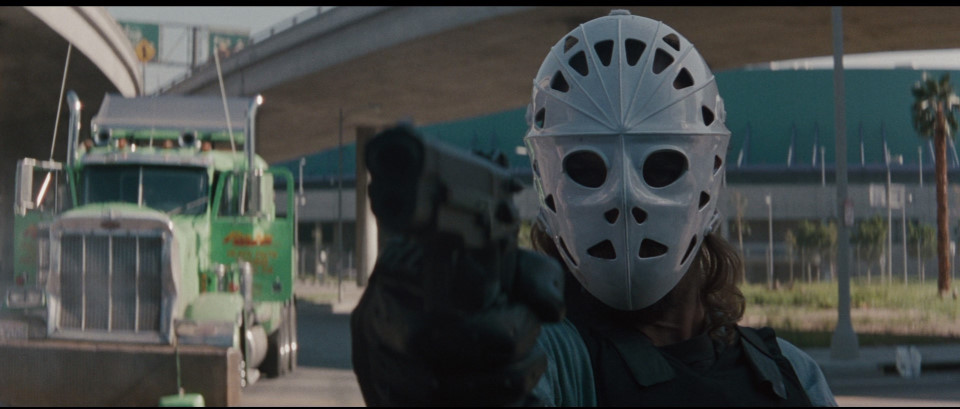
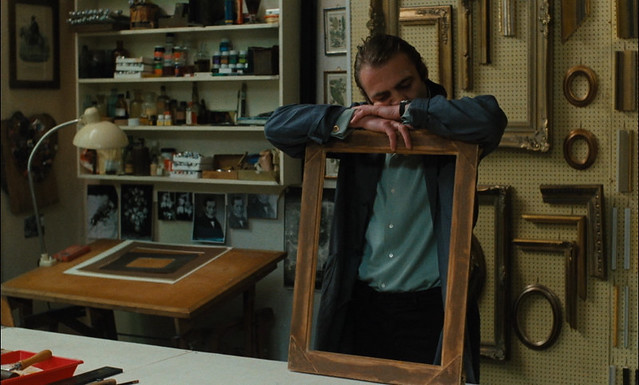
Just the other day I was telling someone that I'd love to see Family Plot (Alfred Hitchcock's flawed, final film about amateur criminals who get caught up with professionals) remade by the Coen Brothers. But if they're not available, I would now accept Macon Blair as a suitable substitute. The tone mixing in this movie is spot-on. It's like two completely different movies that dance with each other for a while before full-on colliding in the final act. The comedy makes the violence more intense and the violence makes the comedy more darkly hilarious. It's the cinematic equivalent of a Reese's peanut butter cup: two tastes, that taste great together.

Thursday, March 23, 2017

Black Sun (1964)


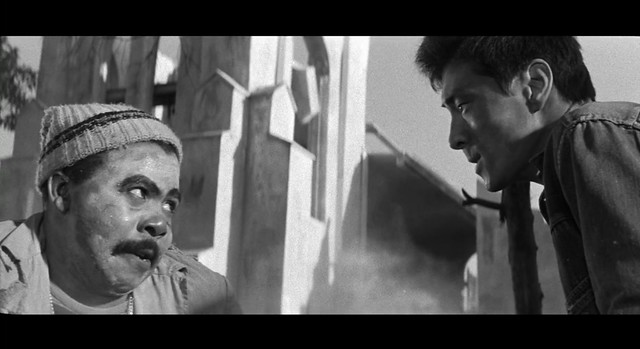
This was an interesting one. It reminded me a lot of a Sam Fuller movie, in that it is the cinematic equivalent of performing surgery with a sledgehammer. It's blunt and it's pulpy, but that doesn't mean that it can't get at some tough and interesting truths. The truly interesting part about this film is the language barrier. This isn't a movie where people have to talk out their differences, because neither speaks the other's language. All they are able to go off of is tone, facial expressions and body language. And somehow they come to understand each other like one does a jazz song or a silent film. Perhaps the Tower of Babel was not meant to separate us, but rather to force us to unite on a deeper, more human level?

Thursday, March 2, 2017

Lights in the Dusk (2006)


This film feels like it was made on a dare. It feels like the type of challenge Lars Von Trier would lay down in The Five Obstructions: make a Film Noir - without guilt.

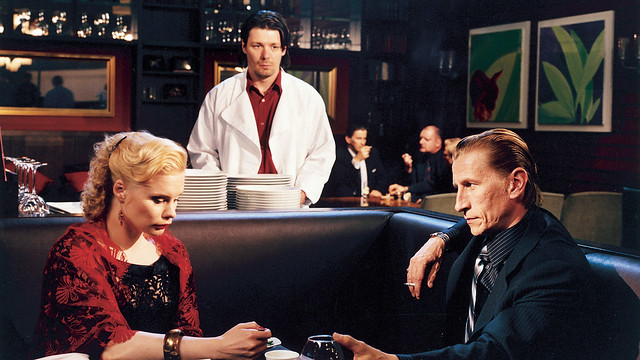
Unlike a traditional Film Noir, where the world is working against the protagonist as some sort of self-fulfilling, guilt manifestation, the hero of this film is guilty of nothing. He doesn't even have an opportunity to become guilty. People are hating him from the very start and for no stated reason. And it's not even some Kafka-esque exercise in paranoia because our hero is oblivious to all the ways in which people are conspiring against him. He's also equally oblivious to the few people out there who give a damn about him.

So is this Film Noir? No. But it is an Aki Kaurismäki film. And that's certainly something to savor.

Thursday, February 2, 2017

Female Prisoner #701: Scorpion (1972)


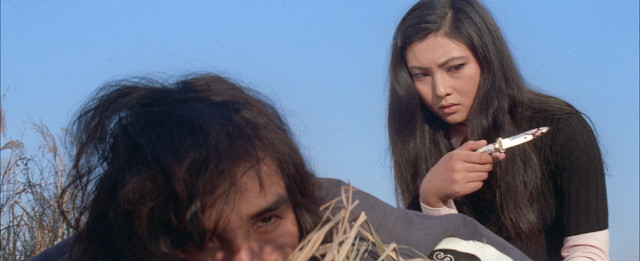
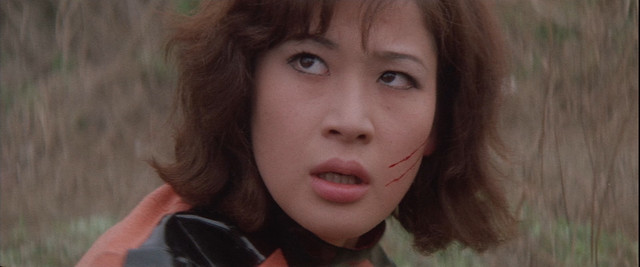
As Michael Bay can surely attest, an over-abundance of style can easily paper over a great many deficiencies. If it's flashy looking, you won't notice the cardboard characters, plot holes and dubious politics because you are being constantly bombarded with spectacle. But style can also help distract from the fact that you do not have a budget. Pretty much all of Female Prisoner #701: Scorpion takes place in one location and good chunks take place in a large dirt field, yet it is one of the most visually inventive films you will ever encounter. Even something as subtle as a colored light can make something cheap look interesting. The participation of a leading lady as magnetic as Meiko Kaji also helps too. I'm really excited to see where this series goes!

Monday, December 5, 2016

The American Friend (1977)


This is an interesting one. It feels the most autobiographical of the Wim Wenders films I've seen. The cameos by Sam Fuller and Nicholas Ray, the dedication to Henri Langlois and the inclusion of early optical toys clearly indicate that Wenders wants us to be thinking about cinema itself. Viewed in this context, the forgery subplot seems like a knowing nod towards his early career, where Wenders himself acknowledges that his directing "style" consisted of little more than approximating Hitchcock and Cassavetes. Even the Zimmerman character agreeing to serve as a hired gun seems to pre-sage the difficulties Wim would later encounter trying to work for Francis Ford Coppola on Hammett. Yet by placing all of this within the context of a "crime picture", Wenders is able to sidestep the indulgence of making a "struggling artist picture". It's not an entirely perfect marriage, but it sure makes for some interesting images, ideas and an amazing train sequence.

Thursday, October 13, 2016

13th (2016)


There is no room for ambiguity in this documentary. Ava DuVernay has a message to impart and she wants to make damn sure that you get it. While she never resorts to Michael Moore narration or Errol Morris recreations, the bravura editing by Spencer Averick (obviously under DuVernay's direction) makes damn sure that nothing is lost on anyone. A single cut can bridge 150 years and help us to better understand how we got into this mess in the first place. Sure it's unsubtle, that's deliberate. DuVernay knows how important it is to pick the right tool for the job. If you want to carve the statue of David, you use a chisel. If you want to tear down the Prison Industrial Complex, you use a sledge hammer. I'm glad that this film is on Netflix so that it can be seen by as many people as possible because this is a documentary for right now.

Monday, October 10, 2016

The Witness (2016)


How much of a news story do you have to read to be outraged? How much of a news story do you have to read before you click that "share" button on Facebook? While I'm sure plenty of you share responsibly, I know for a fact that plenty also share stories based entirely on the headline. I do it myself. And that's how false information spreads. This film is not a click-bait headline. This film is a "long read". This film goes deep and goes wide. You think you know the story of Kitty Genovese, but even her own family didn't know her whole story. Can anyone really know the whole story? Does the quest ever end?

Thursday, October 6, 2016

Yakuza Graveyard (1976)


I love the way that Kinji Fukasaku uses handheld. Lots of people do it his way nowadays (The Wrestler, Narc, The Bourne Series, etc.) but back then it was new. The only other filmmaker with a similar style was his American contemporary William Friedkin. It's not documentary and it's not French New Wave, it's something different. The camera is always in precisely the right place. It's never in danger of missing any crucial storytelling information. Yet, by virtue of the camera being handled, it's able to pull off all sorts of crazy shots to get an audience's adrenaline pumping. The camera swings wildly and can tilt or twirl at any moment. One could say that it's just as chaotic as the unpredictably violent world Fukasaku depicts in film after film. The perfect melding of style and substance.

Thursday, September 29, 2016

Stray Cat Rock: Beat '71 (1971)


I was a little nervous going into this final Stray Cat Rock film seeing as it was directed by Toshiya Fujita who also directed the series low-point, Wild Jumbo. Why not finish it out with series-starter Yasuharu Hasebe who directed all the other entries? Thankfully all my fears were for naught. While not the out and out masterpiece of Lady Snowblood (which Fujita would go on to direct two years later) Beat '71 is a solid film and also a fitting end to this weird little series. There's a lot of loaded imagery in that final battle where Eastern Culture is literally doing battle with Western Culture - in a Wild West Town no less! Perhaps for others this will come off as heavy handed, but for me, when you throw in the reprise of that Mops song and those poetic closing images of MaabĂ´, cinema doesn't get much better.

Monday, September 26, 2016

Stray Cat Rock: Machine Animal (1970)


Since all five of theses films were released within eight months of each other, you can't really say that each factored in the audience's response to the previous installment, but it kind of feels like it. Wild Jumbo tried doing something wildly different from Delinquent Girl Boss by having a mostly male cast and then in Sex Hunter they seem to have learned that the less men the better. Gratefully, Machine Animal seems to have learned from Sex Hunter that loads of rape tends to undercut your political messaging. They even seem to be addressing it with dialogue before the opening brawl. Watching these filmmakers and actors actively figuring out what does and does not work via trial and error is a very interesting experience. I have only one film left in the series. Will it be the masterpiece where everything truly comes together? Probably not! But that doesn't mean this hasn't been a pretty wild and enjoyable ride so far.

Thursday, September 22, 2016

Stray Cat Rock: Delinquent Girl Boss (1970)


Oh man! Where has this series been all my life? It's so alive with cinematic energy! Like Steven Soderbergh with the Ocean's films, this film is willing to try anything to get your attention. Color, music, editing, swinging cameras - nothing is off-limits. One gag leads to another and before you know it the movie is over and you had a great time. It's ludicrous that a film this wild was able to be made by the same studio that had just fired Seijun Suzuki for being too wild. Perhaps they were too preoccupied with Suzuki's lawsuit against them to really know what was going on? Who knows! I just know that I can't wait to check out the rest of this series!

Monday, July 18, 2016

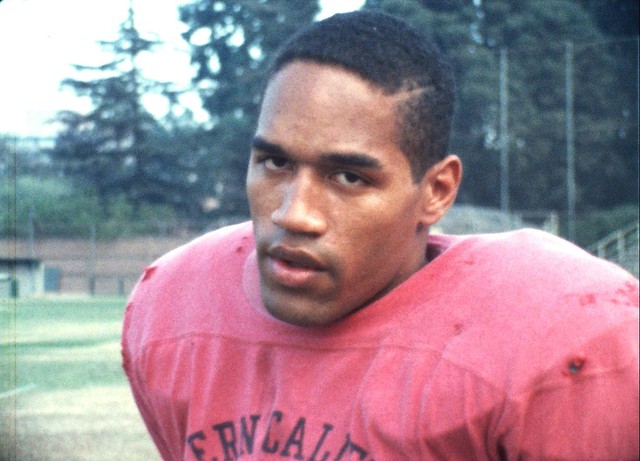
O.J.: Made In America (2016)


Back in 2000 there was a TV movie about the OJ case titled American Tragedy. I remember at the time thinking that the title was quite an overstatement for a film about an ex-athlete's murder trial. It's not like Simpson was a politician or something. Someday I'll check that movie out, but having now consumed over seven hours of expertly crafted documentary filmmaking on the subject, I completely agree with that title.

It's twenty years later and all of the issues at play during the first trial are still problems today. Rather than showing us how far we have come in two decades, this film makes us acutely aware that nothing has changed. In fact, things have gotten worse. This is not a nostalgia piece. This film is relevant to the here and now. Orenthal James Simpson might have fallen from a great height, but it's nothing compared to how far American Culture has fallen. If Spike Lee had made this film, it would have ended or began with someone yelling, "WAKE UP!"

Monday, June 20, 2016

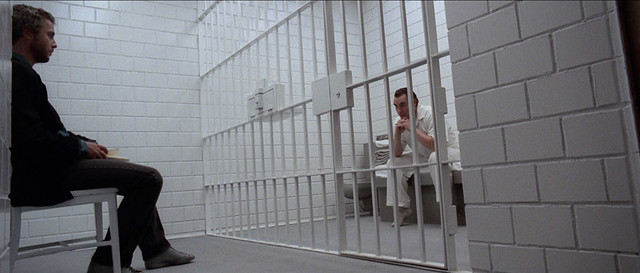
Manhunter (1986)


Back in the early 30's, Universal was riding high on the backs of horror films like Dracula, Frankenstein and The Mummy. While none of these films were set in a specific time period, it clearly wasn't the 1930's. These were stories set in exotic locales or in "the old world" where the same creepy castle set could be used over and over again. And then Edgar G. Ulmer adapted Edgar Alan Poe's The Black Cat and decided to transport it to an extremely modern, art deco mansion. By setting a story of Satanic mutilation in such an orderly and sterile setting, the horror was amplified rather than diminished. This is exactly what Michael Mann does with Manhunter. Say what you will about the awful, faux-deco that was so popular in the 1980's, but the red of human blood really stands out on all those white walls and duvets.

Monday, May 30, 2016

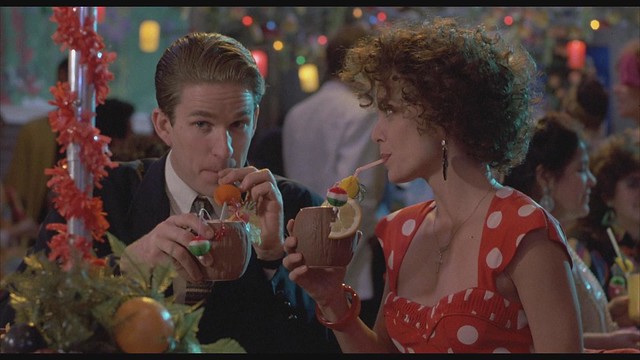
Married to the Mob (1988)


The instant we meet Angela de Marco we know that she doesn't fit in this world. She looks the part of a mob wife with her big hair and hoop earrings, but there is a look in her eyes that tells us she wants more. She is distracted. She is somewhere else. She isn't like all the other catty broads in this beauty salon.

There were a lot of movies like this in the 80's, about trying to break out of the conformity. Usually it's a story about leaving behind square, yuppie suburbia for something more exciting. Jonathan Demme even made one of these films two years prior with the masterful Something Wild. But what makes this film stand out from the pack is the decision to substitute Reagan's America with the world of organized crime. It makes Angela's urge to flee a bit more understandable to the average viewer. It also makes a nice parallel between the Reagan Administration and gangsters. Bonus points for having a female protagonist. It's sort of odd that this is the film that preceded The Silence of the Lambs, but it also makes sense.

Thursday, February 18, 2016

The Bling Ring (2013)


When Sidney Lumet made Network, he and cinematographer Owen Roizman used lighting to enhance their story. Since the film was about corruption, they decided to have the camera become corrupt as well. In the early scenes they used very little light and a hand-held, documentary approach. By the end, everything is lit "like a commercial". That's the lighting that The Bling Ring begins with. The world of slick commercialism is this film's baseline. It's not a film about "good" kids getting seduced by fame. These kids were born into that world and know no other. Aesthetically, this is the cinematic equivalent of a selfie. Does this film glamorize its subjects? It sure as hell does. But no more than the reality television they were raised on. Just try to not be chilled by Emma Watson's interview at the end. The only place to go from here is the absolute anarchy of Spring Breakers.

Thursday, December 3, 2015

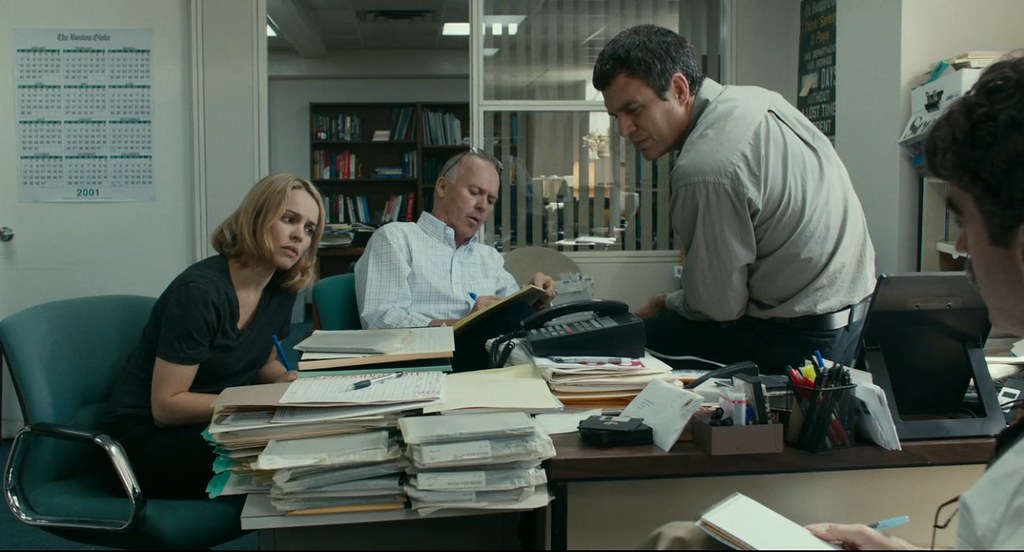
Spotlight (2015)

Like a great piece of journalism, this film does not bury the lead. The opening lays it all out: the abuse and the cover-up. The story is out there and it's up to the Spotlight team to follow the clues and uncover the truth. Even the opening shot is a statement of intent. Throughout the film, director Tom McCarthy is placing his camera behind the actors as they doggedly pursue this story. As these intrepid reporters following their various leads, we are in turn following them. And it's all there from the very beginning. The fact that the film opens with one of these follow-shots is not a coincidence. In spite of all the praise this film has been getting, many have found it necessary to point out a perceived lack of style. I just think they aren't looking close enough. It's subtle, but it's there, right in plain sight.