Showing posts with label melodrama. Show all posts

Thursday, February 8, 2018

Columbus (2017)


Can filmmaking be taught/learned? Being able to notice and appreciate the inspired techniques and motifs of a great filmmaker doesn’t mean that you will be able to execute them yourself.

These were my thoughts going into the debut feature of visual essayist kogonada. And while he certainly didn’t produce a masterpiece like Tokyo Story on his first at-bat, he did succeed at internalizing the techniques of Ozu et al and personalizing them. That Columbus doesn’t feel like a Tarantino-esque stream of citations is a small miracle. He makes the experience seamless. You are not distracted by the style. He is not teaching. He is being.

Perhaps the next one will be Tokyo Story.

Thursday, February 1, 2018

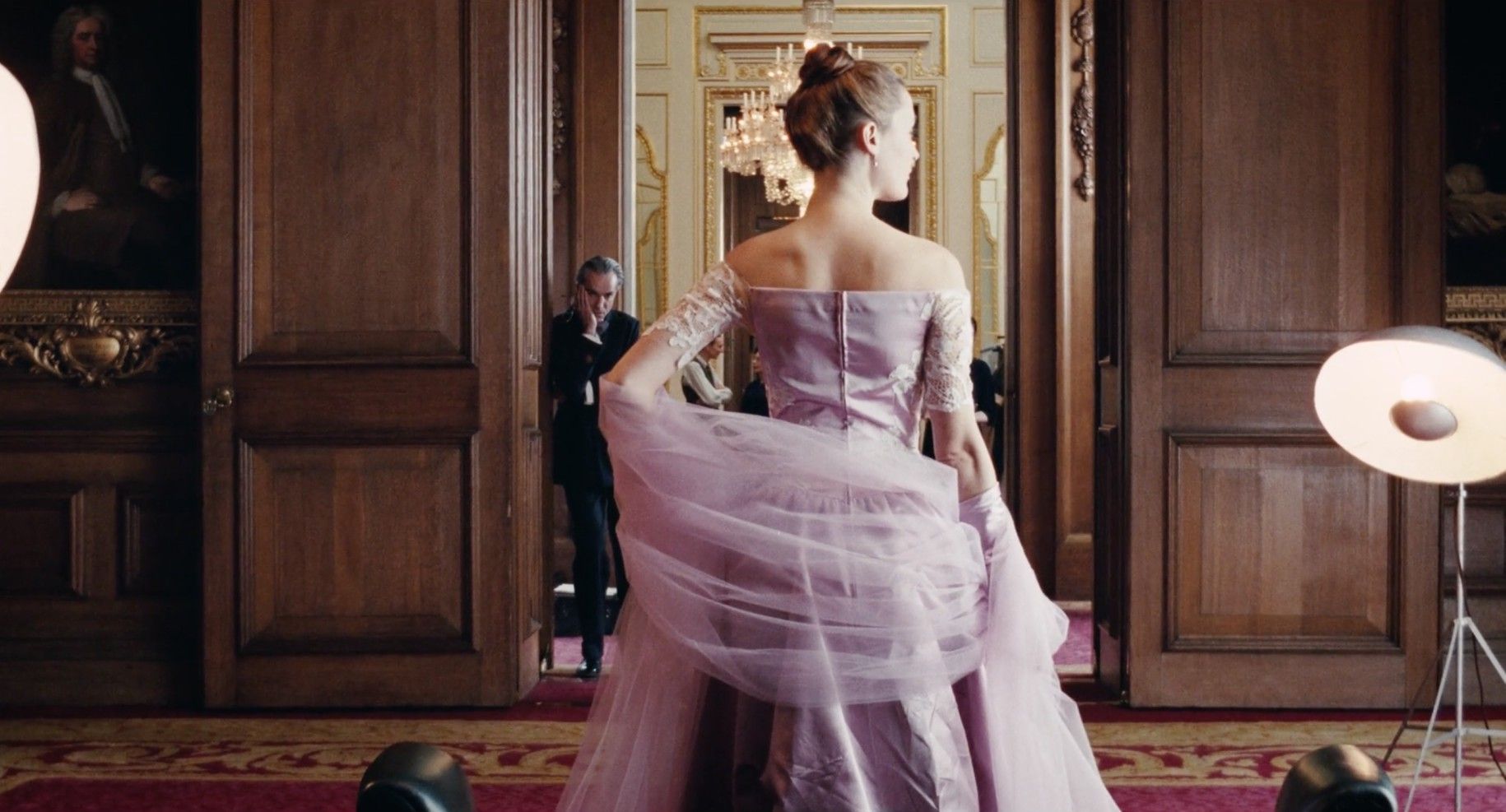
Phantom Thread (2017)


Though it was the Scorsese-like, visual gymnastics of Boogie Nights and Magnolia that caught the eye of the Film School Kids, we must remember that the principle influence on Paul Thomas Anderson’s debut film Sydney (aka Hard Eight) was Melvin and Howard. Instead of opening with a whole lot of whiz-bang, both films begin with protracted conversations between two characters. At his core, this is who Paul Thomas Anderson is as a filmmaker.

Of course he played around with all the fancy toys on his next couple of films (who wouldn’t?), but as early as Punch-Drunk Love you can sense a filmmaker casting aside all of the bravura in favor of a simpler, more character based cinema.

For all its fire and fury, There Will Be Blood is the story of three people in the desert. The Master is a love story between Freddie and Lancaster. Even with all the Pynchonian intrigue, Inherent Vice is really just the story of Doc, Bigfoot and Shasta Fey. Phantom Thread is Anderson’s minimalism taken to its logical end-point.

It’s not shot on antique, large-format cameras and most of it takes place in small rooms. It’s not about Capitalism or Religion or any other “important” issue. The only maximalist element in the whole thing is Johnny Greenwood’s wonderful score.

It’s taken him many years and films to get to this point, but Anderson has successfully pruned away that which is not essential, held on to a few handy tricks, and returned to where he started. But this is no ending. This is a new beginning. And I cannot wait to see what comes next.

Monday, December 11, 2017

Marjorie Prime (2017)


So apparently this was a play before it was a film. I wonder if it had music when it was performed? I feel like the music is such a part of the whole and really made the movie for me. While it deals with big issues like technology and memory in a thoughtful manner, Marjorie Prime is very much a melodrama - in the Victorian sense. Mica Levi’s beautiful score (and the few source songs) inform, overwhelm, envelope, and enhance the images. It feels almost like a silent film where a modern score was placed overtop. The music expresses that which is being withheld. It speaks for those who choose not to, and gives emotion to what we are told is just a series of 1's and 0's. Days later I’m still thinking about it all. Can’t wait to revisit and dig deeper.

Monday, May 22, 2017

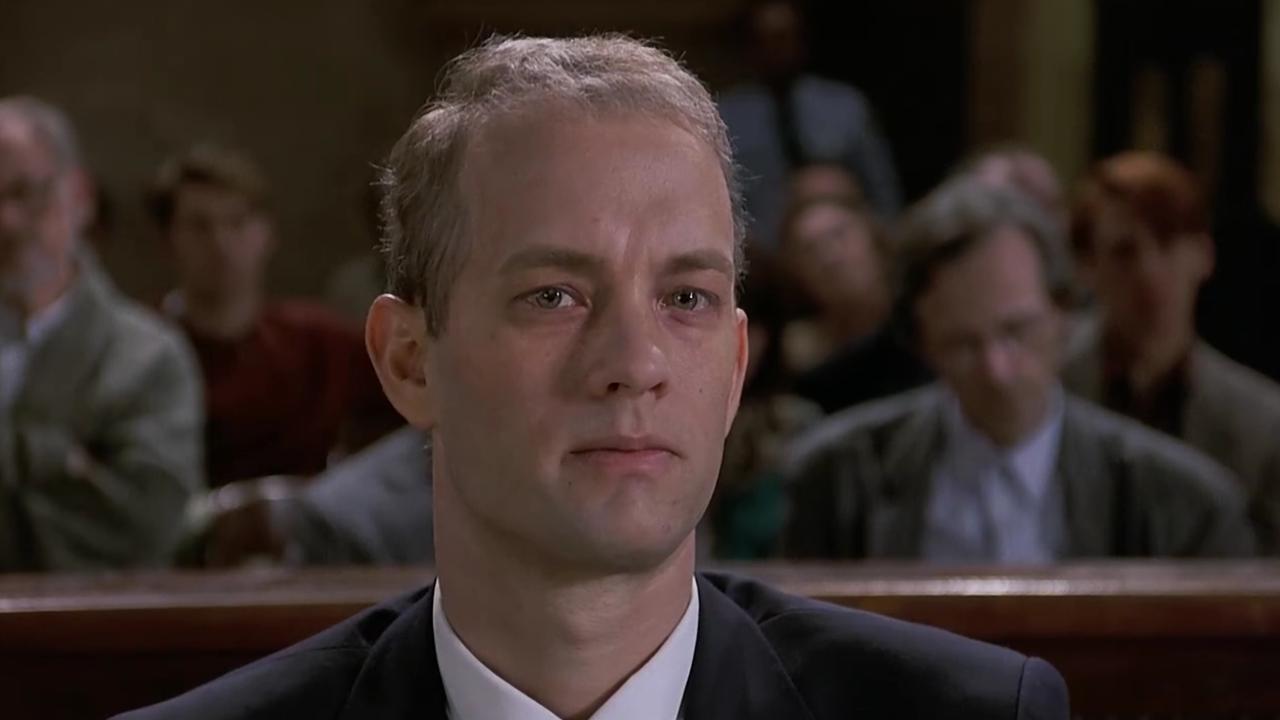
Philadelphia (1993)


I wish I had seen this film when it first came out. As the son of a huge Bruce Springsteen fan I was certainly aware of it, but I didn't actually seek out and watch it until five or so years ago. And while both viewings moved me greatly, I also felt like I was watching AIDS, homophobia and bigotry 101. I was watching this film in an After Ellen world where HIV/AIDS is still incurable, but it is also no longer a death sentence. It's amazing how fast the world can change.

It's also amazing that it took thirteen years for Hollywood to address this plague. I get that the GOP was ignoring it because they were fine with it killing off gay men and IV drug users, but homosexuals have formed the bedrock of the entertainment industry since forever. Why did it take active protesting of the Oscars and of hit films like Silence of the Lambs and Basic Instinct to get the Coastal Elites on board?

Philadelphia remains an important film worth watching for its strong performances and Demme's compassionate direction, but more so than anything it is a reminder of how slow to action even the most progressive people can be when there isn't someone actively pushing them to do right. If you want to get something done, you can't be silent.

Thursday, May 18, 2017

Twin Peaks (1990)


When people talk about Twin Peaks they tend to talk about giants and little men who talk backwards. They talk about the Black Lodge and Owl Cave. And while all of those elements are very much part of Twin Peaks, they are not part of the pilot. Things don't start getting dreamy until episode three. But that doesn't make the first episodes any less Lynch.

What struck me on this rewatch was how reliant this pilot was on mood and inference. Right from that first close-up of the Palmer's ceiling fan. You can imagine executives imploring David Lynch to cut it out and keep things moving, but thank God he didn't. Things like that fan and the swaying traffic light are laying the groundwork for where things are going. They are the "acceptable strangeness" that prepares us for the truly dark places we are going to eventually find ourselves in. Just as Sarah Palmer and Donna Hayward are able to infer Laura's death before they are explicitly told, we too are able to read the signs and glean the greater significance of what is afoot under the small town surface.

In this pilot, David Lynch is giving us the keys to unlocking his and Mark Frost's weird little world. I can't wait to open that door again.

Thursday, May 4, 2017

Rachel Getting Married (2008)


I'd been meaning to revisit this one for months. It's unfortunate that it took Jonathan Demme's death to get me to finally put the disc in the player.

Man he had a such a big heart. You can feel it in every frame of his work. He loved people and he loved life. You can tell that he drank in every moment spent with another human and appreciated all the things that made them unique. And his concept of love was not a naive one either. He knew that life and love are complex and that things can get really dark at times. His light moments are all the lighter because darkness is still very visible in the rear-view and around the periphery. The cinema of Jonathan Demme is the cinema of forgiveness.

We have lost a great artist and (by all accounts) a great human. Rest In Peace Mr. Demme. Thank you so much for all the beautiful and loving films.

Monday, March 20, 2017

Girlfriends (1978)


So crazy seeing a Warner Brothers logo at the head of a film this structurally daring and visually murky. Looking into the fairly limited amount of trivia about this wonderful movie, I discovered that Stanley Kubrick was quite the fan, and it makes perfect sense. Though it has little in common with the aesthetics and themes Stanley trafficked in, Vicki Polon's structure is very Kubrick.

Rather than telling a conventional story, Girlfriends is a collection of moments that build upon one another. Long spans of time elapse between scenes and the audience is trusted to figure out where we are. Each scene builds upon the last while also being its own contained moment. The ending is cumulative and satisfying without that contrived/inevitable feeling that accompanies most traditionally structured screenplays. While there certainly isn't a straight line between 2001 and Girlfriends, you can see a circuitous kinship.

Thursday, March 9, 2017

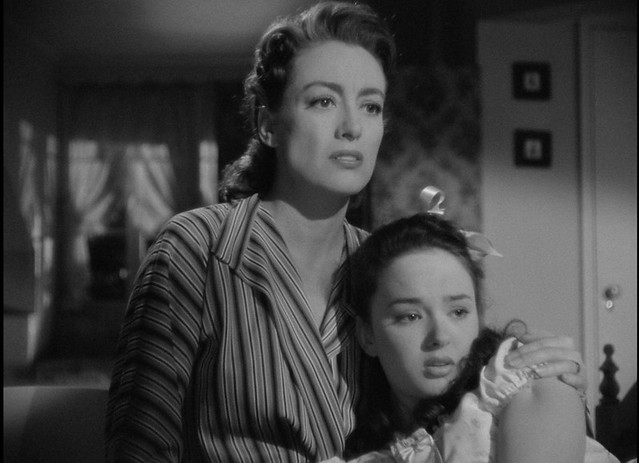
Mildred Pierce (1945)

Veda is the perfect scapegoat. Remove her from this film and you have the story of a woman who is destroyed by her ambitious quest for the American Dream that we are all told to want. With her, you have the story of this poor woman whose only sin was that she cares too much. Did James M. Cain intend for her to be a cipher? She's this perfect void that will never be filled no matter how much love or money you throw at it. She's both voracious and insatiable. Just when you think you've got it all with your chain of restaurants and nice house, along comes Veda to throw a new wrench into the perfectly running machinery. It's a series of false peaks that leads only to destruction. But I didn't do it for me. I did it for her! There is no happy end. When you fall down a bottomless pit, you die of starvation.

Thursday, March 2, 2017

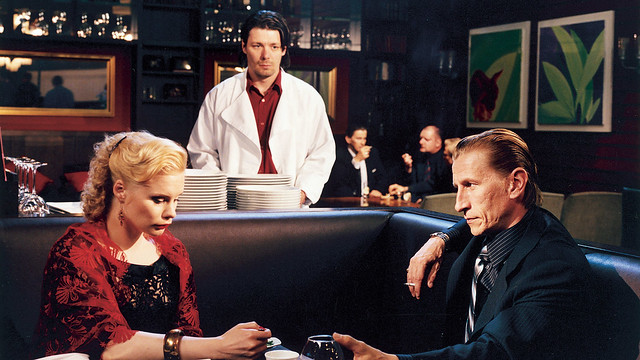
Lights in the Dusk (2006)


This film feels like it was made on a dare. It feels like the type of challenge Lars Von Trier would lay down in The Five Obstructions: make a Film Noir - without guilt.

Unlike a traditional Film Noir, where the world is working against the protagonist as some sort of self-fulfilling, guilt manifestation, the hero of this film is guilty of nothing. He doesn't even have an opportunity to become guilty. People are hating him from the very start and for no stated reason. And it's not even some Kafka-esque exercise in paranoia because our hero is oblivious to all the ways in which people are conspiring against him. He's also equally oblivious to the few people out there who give a damn about him.

So is this Film Noir? No. But it is an Aki Kaurismäki film. And that's certainly something to savor.

Thursday, February 9, 2017

Edge of Seventeen (2016)


Before this movie even started I was already baffled by the sheer number of company logos at the start. Had the trailers been hiding something from me? Was there going to be some effects-filled, third act twist that would justify so many funding sources for a film about a teenage girl trying to figure her life out? Not to spoil anything but, giant robots and dinosaurs do not show up at any point in this movie. So why did a hilarious and heartfelt film, produced by a Hollywood legend, starring an Oscar nominee who also appears in a popular franchise, need to go to so many different sources for such a modest $9mil budget? I'd venture it has something to do with the fact that the director was a first timer...and female. Please pay to see this film and show all those financiers that their money was well spent!

Thursday, January 12, 2017

La La Land (2016)


I was sort of dreading this film. While I admire the craft of Whiplash, I found the overall message to be rather abhorrent. It was a self-justifying ode to being a dick. Knowing in advance that one of this film's main characters was a militant jazz evangelist, I was prepared for more of the same "ends justify the means" BS that college boys take way too to heart. Thankfully, this film allows its central dick to suffer (not a whole lot of suffering though, because in the end this is just light entertainment) but at least a little suffering. Rather than ending on the triumph of Whiplash, La La Land hangs around to see what comes after the success and does not shy away from the regret that follows. Was it really all worth it? Hopefully that's enough to prevent an army of militant jazz evangelists from springing up in this film's wake. It really is Emma Stone's movie anyway.

Thursday, December 29, 2016

Moonlight (2016)


On his audio commentary track for The Graduate, Mike Nichols seems rather proud of the fact that he was able to open the film by stating his theme outright. His pride is justified. It's tough to do. Usually the line where a theme is stated will stick out like a sore thumb and turn many people off. Oh, that's what they want me to think?! Only truly skilled directors like Nichols are able to pull it off. And the newest filmmaker to join that club is Barry Jenkins.

Not only is Jenkins able to get away with stating his theme outright, he's able to do it while also mentioning the film's title at the same time. That's just asking for trouble! But it works. When Juan tells Little about the Cuban woman who told him that, "In moonlight, black boys look blue" you don't exactly know what to take from that. Sure there's the double-meaning of blue as a color and blue as an emotion, but is that really all there is to this film? Is it just about sadness?

For me, the most important aspect of this film is light. This film is filled with different types of light. There is natural light, there is artificial light, there is direct light, there is diffused light, there's warm light, cool light and even highly stylized, colored light. And because this film is nuanced, everyone gets to be seen in a variety of those lights because no person is any one specific thing. In one light they are loving, in another they are hateful. The light can change from scene to scene or angle to angle depending on the emotion of the scene. Sometimes the light can even change within a shot. 

So yes, black boys do look blue in the Moonlight. But that's just one type of light.

Monday, December 12, 2016

Little Women (1994)


Adapting classic literature can be challenging. In addition to the normal problems that come with adapting a novel, there is the added complication of the fact that lots of early novels were pretty weirdly structured. Though the "hero's journey" is as old as time, I'm pretty sure Louisa May Alcott was not consulting Aristotle's Poetics as she was crafting her touching tale of the March Family. From the limited research I've done, the novel we think of as Little Women is actually the fusion of two shorter works. In spite of all of this, the adaptation that director Gillian Armstrong, writer Robin Swicord and editor Nicholas Beauman were able to put together is pretty great. They were able to successfully include numerous, smaller, side stories from the book(s) without losing the overall thrust of Jo's journey of actualization. It is somehow simultaneously loose and tight. Few films are able to hit that sweet spot so squarely. It should be studied in schools.

Thursday, November 17, 2016

Possessed (1947)


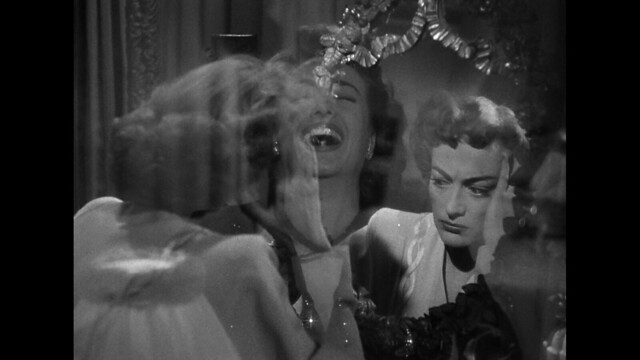
In film school we learned a lot about the "classical Hollywood style". The central tenet of this "style" was to create a seamless experience where the audience is continuously enveloped in the story, and great pains are taken to preserve that illusion. Edits and camera movements are placed very strategically so that you do not notice them. While I'm pretty sure it was unintentional, throughout this film I was repeatedly made aware that I was watching a deliberate construct.

Right near the opening you have Joan Crawford walking down real Los Angeles streets, then you cut to her walking up to and into a restaurant that is very obviously a set. And then there are camera moves like the POV shot of Joan being wheeled into the hospital. Nothing seamless about a shot like that. Even the ways in which Crawford is lit to maximize her Joan-ness is a bit distracting.

When you later find out that her character is sometimes unable to distinguish reality from fantasy, I started to wonder if the clashing of styles was deliberate. Was director Curtis Bernhardt subtly preparing us for later reveals and shocks? Was he making a comment on the inherent falseness of the cinema? Judging by his filmography, I'm thinking not. But I love when a work of art allows my mind to roam to such places. That's what makes movies great. You can have your own little theories about them, like how The Shining was Kubrick's way of telling us the truth about the Moon Landing...

Thursday, September 8, 2016

Ratcatcher (1999)


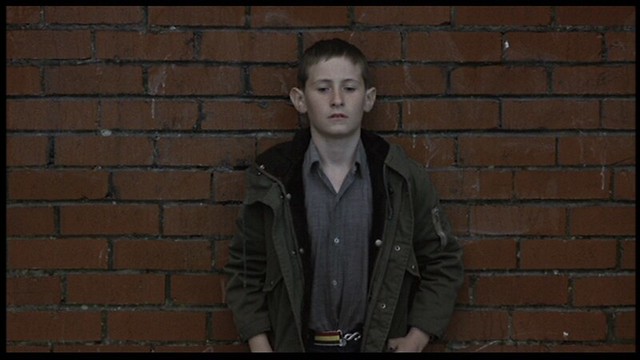
Since I recently became a father, I've been thinking a lot about motivation. I find myself staring at my daughter as she plays with her toys and I wonder how she decides what to do with which toys? What synapses are firing when she decides to smash two hunks of plastic together? What makes her suddenly decide to lick one item rather than another? Those same thoughts came to me as I was re-watching Ratcatcher.

At first I chocked it up to the fact that I am not Scottish and therefore am missing a lot of cultural nuance. But then there would be moments where Lynn Ramsay's camera is clearly suggesting that these characters don't know why they are doing things either. Why lie about not seeing someone's glasses when they are clearly right there? Why get on a bus when you have no idea where you are headed? Is all the trash around them affecting them like in an Antonioni film? So many questions and I love pondering every one of them. Such a beautiful film.

Monday, August 22, 2016

The Wanderers (1979)


Seeing as The Right Stuff and the 1978 incarnation of Invasion of the Bodysnatchers are two films that I hold in extremely high regard, it's a wonder that I waited so long to see the film that Philip Kaufman made in-between those two. But it's also a kind of hard film to track down, so sue me! Anyway, though it comes nowhere close to the perfection of its predecessor and descendant, it's quite a good little picture. You can see elements of Bodysnatchers in a particular chase scene and the plotless focus on charismatic lunkheads clearly presages the Gemini astronauts of The Right Stuff. Sure things peter out a little after the second act climax, but it wins you back pretty easily. All in all it's a fun movie with a few actual thoughts on its mind and it deserves a wider audience. Perhaps the $49.99 price for the DVD on Amazon is holding people back? You can get the disc from Netflix. But like The Wanderers themselves, DVD's are a remnant of a bygone era that just doesn't know that it's time has passed.

Thursday, June 16, 2016

The Marriage of Maria Braun (1979)


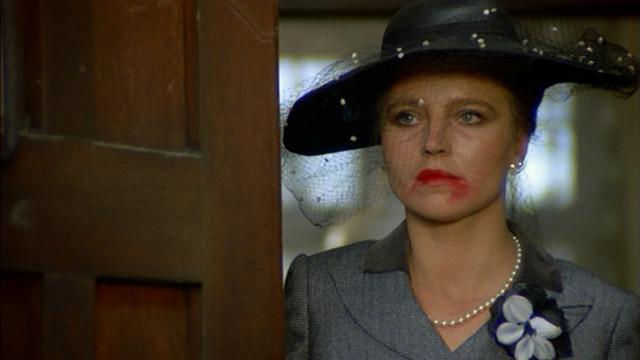
For better or worse, when you make a period piece you are judging the past. Often the judgement is positive. Weren't things so much better back in the day? This rose colored perspective almost always ignores the various horrors that were going on during the time period in question. As a German man born almost immediately after the end of World War II, Rainer Werner Fassbinder has nothing good to say about the past. Using Maria Braun as a stand-in for the entire country, Fassbinder paints a very bleak portrait of post-war Germany. Not only is Maria an opportunist who will do anything to move forward financially, she also continues to carry a torch for her missing/imprisoned Nazi husband. An entire Nation doesn't just suddenly change their prejudices or impulses overnight and the "progress" of today is often built on a rotten foundation. We are forever wedded to the past. Fassbinder never wants us to forget that.

Thursday, June 9, 2016

Meadowland (2015)

Generally, beauty and quality are considered to be mutually exclusive. If someone or something is beautiful, they/it must not be significant. A beautiful actress simply cannot be anything but a pretty face to sell tickets, and cinematographers who turn to directing can only make gorgeous films that lack thematic depth. Right? Meadowland roundly refutes both of those assertions. Cinematographer Reed Morano's feature debut consistently puts emotion before aesthetics and the whole thing is anchored by an uncompromisingly honest performance from the amazing Olivia Wilde. The beauty is just icing on the cake.

Thursday, March 10, 2016

Dogtooth (2009)


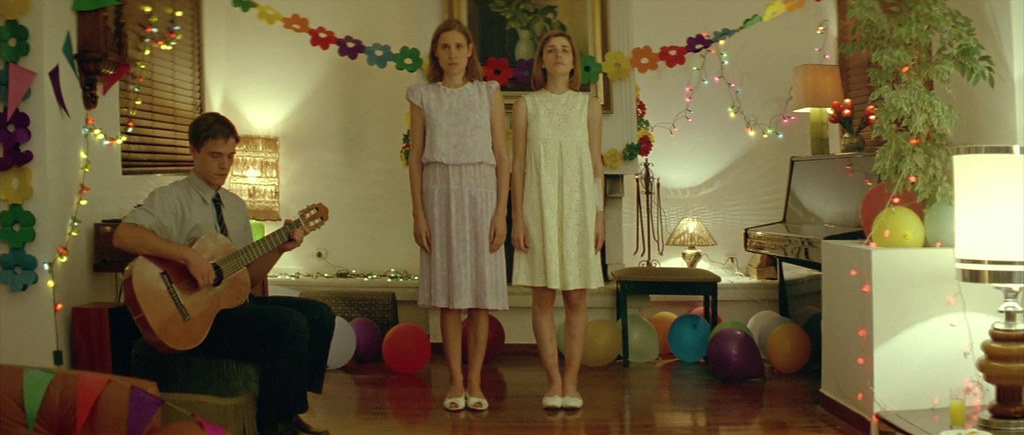
Beneath the political, sexual and familial layers at play in Dogtooth, this film is first and foremost about control and how hard it is to maintain. Logically, the film is told in a very controlled manner. The camera very seldom moves and the entire production was shot with a single lens which gives a subconscious feeling of uniformity. Yet, in spite of that rigid visual structure, the viewer is given a lot of freedom with regards to various aspects of the narrative and are thus allowed to find their own interpretation of them. When you are shown only very specific moments from very specific angles, it is on you to come up with what happens outside the frame and in-between the scenes. Like Christina, we are that little bit of chaos that is being thrown into the mix. Merely by watching this family, we are throwing them into absolute chaos with our judgements and observations. They were all so much happier before we came along and ruined everything.

Thursday, January 7, 2016

Showgirls (1995)


Outsiders often have a unique perspective on things. They notice stuff that others might miss. This applies to filmmakers too. They can see our faults and shine a light on them. Or in some cases, cast an artful shadow on them. It is no coincidence that of the major tributaries to the river we know as "film noir" is the cinematic output of foreign filmmakers like Billy Wilder, Fritz Lang and Roman Polanski. They were able to see the sickness that America was either oblivious to or actively ignoring. While I'll agree that Robocop is clearly the greatest American satire of Paul Verhoeven's career, Showgirls is a pretty great one too. When he directed Robocop, he was still brand new to this country and made a film that was most heavily influenced by the America he had experienced through media while growing up in the Netherlands. Showgirls is a film that comes from having actually lived and worked in America for the better part of a decade. This decadently ugly depiction of a violent and treacherous world where  there are no good guys came as the result of careful study. Of course it bombed. You can hold a mirror up to society, but you can't make them look.