Showing posts with label spain. Show all posts

Thursday, March 20, 2014

Talk To Her (2002)


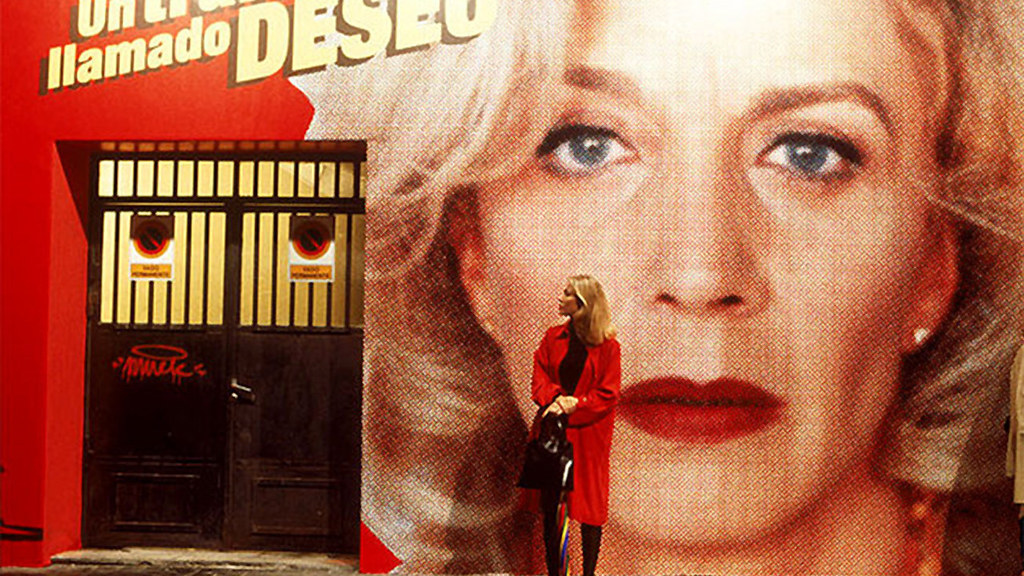
The second and greatest film in what I like to refer to as Pedro's "Trans-Gender Trilogy". With All About My Mother you begin with an incapacitated/dead male and continue with a story that is almost exclusively female. For Talk To Her, this is reversed and it is the females who are incapacitated for a male story. Finally, in Bad Education you are dealing exclusively with male characters. If you want to make it a quadrilogy you can always throw in The Skin I Live In as well.

So why is this the best film of the series? Well to begin with it's a beautiful and touching exploration of loneliness and grief. Then there's the fact that Pedro is able to make you feel sympathy for a character who has done a despicable thing. Let's also not forget the ingenious implementation of that silent film sequence. Oh and the music! And the acting! And the colors! The Academy choosing to honor this film with Best Original Screenplay almost makes up for Chicago winning best picture - almost. Oh and I didn't even mention the dance sequences! So much beauty in this film, even midst the darkness.

Tuesday, March 4, 2014

Women on the Verge of a Nervous Breakdown (1988)


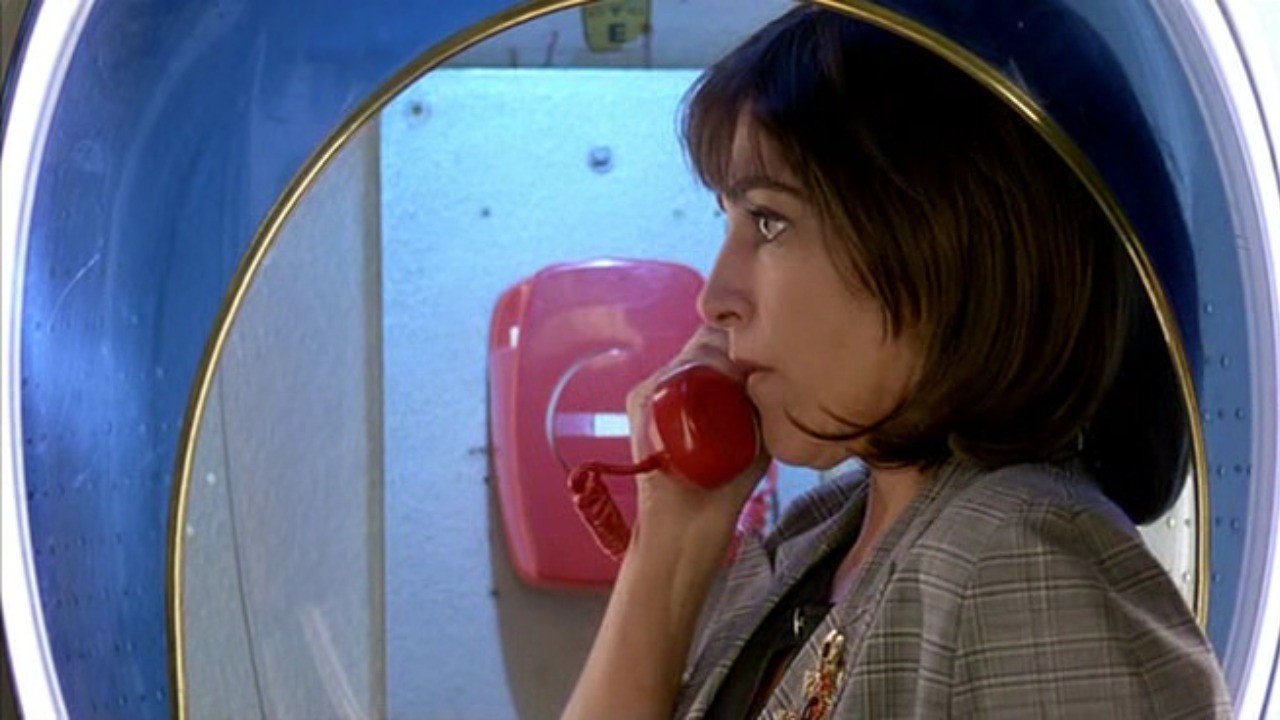
Don’t ever let someone give you grief for watching trashy films and television. There is no such thing as a guilty pleasure. If something gives you pleasure, then there is something worthwhile in it. And in the right hands anything can become high art - just look at the career of Quentin Tarantino! What is Django Unchained if not a Spaghetti Western transposed the American South during slavery? Simply sprinkle in some high-brow film references and suddenly exploitive “trash” becomes “art” worthy of Oscars! The same could be said of Pedro Almodóvar’s career.

At their heart, all of his films are essentially telenovelas. Take Women on the Verge of a Nervous Breakdown for an example. All the ingredients of a soap are there: melodrama, infidelity, an estranged son, a lunatic mother, etc. The only thing that really distinguishes this film from something you’d come across in the middle of the night on cable, is that it is filtered through the stylistic sensibilities and obsessions of Almodóvar. His colors and camera movements alone make it into something more. Admittedly, there’s nothing overly profound going on below the surface in this particular film, but you can also clearly tell that he is well on his way towards the equally soapy masterpieces that are All About My Mother and Talk To Her. Like Jean-Luc Godard said: It's not where you take things from - it's where you take them to.

Monday, July 29, 2013

The Devil's Backbone (2001)


Near the end of the Spanish Civil War, a young boy (Fernando Tielve) is sent to stay in an orphanage in the middle of nowhere, where some rather spooky goings on are going on.

*      *      *

The first class I ever took in film school was titled: Intro to Visual Storytelling. Each week we would be given different vague prompts of increasing difficulty. The one rule that applied to all of these films was that we were not allowed to use any dialogue. We had to rely entirely on camera placement, camera movement, close-ups, cut-aways and reaction shots to tell our stories. We couldn't explain things away with clunky dialogue. Think this sounds easy? Trust me, it's not. This is why I love Guillermo del Toro. With him the visuals are never an afterthought. Sometimes they even predate the story. Thanks to his meticulous attention to color and design, you can watch a film like The Devil's Backbone with the sound off and follow the story completely. More so than Spanish or English, its clear that del Toro's primary language is that of cinema.

Why is Guillermo del Toro an important filmmaker?
Because in an industry content with See Spot Run, he insists on treating every film as though it were War and Peace.

Monday, April 1, 2013

All About My Mother (1999)

After her son is killed in a car accident, Manuela (Ceclia Roth) travels to Barcelona in order to inform the boy's estranged father. I'll just leave it at that...

*      *      *

This was my first Almodóvar film. I'd heard the name a few times, but my still-forming film brain hadn't really branched out into world cinema yet.  I went into this movie knowing absolutely nothing about Pedro's particular brand of cinema...which is why I brought my grandparents with me. They'd gone with me to see Life Is Beautiful the year prior and seeing as the film is in Spanish this seemed like a perfect fit for mis abuelos Mexicanos. Admittedly, things did get a little awkward during the first scene with Agrado (you couldn't help but notice my grandpa starting to squirm in his seat) yet surprisingly, we stayed through the entire film. Even more surprisingly, my grandparents really enjoyed it. This film is that good! The colors and the characters are so wonderful that audiences cannot help but get caught  up in their spell. I have not missed an Almodóvar film since. Though my grandparents did take a little bit of a "Pedro break" after this film, they did return to the fold for Volver.