Showing posts with label suspense. Show all posts

Monday, June 5, 2017

Inland Empire (2006)


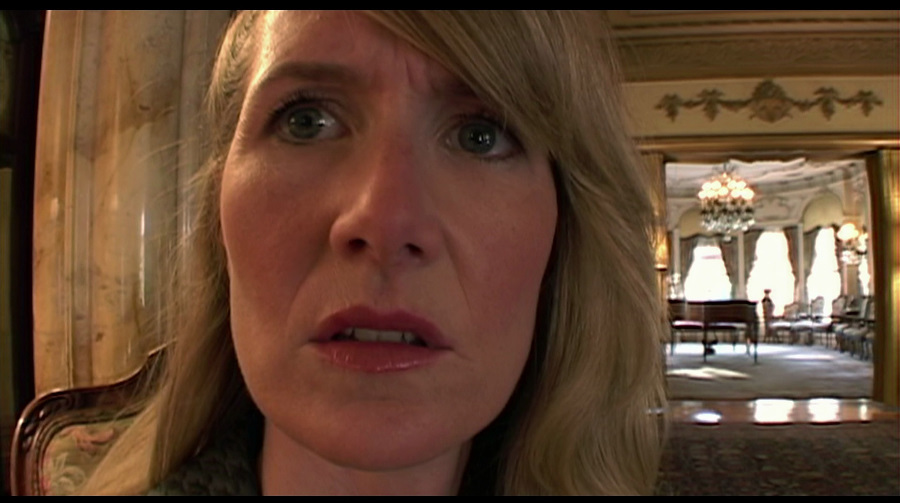
On a recent rewatch of Mulholland Drive, I was observing how many scene transitions were simply hard cuts. One minute we are with one set of characters and the next we are with a whole new group of characters. We have no clue if they are connected but we go along with it. In-between those two scenes is where the cinema of David Lynch resides. We are shown one image and then another and it is up to us to make or find the connections and divine meaning.

Having been filmed in pieces over years, Inland Empire stretches that premise nearly to the breaking point. Lynch himself didn't even know he was making a feature until well into production. He'd come up with an idea for a scene and film it, then a few days or weeks later he'd have a new idea and film that. There was no finished script, the actors had no context of what came before or after. There's even an additional  90 minutes of unused footage this is available as DVD bonus material.

Unlike Mulholland Drive and Lost Highway, I have yet to hear anyone give a coherent "reading" of this film and I don't think it's really even possible to give one. It's an immense collage of pain and sorrow (garmonbozia?) peppered with the occasional dance number. It's not a Disneyland ride with a narrative throughline. Inland Empire is one of those carnival spook-houses where shit just pops out at you. You don't wonder how The Creature from the Black Lagoon got to Transylvania, you just go along for the ride and have an experience.

Monday, March 6, 2017

Get Out (2017)


**DO NOT READ UNTIL AFTER YOU HAVE SEEN THIS FILM**

Jordan Peele's Get Out is really an embarrassment of riches. There is so much to talk about. Both the filmmaking itself and the social issues covered in this film are equally fertile grounds for discussion and dissection. Though there are many intensely specific conversations one can have about this film, the one that grabbed me the most was the choice of victims.

The Armitage Family aren't just picking generic black people to foist themselves into, they are picking black people with potential. Though we don't know it at first, we later discover that the opening victim was a budding  jazz musician, Chris is clearly shown to be an up and coming photographer, and near the end we see Rose looking for promising student athletes. All I could think about was names like Trayvon Martin, Michael Brown and Tamir Rice: young men taken from this earth before they had a chance to make their mark.

And what are these white people doing with that potential? Are they taking the glory for themselves? Worse, they are squandering those gifts. A once promising jazz musician is reduced to being some white woman's meek, arm candy. A once promising athlete is reduced to splitting logs. And a promising photographer is about to become some old, art dealer's new eyes. All of that promise squandered by rich people who already had their bite at the apple and want more. And that is the real horror in this film.

Thursday, September 15, 2016

In the Cut (2003)

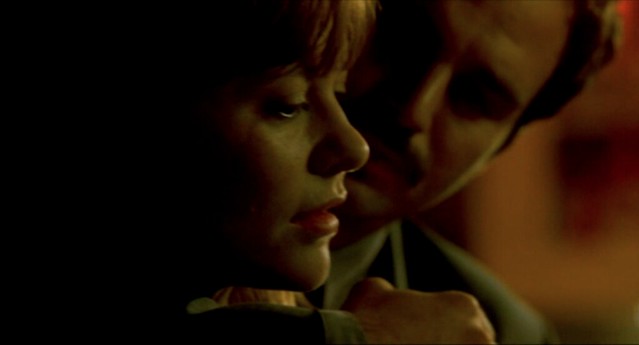
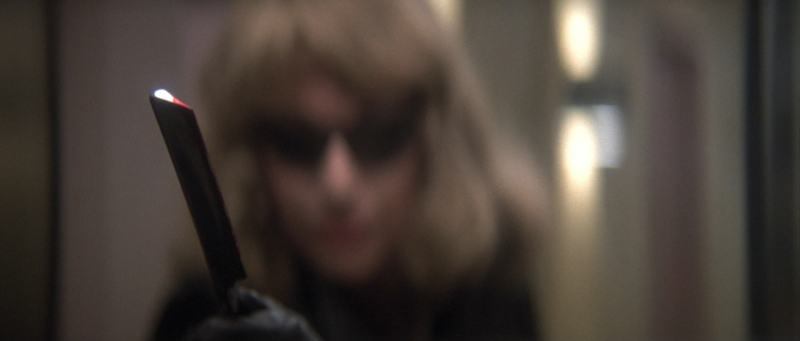
If I were a filmmaker, I would not want to get anywhere near this material. Due to my privilege as a straight, cis-gender male, I've never had to constantly fear for my safety the way a female, homosexual, or trans person does. I don't have to worry about roughly half of the world's population potentially wishing me harm. The threat of physical and sexual violence is completely alien to me. Yet, as an audience member I find this topic to be extremely compelling. Through Jane Campion and Meg Ryan I am able to glimpse that experience from the comfort and safety of my own sofa. Only a female, trans, or queer filmmaker could have told this story. Imagine some straight, male director talking about how the danger of everyday life can sometimes be a turn on. No way! What danger do they know? Although, a male person of color does know the unique terror of living in a world where black lives don't seem to matter. You know, the more I think about it, this story isn't very niche at all. The only group this is a foreign idea to is the tiny minority group of straight, white, cis-gender males. And that is the power of cinema.

Monday, August 15, 2016

Green Room (2016)


Now this is what I'm talking about! Unlike a lot of you, I did not care much for Jeremy Saulinier's last film, Blue Ruin. I didn't hate it, I just found it to be rather generic. Nothing really stuck with me after that initial viewing. I even find myself mixing it up in my brain with other films. Thanks to the specificity of the Punk v. Skinhead divide in this outing, there is no way that you could possibly mix this film up with any other. All the little nuances of those subcultures are handled just right. You get the significance of certain elements without having to have them turgidly explained to you and they add up to a more well-rounded experience overall. The more specific you get, the more universal you become. Also, who could possibly forget Anton Yelchin?

Monday, July 25, 2016

The Invitation (2016)

Is grief the cinematic inverse of disaster? Since 9/11 both of these themes have become fertile ground for cinema. On one end you have films like Man of Steel and Star Trek Into Darkness which traffic in the iconography of that fateful day without speaking much to the underlying causes and/or aftermath. On the other end you have films like this, The Babadook and Rabbit Hole which dwell in the unending pain and uncertainty which follows such a catastrophic loss. Neither type of film really supplies any answers. But at least the grief films feel more honest. Few of these films get more honest than the very final reveal of this film. It's pretty powerful stuff.

Monday, April 4, 2016

10 Cloverfield Lane (2016)


In an era full of bloated crap that doesn't know what it is about and is there primarily to set up sequels and spin-offs, it's refreshing to find a film that is so narratively clear. Even though this movie is somehow related to Cloverfield, that doesn't change the the fact that it is also an insanely well structured film. It plants ideas and plot points that pay off in rewarding/surprising ways and most importantly - it is actually about something! Thank God the direction and acting don't get in the way. In fact, both those aspects are insanely strong as well. This film was a wonderful treat that can be enjoyed beyond the mysteries and spoilers. If they're able to keep up the same quality and clarity, I would gladly see more films in this universe.

Monday, October 19, 2015

Crimson Peak (2015)


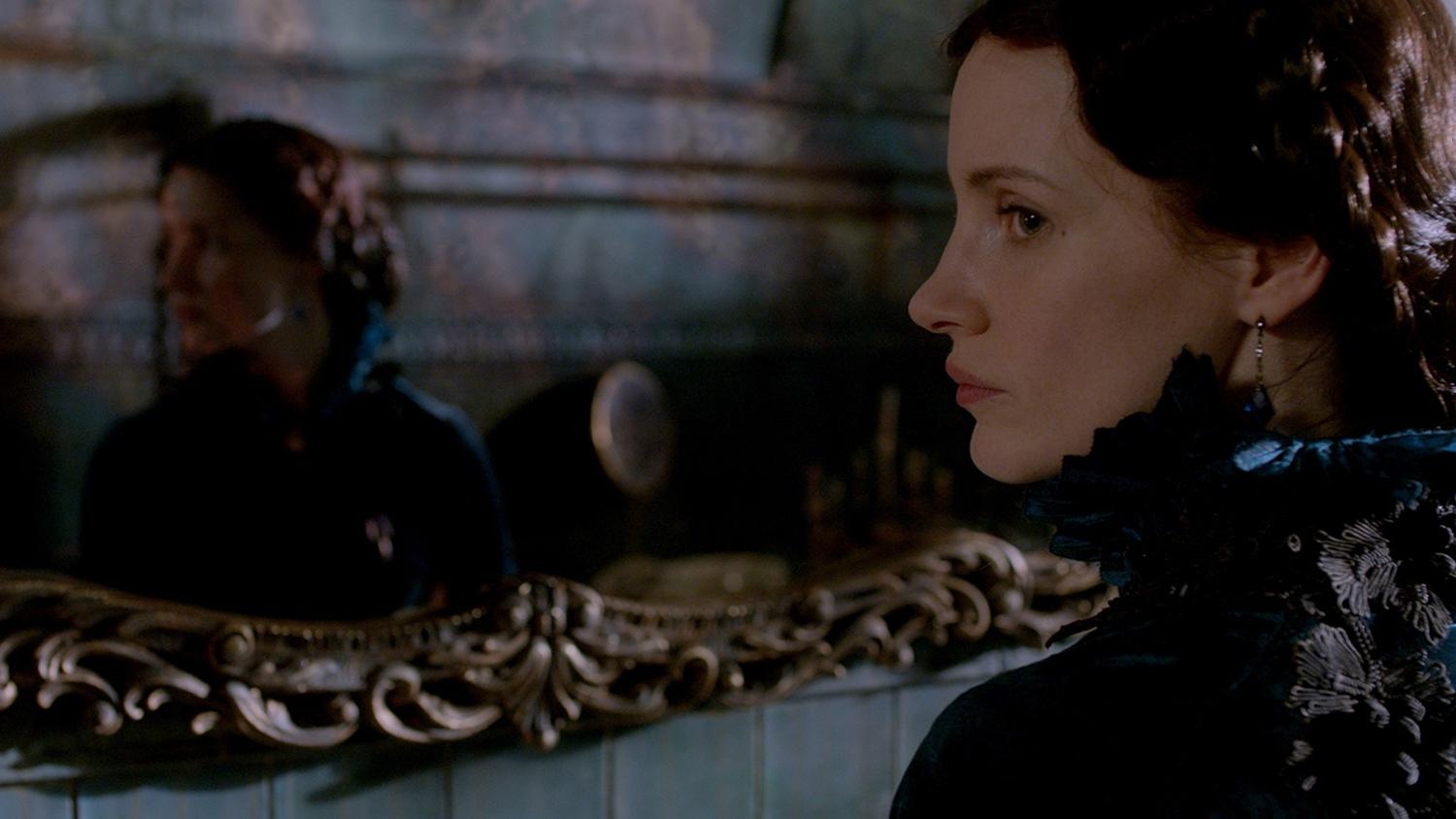
When Martin Scorsese decided to make The Age of Innocence, a lot of people were baffled that a filmmaker so synonymous with violence would be making a costume picture. What they realized upon seeing the final film was, that despite the gorgeous décor and costumes, the elite of 1870’s New York could be just as (if not more) vicious than the mafia. And that film didn’t even bother to try addressing the savagery of unbridled Capitalism which was just coming into full bloom thanks to the Industrial Revolution. Fortunately Guillermo Del Toro exists to address that oversight with the blood red, Gothic Romance of Crimson Peak.

Through lush imagery like moths stained with the soot of factories, and a house that has bled the land so dry that it in turn is bleeding as well, Del Toro is able to make clear what took Charlie Chaplin a whole overwrought monologue to drive home in Monsieur Verdoux. There are few filmmakers working today so in command of purely visual storytelling. Guillermo Del Toro and his collaborators were able to take the inherent violence of capitalism and externalize it in the most sensuous and grisly manner possible. It’s not a ghost story, it’s a story with ghosts in it.

Monday, August 17, 2015

Tinker Tailor Soldier Spy (2011)


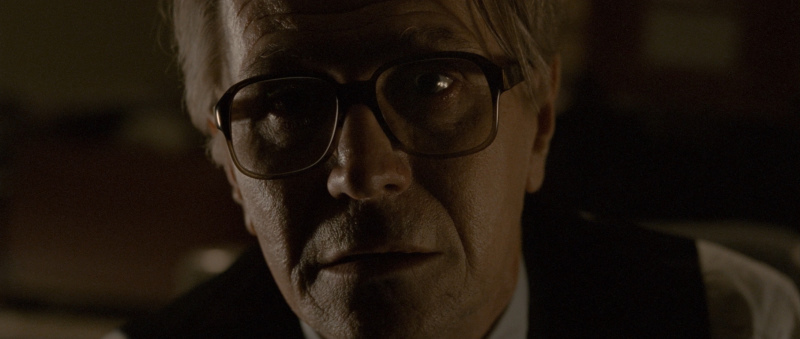
Of all the various sub-genres in cinema, the paranoid thriller is pretty close to the top of my list. Probably the only sub-genre that could rival it in my personal pantheon is film noir. While revisiting Tinker Tailor Soldier Spy I found myself musing on the similarities between the two genres. Most apparent is the fact that both rely heavily on ambiance. In both cases plot comes in as distant second to mood. I can be absolutely lost in terms of narrative (eg: The Big Sleep or Tinker) while still being absolutely enraptured by the overall tone of the piece.

It's particularly interesting that traditional noir died out in the late 50's and paranoid thrillers started to become a thing in the early 60's. Would it be too far of a reach to say that much like how birds evolved from dinosaurs, paranoid thrillers evolved from film noir? They do share a common skeleton on which everything else is built. At their hearts both genres share the basic human emotions of guilt and loneliness. It's no accident that when someone in Tinker gets shot in the cheek, the wound drips like a tear.

Monday, June 15, 2015

The Vanishing (1988)


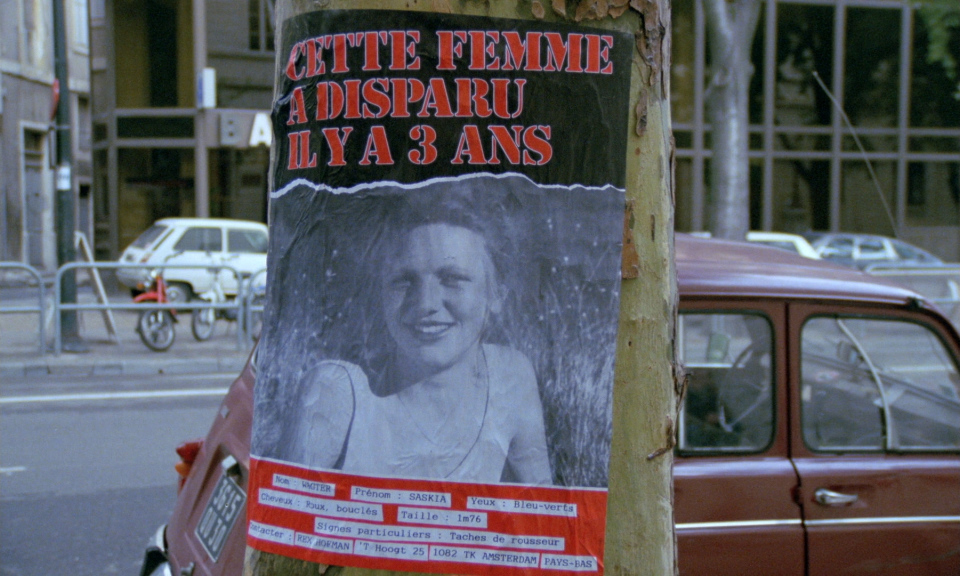
I’m pretty sure this is the most chilling film that I have ever seen. I’ve seen all sorts of screwed up movies about good and bad people doing awful things, but none of them have left me feeling as creeped out and helpless as this film. And while many chalk this up to the haunting end (which is apparently undone in the English language remake) I give all credit to a very deft and delicate implementation of score. Rather than sticking unrelentingly to dour, suspenseful and serious music throughout, director George Sluizer and composer Henny Vrienten brilliantly chose to underscore some scenes with music that is downright jaunty and silly. Not only does this create an interesting contrast that breaks up what might have been a one-note (pun intended) slog, but it also helps to enhance the banality of evil at play here. A sociopath does not view their actions as evil. What they are doing is merely the simplest and most direct way to get what they want. And so, the music which underscores the scenes of our villain in his home life, is the type of score you might expect from a pleasant film about a family man. And this is absolutely maddening.

Monday, May 25, 2015

Dressed To Kill (1980)


To most of his detractors, Brian De Palma is known as, “the guy who rips off Alfred Hitchcock”. The argument is valid but most people only deal with it on a surface level. The operatic camera moves and thriller plots really call attention to themselves. But the Hitchcock parallels don’t stop there. For De Palma it goes to a much deeper level. Beyond the visuals and choice of genre, what really unites these two auteurs is how they also seem to share a bizarre view of human sexuality that is somehow simultaneously both perverse and conservative. As kinky as things can get in films like Rope or Body Double, there’s still a strong undercurrent of heteronormativity and fear of that which diverges from, “normal”. It both repels and attracts them. While the horrendously dated views of transsexuality espoused in Dressed to Kill are certainly regrettable and reprehensible, I feel that on a deeper level they point towards an artist who is aware of himself and is trying to reconcile the two opposing sides of his personality. He had to be aware of the fact that he cast his then-wife as a hooker in multiple films right? I don’t think Hitchcock ever got THAT personal.

Thursday, April 16, 2015

Kumiko, The Treasure Hunter (2015)


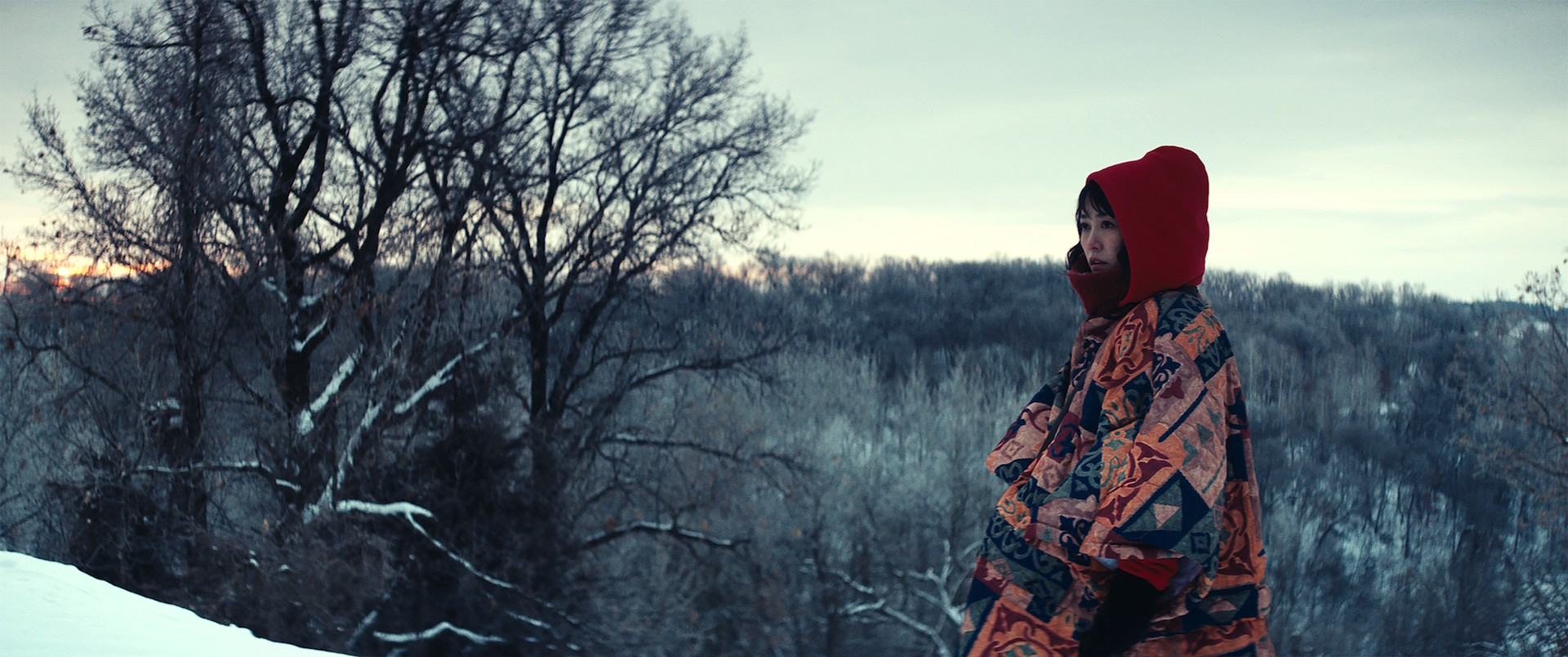
One of the greatest things about film is its ability to generate empathy. By watching a film we gain the ability to see the world from the perspective of another. Most often this occurs whilst watching foreign films. Suddenly you are able to see something of yourself in someone who lives a world away that you share little in common with. Cinema also allows us to empathize with the insane. The hack way to do this is by swinging the camera around, playing with film stocks and obvious music. The more subtle way to do this is simply by placing the camera somewhere unconventional. Move the camera a little to the right or to the left and what was once common and mundane can suddenly become something weird and alien. All of a sudden you can maybe understand how someone can watch a movie and believe that they can find the treasure that was buried on screen. It's kind of like how someone can watch a movie and suddenly decide that they have it in them to make one. We all have our own little delusions.

Monday, March 23, 2015

Shutter Island (2010)


Sometimes great filmmakers just want to play. Lots of reviews at the time pointed out that this film wasn't awards material, but they're missing the point. Like Cape Fear before it, this was a chance for Marty to get his genre on. This film isn't about gold statues, it's about making audiences jump and gasp. This film is about taking little strips of celluloid and assembling them in an order that illicits dread. Sure it is over-long and that stretch in the cave is a chore to get through once you know the "twist", but by and large this film is an extremely effective creep fest. And that ending is absolutely shattering. I still can't believe people turned out in such large numbers to watch something that bleak on its opening weekend. The car rides home must've been dead quiet.

Thursday, March 5, 2015

A Walk Among The Tombstones (2014)


Apparently this film was based on one in a series of detective novels by Lawrence Block. You know, those paperbacks you see everywhere with titles like Kiss The Girls or Gone Baby Gone or The Silence of the Lambs? It's fascinating how popular these novels are despite the super dark subject matter a their cores. The lurid descriptions of violent/sexual crime in these books is enough to put you off your lunch and ruin your day, yet people consume them by the fistful. It's no wonder the suburbs are full of gated communities.

I guess it's part of the same mentality that drives the popularity of the local evening news. What am I supposed to be afraid of this week? The thing that makes this film particularly interesting is its setting of New York City on the eve of the, "new millennium". Everyone is preoccupied with worrying about Y2K and totally oblivious about the real evil of 9/11 that is not too far off. In the end, I guess it's really all about control. We want to feel that we are prepared for all the horrible things that are coming down the pipe. But the real horror is what we will never see coming.

Monday, January 12, 2015

Safe (1995)


There are few things more frightening in cinema than a well-composed, wide-shot. It's a blank slate on which anything could happen. Terror can enter the frame from any possible angle. And with the camera so far back, when something bad does happen, we the audience are helpless to do anything about it. We can only watch.

Todd Haynes was brilliant to adopt this aesthetic for Safe because even though the frame is filled with various sofas, walls and coffee tables, Carol is still effectively isolated. She is an alien in her own home and surrounded by things that could literally kill her. What is going to attack her next? No hyperbolic Requiem for a Dream editing needed. Trust me, you will never be able to look at a can of hairspray the same again.

Monday, December 8, 2014

The Babadook (2014)


There’s no such thing as monsters. And that’s why I don’t care about so many horror films. Though I grew up devouring episodes of Sightings and The X-Files, I know for a fact that there aren’t any flukemen or chupacabras out there that are going to come after me. What I’m afraid of is other people. Every single one of us has the potential to commit unspeakable evil upon others and even upon ourselves. THAT is horror. The monsters are just a fictional manifestation of our neurosis. The Shining is about alcoholism, Rosemary’s Baby is about a loss of control, Psycho (and pretty much the entire slasher genre) is about sexual guilt. The mind is where horror lives and that is why the best horror films are able to stick with us. They speak to the fears that lay deep, down inside of us all. They speak to the fears that we would never dare give voice to. Even if you haven’t thought of a particular film in a while, it is there inside of you waiting to be awoken by the smallest trigger. If it’s in a word, or in a look, you can’t get rid of The Babadook.

Thursday, October 30, 2014

Repulsion (1965)


I don't know if any of you are aware but: I am not a woman. I've never been one and I will likely never be one. I can never truly know what it is like to be a woman. When #YesAllWomen was making the rounds after the Santa Barbara shooting that so many seem to have forgotten about, I was aghast at all of the things I was reading. As a man I might know what it is like to feel afraid whilst walking through a particularly "rough" neighborhood, but I will never know what it is like to live every day in a world where half the population is a potential threat to my well-being.

Repulsion is great cinema because it is 100% successful at putting you into the mindset of its protagonist. You feel every leer and catcall. Your pulse rises every time a man comes close. Is he friend or foe? And even if he is friendly: For how long? This and Rosemary's Baby are masterpieces of subjective suspense that resonate with women for "telling it like it is" and shock men by placing them on the other side of the gender divide. Roman Polanski really seems to "get it". But then again, he also had to flee the United States after he drugged and raped a 13-year-old girl.

Sure, "not all men" but how can you ever really know who is truly a, "good guy" and who is not?

Monday, October 13, 2014

Gone Girl (2014)


When you think of David Fincher the first word to pop into your head is probably, "darkness". Both aesthetically and thematically that's an accurate description of his cinema. He knows what he likes, but more importantly he knows what we like. Let us not forget that his last two films in particular have been based on HUGE best sellers. Say what you will about the declining numbers in the publishing industry, a whole lot of people read The Girl With The Dragon Tattoo and Gone Girl. Those books are/were everywhere: airports, beaches, bathrooms, convenience stores, etc. I'm pretty sure that your parents and your grandparents have read them. I'm also pretty sure that they enjoyed each and every smutty/gory sentence just as they love all the various incarnations of CSI, Law & Order and NCIS. And let's not forget how eagerly they are awaiting the Fifty Shades of Grey movie. So who's the dark one again?

Tuesday, September 16, 2014

Rent This: M (1931)


I had the pleasure of revisiting Fritz Lang's M (1931) for the first time in quite a few years. I first saw it when I was in high school, and it kicked off both a fascination for moody German expressionist films (such as Metropolis (1927), The Cabinet of Dr. Caligari (1920), and Nosferatu (1922)) and a great appreciation for actor Peter Lorre. Here Lorre plays a child murderer, who stalks his victims and lures them away with sweets and balloons, all while whistling "In The Hall Of The Mountain King," a strange and memorable little melody. He plays the part as an unsettling man-child of sorts, his big eyes simultaneously drawing sympathy from the audience and utterly repulsing us. Lorre is pitch-perfect here, and the film is ideal for his abilities to intrigue and horrify. The movie is full of shadows, of paranoia, and frequently switches from sound to complete silence. The result is an eerie claustrophobic feeling that pervades the film; it works especially well when Lorre's character is closer and closer to capture, the crowds closing in on him. It's a chilling masterpiece of suspense, and black and white cinematography never looked better. Do yourself a favor and check this one out...you won't soon forget it.

Monday, April 28, 2014

Sorcerer (1977)


With all due respect to Spike Lee, his Oldboy was nothing but a piss-poor facsimile of the original. It's never a good sign when the filmmaker has to point out all the subtle ways that they diverted from the source material. William Friedkin's Sorcerer on the other hand, is what a remake is supposed to look like. Other than the image of a woman on her knees washing the floor, hardly any visual cues from The Wages of Fear were carried over to this re-imagining. While Clouzot was content to simply make an intimate film about greed and desperation, Friedkin saw fit to open things up and add geopolitical implications on top of everything. To use music as an analogue, this is akin to when Issac Hayes took the wonderful three minute pop song "Walk on By" and turned it into an awesome twelve minute funk epic. And through some sort of cinematic alchemy, Friedkin was able to do all of this in a shorter run-time than the original! The resultant film is a compact yet epic adventure story filled with tension that also packs a bite.

Thursday, September 19, 2013

Don't Look Now (1973)


Shortly after the accidental death of their daughter, a couple (Donald Sutherland and Julie Christie) go to Venice as they both deal with grief in their own way. Oh and there might be a killer on the loose too.

*      *      *

Back in the silent era the Russians were obsessed with editing. They developed all kinds of theories and tested them in very scientific ways. Sergi Eisenstein in particular was obsessed with examining how the order in which we see images can alter our emotional reactions to them. Shot A + Shot B = X, but Shot B + Shot A = Y. Such a subtle change in order can yield wildly different results. What might have been humorous before, can suddenly become suspenseful. As English director Nicolas Roeg's filmography has shown time and again: the same applies to the order of scenes.

By cutting freely between past, present and future, Roeg is able to weave tension into even the most mundane scene because we already know what lies ahead. And when you are never certain where the next cut will take you, every cut is filled with suspense. Something as simple as the color red can be either a harbinger of impending doom or a reminder of unspeakable grief. It's all about context.

Though the common consensus is that the horror genre is without artistic merit, Don't Look Now goes to show that in the hands of the right filmmaker, anything is possible.