Showing posts with label drama. Show all posts

Thursday, December 21, 2017

The Disaster Artist (2017)


Much like James Franco, this film wants to be taken seriously. It’s about a silly movie and centered around a silly (real life) character, but it wants to treat it all seriously. The Disaster Artist wants to be about friendship, relationships, art, insanity, etc. This is what Tommy was striving for too. If you ask him what The Room is about, he will tell you that it is about everything.

While Franco’s endeavor was much more successful than Tommy's, it is also similarly hamstrung by its ambition. It's about so many things that it ends up being about very little. It has thoughts and ideas and things to say, but they don’t add up to anything too profound. They are all truisms that we have heard before. I know Franco has a mind for meta, but I don't think even he was aware of this subtextual level. Like Tommy, he just stumbled into success.

Monday, August 21, 2017

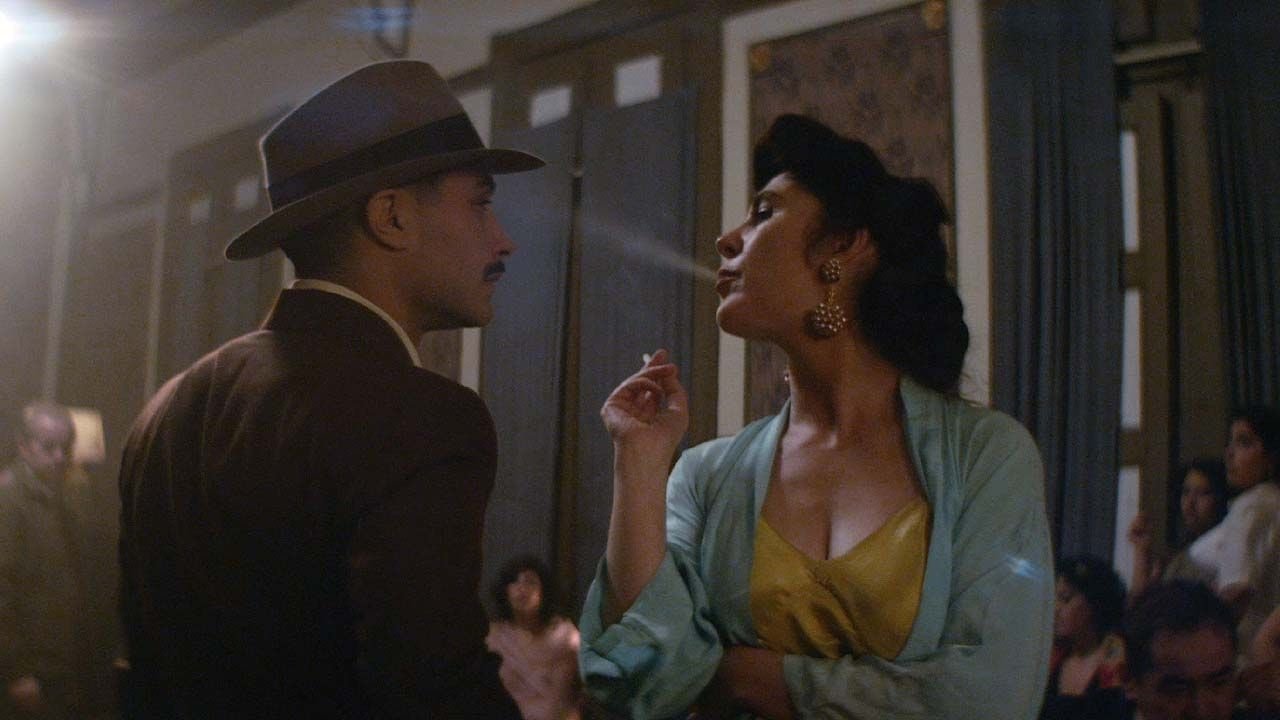
Neruda (2016)


The best films are films that could not exist in another medium. If it can be written as an essay, it should be an essay. If it could be staged as a play, then it should be staged as a play. I don't know if I simply lack the skill or insight, but I cannot seem to put into words what Neruda is doing. I understand it and it provokes fascinating thoughts in me about art and politics, but there is no way I could ever rightly put them into words. It would be a bunch of scattered thoughts with no center. Perhaps Pablo Neruda could have done it. Pablo LarraĆ­n certainly did it with this beautiful film.

Thursday, August 10, 2017

T2: Trainspotting (2017)


As much as I love Richard Linklater, his aesthetic hasn't really changed much over the years. Just think of Boyhood being shot over the course of twelve years and feeling like a cohesive whole. That's not the case with Danny Boyle.

Unlike the characters in T2, Boyle's famously hyperbolic style has evolved. Like the world around us, Danny's gone digital and has become much faster. The celluloid scenes from the original film that pop up from time to time stick out like sore thumbs among all the digital crispness - and that's the point. This movie is the equivalent of staying at a bar until closing time when all the lights come on and you see everything with crystal clarity. Every speck of dirt on the floor and wrinkle on your face is staring right back at you.

Thursday, June 15, 2017

Saving Private Ryan (1998)


From a narrative standpoint this movie didn't have to open with the D-Day Invasion. You could have easily snipped out those first twenty-six pages of screenplay, started with the telegrams being typed out, and gone from there. Sure there are little character beats that get dropped in that opening sequence (about Captain Miller in particular) but nothing that isn't also covered later. It feels like the type of indulgence that a studio reader would have suggested cutting for budget's sake. But this isn't a screenplay, this is a film. On the page it's a pretty straightforward account of taking the beach. But with sound and images on a screen, it's an assault. It beats you into the ground. That opening is there to traumatize the audience. Now you are in Captain Miller's boots. You're startled by loud noises and hypervigilant about threats from all sides. Is this what it's like to have PTSD? Anything can happen and anyone can die at any moment. And that is why Steven Spielberg is a master.

Monday, May 1, 2017

Christine (2016)


In the past I've admired films "based on a true story" for taking us inside of private moments that a documentary never could. This film I admire for keeping us outside.

Throughout the runtime, we are presented with all sorts of reasons why Christine might have done what she did. There's her physical health, there's her mental health, there's her home situation, her love situation, her work situation, and of course there is also Watergate. But when it comes time for her to do the deed, we still have no clue why she did it. Perhaps it was a combination of all the things we've seen. You can comb through hours of tape looking for an answer, but the only person who can truly give you that answer is dead.

To try and place an answer on to Christine's actions would be doing her a great disservice. Rebecca Hall's performance deserves far more recognition than it has received thus far. She compassionately honored a woman who, like so many other women throughout history, has been reduced to just a single thing.

Thursday, April 27, 2017

Mississippi Grind (2015)


Much like the film's protagonists, I thought I knew where this was heading. While they had visions of wealth and happiness, I foresaw only misery. In the end we were all pleasantly surprised. From moment to to moment the conclusion vascilates wildly between triumph and tragedy. If it ends at one moment it is a story of the American Dream realized. If it ends at a different moment it's a story about that inner hole that can never be filled. So, where does it end? Which moment does it end on? That depends on you. It's a cinematic Rorschach. Is the glass half-empty or half-full? You have to know how to read the tells. And even if you're great at it, you could always be wrong.

Thursday, April 20, 2017

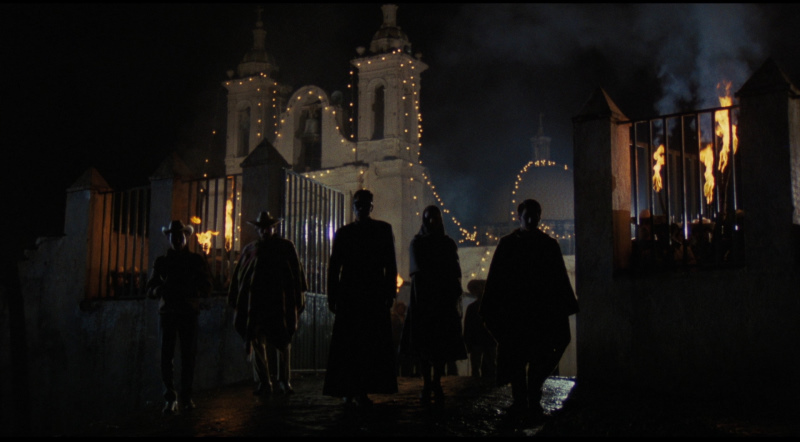
Canoa: A Shameful Memory (1976)


I really appreciate how this film takes its time. It appreciates the importance of building to a climax. But it also appreciates the importance of a good tease. That opening where the reporter is taking down the bare bone facts of the story is a master stroke. It satiates the impatient viewers by letting them know where things are headed, while also building a sense of dread into every moment that follows. There are no happy scenes because we know what is to follow. Innocent questions of who will stay and who will go are imbued with life or death stakes. Even unintended things like the priest's glasses and that PA system give unintended dread by conjuring Jonestown two years before it even happened. Movies don't get much more horrific. And it is all true.

Thursday, March 23, 2017

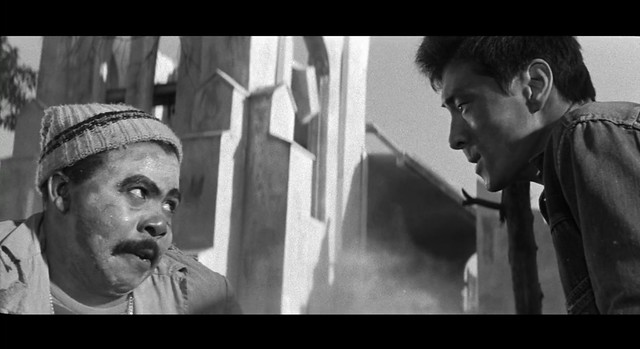
Black Sun (1964)


This was an interesting one. It reminded me a lot of a Sam Fuller movie, in that it is the cinematic equivalent of performing surgery with a sledgehammer. It's blunt and it's pulpy, but that doesn't mean that it can't get at some tough and interesting truths. The truly interesting part about this film is the language barrier. This isn't a movie where people have to talk out their differences, because neither speaks the other's language. All they are able to go off of is tone, facial expressions and body language. And somehow they come to understand each other like one does a jazz song or a silent film. Perhaps the Tower of Babel was not meant to separate us, but rather to force us to unite on a deeper, more human level?

Monday, January 23, 2017

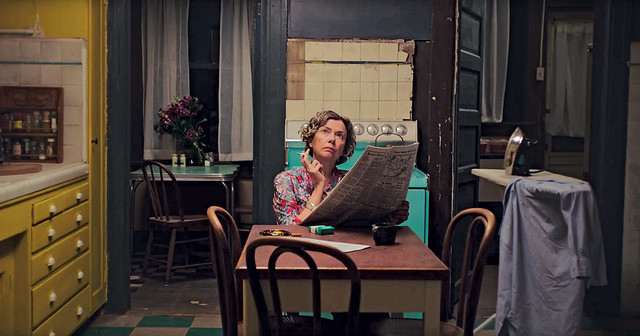
20th Century Women (2016)


Though still (relatively) early in his feature filmmaking career, the filmography of Mike Mills has come to exemplify a fascinating exception to one commonly held truism about an artist's trajectory.

Like novelists, most directors tend to start their careers with an autobiographical work that is either about their childhood or their current romantic situation. Even the filmmakers who head straight into genre will undoubtedly still include a protagonist who parrots whatever he or she thinks about life, the universe and everything. Then, if that first film is good enough to be successful, it becomes imperative that the filmmaker does something different on their next go around. They have to turn their gaze outward at the wider world. Unless your name is Mike Mills.

With each successive film, Mills has opted to get more personal and to look deeper inward. Though he did not write the novel on which Thumbsucker was based, he clearly felt a kinship with its infantilized protagonist. As a follow-up, Mills dropped the surrogacy of adaptation and instead chose to make a film about his father's late in life coming out and the impact that had on his relationships with other humans. For 20th Century Women, he's gone even further into the past to examine his relationship with his mother and the other women who shaped him.

Though each film is even more autobiographical than the last, rather than coming off as naval-gazey, the overwhelming feeling imparted by these films is one of intimacy. The more specific he gets about the granular details of these lives that are under examination, the more universal the overall work becomes. We might not be able to relate to the specifics of the narrative, location, time period, song choices, etc., yet I'm certain that somewhere in this film's lazy rhythms you will find something to love. Who doesn't love a great Annette Bening performance?

Thursday, November 3, 2016

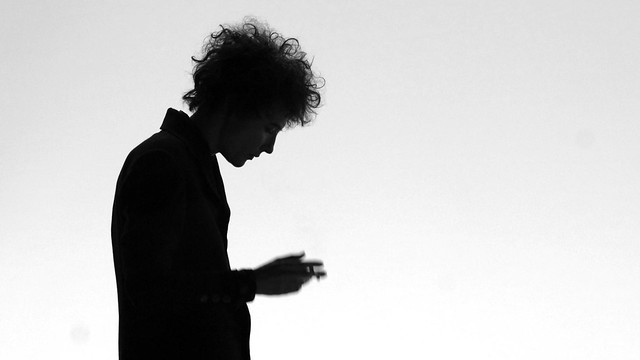
I'm Not There. (2007)


This film is a real Catch-22 because the only way to tell the story of a chameleon like Bob Dylan is to have the film change along with him...creating a fragmented experience that never really comes together as a cohesive whole. It's like a really great album with a few bum songs thrown in to knock you off balance. And I'm sure that really pleased Dylan. This is the man who willfully alienated most of his audience by going electric and by becoming Born Again. While some of the metaphors, allusions and homages help to bring us deeper into Dylan's mind, others only serve to alienate us further. The result is a film that's nearly as enigmatic as its subject. It will never be a perfect film, but it is absolutely perfect in its imperfection.

Thursday, October 27, 2016

Swiss Army Man (2016)


Going in, I assumed that this was going to be  a film about making due with what you have and how desperation can lead you to questionable decisions. I expected an unintended parable for how the Republican Party is currently lashing themselves to the putrid corpse that is Donald Trump. And while I guess that reading could still stand, there's more to it. It's also a Ferris Bueller/Cameron Frye or Tyler Durden/Jack story about having someone to push you out of your comfort zone. It's also a story about farting. And about admitting that you are the one who farted. Just as Daniel Radcliffe's corpse was able to become whatever Paul Dano needed in the moment (be it jet ski or confessor) this film can also be a multitude of things. Why does it have to be just one? Though it never quite worked for me on an emotional level, I was absolutely impressed by how much mileage Daniels were able to get out of a simple premise. They squeezed out all that they possibly could.

Thursday, August 18, 2016

Wendy and Lucy (2008)


This feels like the type of movie a lot of filmmakers aspire to make. They want to tell a small story with low stakes that focuses on the characters rather than the plot. Of course this is a lot easier said than done. Big stories and intricate plots exist for a reason - they draw people in easily! When all you have is a few characters in a fairly unremarkable setting you have to work a lot harder. I guess it also helps if you have an adorable dog as one of those characters. But that's not to take anything away from Kelly Reichardt who makes you viscerally feel every single dollar Wendy has to spend. Decisions about how to spend your last few dollars are just as important as decisions that involve the fate of the world. It's nice to see that somebody gets that.

Thursday, June 9, 2016

Meadowland (2015)

Generally, beauty and quality are considered to be mutually exclusive. If someone or something is beautiful, they/it must not be significant. A beautiful actress simply cannot be anything but a pretty face to sell tickets, and cinematographers who turn to directing can only make gorgeous films that lack thematic depth. Right? Meadowland roundly refutes both of those assertions. Cinematographer Reed Morano's feature debut consistently puts emotion before aesthetics and the whole thing is anchored by an uncompromisingly honest performance from the amazing Olivia Wilde. The beauty is just icing on the cake.

Thursday, June 2, 2016

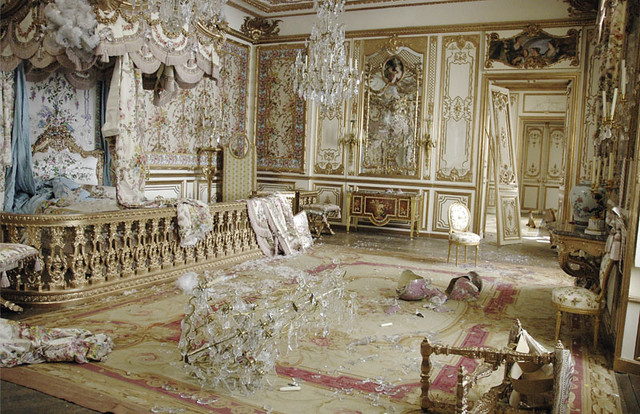
Marie Antoinette (2006)


Though I never hated this film, I've really warmed to it over the years. It's a boldly subjective take on material that many find as boring as...well...a history lesson. This film has no interest in the political. It is 100% focused on the personal. Sofia Coppola's sole aim is to put you in Antoinette's fabulously ornate shoes. How long is a carriage ride from Austria to France? Long! How fun is a masquerade ball? As fun as grooving to Siouxie and the Banshees. And in spite of all the decadent decor and fashion, the camera work is pretty unobtrusive. With the soft, natural light, much of the film feels like home movies...from Versailles. And that final shot of the smashed chandelier is a thing of absolute, heartbreaking beauty. No chyron needed. We know how this ends. It all came crashing down.

Monday, March 28, 2016

The King of Marvin Gardens (1972)


With Atlantic City as an analogue for Hollywood, The King of Marvin Gardens inadvertently predicted the eventual demise of The New Hollywood. Of course Bob Rafelson had no clue he was doing so at the time. Like all the sad characters in his film, he was just trying to take advantage of a once glorious city/industry which had fallen on hard times. The world was his for the taking and he intended to get while the getting was good.

Could anyone have know that by decade's end both Atlantic City and Hollywood would end up being restored to something resembling their glory days? Of course! Anyone could and should have seen that coming. Both conclusions were inevitable. The system always finds a way to correct itself. And heaven help anyone standing in the way. To think that things won't course correct is delusion. But that's the American Dream, isn't it? 100% pure delusion.

Monday, March 14, 2016

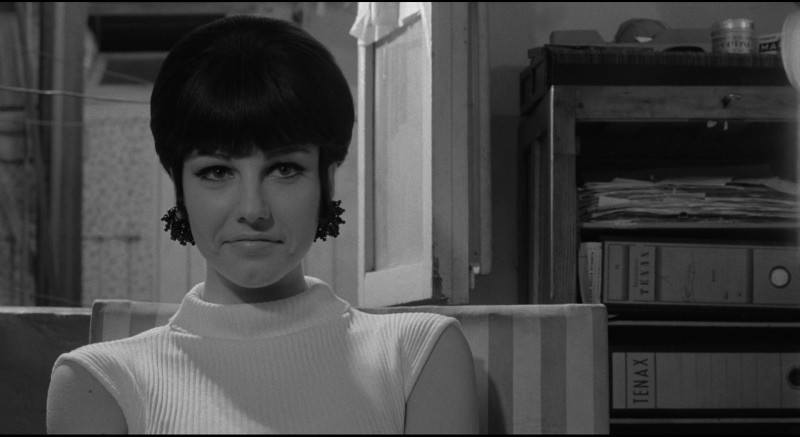
I Knew Her Well (1965)

I've been obsessed with the aesthetic of mid-century Italy for longer than I can remember. Whether it's an authentic period film like La Dolce Vita or a loving reconstruction like The Talented Mr. Ripley, I've always responded to the whole look and attitude of impeccably styled people having a good old time. After twenty years of Fascism and a World War, can you blame a country for wanting to just cut loose? But underneath that impeccable surface, there was also an emptiness. There was a void that everyone was trying to fill with clothes, cars, music and money. This is what Fellini and Antonioni were making films about. It's also what this film is about. Actress Stefania Sandrelli is the perfect embodiment of that impeccable surface. She's gorgeous and goofy and no matter what life throws at her, she keeps up this chipper fun-loving surface. You're given little indication of the turn things will take in the end. But when you think of all the ways she's been used and abused throughout the film, how could she not? Like all the mournful pop songs that provide the soundtrack, the film itself is underscored with immense sadness.

Thursday, March 3, 2016

Creed (2015)


As a comic book fan, I'm well acquainted with continuity. No matter how many times Marvel or DC re-sets the clock back to zero, fifty some-odd years of history still remains. All those stories are informing the present. Even if the publisher has decided to retcon everything, that history is still influencing the people behind the scenes. They're consciously deciding whether to embrace or reject all that came before.

Having said all that, it's not impossible to jump into a long-running series. If the creative team is solid, the story should still be as engaging and compelling for a new reader as an old fan. Done right, all that history will give palpable weight to the present. The newbie might not know the specifics, but they will be able to feel it. And once you've hooked them, they're certain to go searching through the back issues.

Monday, February 29, 2016

Barton Fink (1991)


Now I'm not certain, but I'm pretty sure Pearl Harbor happened at some point during this film. It's deliberately set in 1941, yet war doesn't seem to be in the air at the start. By the end of the film, there are USO sailors about to ship out and Mr. Lipnick is decked out in military regalia. Critics like Roger Ebert have interpreted this film as being about left-wing artists ignoring the rise of fascism in Europe. I personally think it's a little more broad than that. While the film could possibly be an allegory about ignoring Hitler and Mussolini, it certainly appears to be a film about someone who is so self-involved that he is oblivious to the outbreak of a World War. Imagine being so caught up with your own BS that 9/11 was just another Tuesday. Such is the life of the mind.

Thursday, February 25, 2016

Experimenter (2015)

No matter how benign the intent might be, all cinema is a social experiment. It has been produced for a specific purpose. Writers, directors, producers, etc. have deliberately designed it to make the audience feel happy, sad, etc. If the viewer becomes aware of the construction, the experiment has failed. Suddenly you are aware of what you are being fed. You are no longer under their emotional sway and can really examine/digest what you are being shown. You can decide whether you agree or disagree with what the filmmakers are presenting you. In the film Stanley Milgram states, “I believe we are puppets with perception, with awareness. Sometimes we can see the strings. And perhaps our awareness is the first step in our liberation.” Michael Almereyda’s decision to stage this film in such a deliberately artificial way is perfectly in keeping with Milgram’s mission. Since the filmmakers cannot interview us about our experience after the fact, we are instead able to interview ourselves from start to finish.

Monday, February 22, 2016

The Assassin (2015)


The base unit of any film is the shot. Each and every shot is giving the audience a specific piece of information. Ideally, the camera is placed at exactly the right angle with exactly the right lens to get that piece of information across. And the next shot does the same. And so on. And so on. Eventually there is a scene and with enough scenes you get a movie. Thanks to the extremely deliberate pacing Hou Hsiao-Hsein employs here, we are able to appreciate each shot and scene as a unique creation unto itself. Some are black and white but most are color. Most are 1.33:1 but a few are 1.85:1. Each individual unit is exactly what it needs to be. And due to their diversity, many end up enhancing the others. The black and white really makes the color stand out and the wider screen portion makes you very aware of the boxier framed remainder. Yet unlike so many other films which employ such devices, rather than pushing you away from the film, here they bring you in closer. You will not find a more beautiful film any time soon. Oh, and it's an action film.