Showing posts with label period. Show all posts

Thursday, March 8, 2018

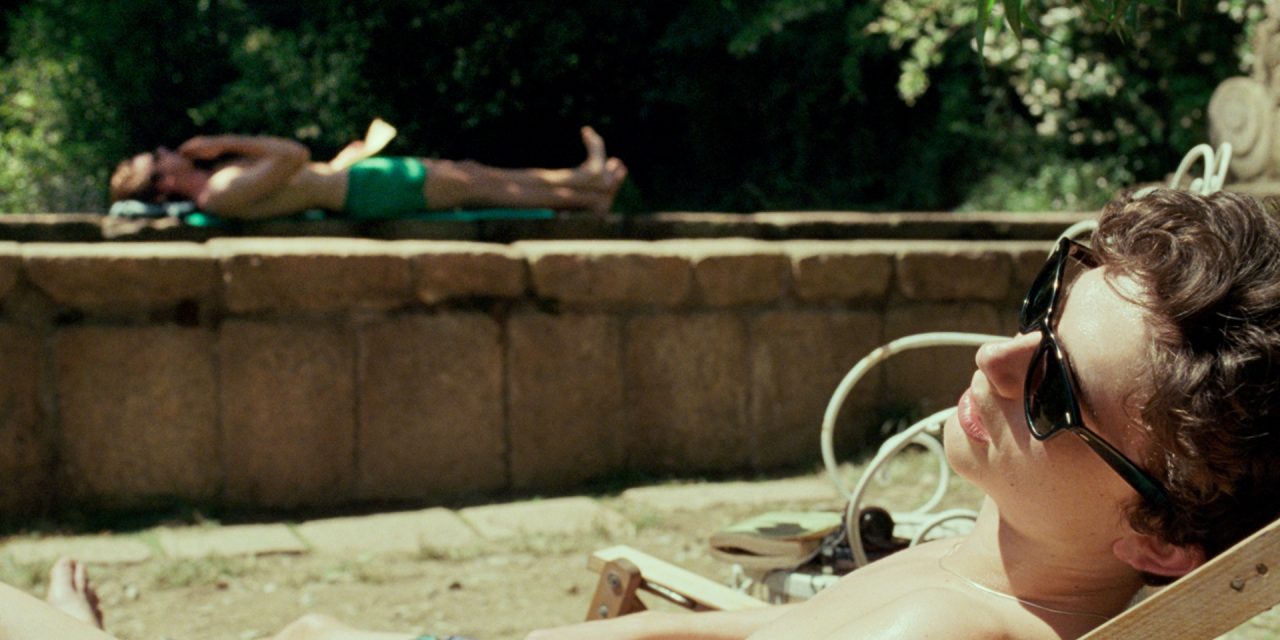
Call Me By Your Name (2017)


I’ve seen lots of Italian Films in my day. From Neorealism to Giallo, I’ve taken in some of the best Cinema that boot-shaped country has to offer. Yet, as "sensual" as that country truly is, that is not the word I would use to describe their films. Luca Guadagnino is the exception.

Unlike his countryman Paolo Sorrentino, I don’t feel a slavishly self-conscious debt to the operatic camera movements and emotions of Fellini, Visconti, or Leone. From the enveloping soundtrack of insects and wind through trees, to the sun-soaked photography that is so bright it warms you with refracted light off the screen, every artistic decision here is intended to make you feel as though you are actually in the north of Italy, in the early 80’s, during summer. There is no need to beat us over the head with heighten emotions in desperate hope of making us feel something/anything. We are already/immediately right there. We are taking everything in with all five senses simultaneously. We can smell the sweat, taste the food and feel the caresses. We are living it. We are living the good times...and the sad times, too.

Thursday, February 1, 2018

Phantom Thread (2017)


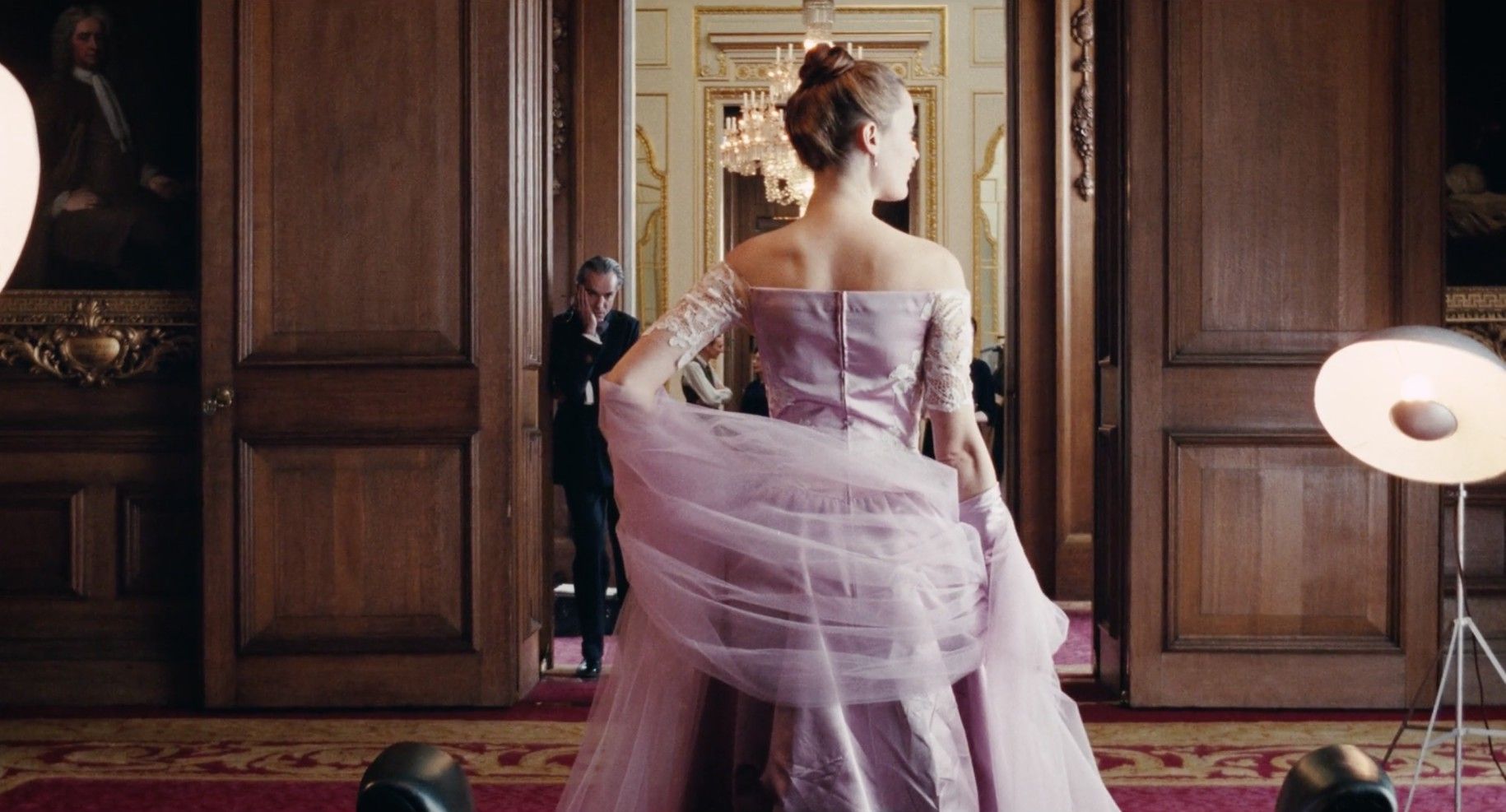
Though it was the Scorsese-like, visual gymnastics of Boogie Nights and Magnolia that caught the eye of the Film School Kids, we must remember that the principle influence on Paul Thomas Anderson’s debut film Sydney (aka Hard Eight) was Melvin and Howard. Instead of opening with a whole lot of whiz-bang, both films begin with protracted conversations between two characters. At his core, this is who Paul Thomas Anderson is as a filmmaker.

Of course he played around with all the fancy toys on his next couple of films (who wouldn’t?), but as early as Punch-Drunk Love you can sense a filmmaker casting aside all of the bravura in favor of a simpler, more character based cinema.

For all its fire and fury, There Will Be Blood is the story of three people in the desert. The Master is a love story between Freddie and Lancaster. Even with all the Pynchonian intrigue, Inherent Vice is really just the story of Doc, Bigfoot and Shasta Fey. Phantom Thread is Anderson’s minimalism taken to its logical end-point.

It’s not shot on antique, large-format cameras and most of it takes place in small rooms. It’s not about Capitalism or Religion or any other “important” issue. The only maximalist element in the whole thing is Johnny Greenwood’s wonderful score.

It’s taken him many years and films to get to this point, but Anderson has successfully pruned away that which is not essential, held on to a few handy tricks, and returned to where he started. But this is no ending. This is a new beginning. And I cannot wait to see what comes next.

Monday, February 6, 2017

Hero (2002)


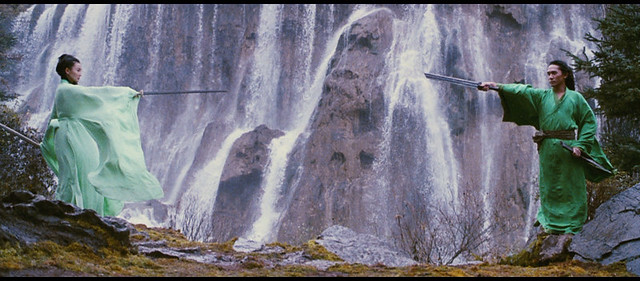
It's interesting comparing this to American-made, big budget, historical epics. This was China's stab at something like Pearl Harbor or The Patriot where money is not an object in helping to bring history to life - and of course it leaves us in the dust. Maybe it's because Yimou Zhang was directing, but this actually feels like a film rather than just spectacle. For all the lavish sets and costumes of Gone with the Wind, I have no clue what that film is actually about. This film is about something and has a message to impart about world affairs. And it's not some generic message either like "all's well that ends well". But perhaps to a Chinese audience the "message" is "old hat" and I just see it as profound because it's not American. ¯\_(ツ)_/¯

Monday, January 23, 2017

20th Century Women (2016)


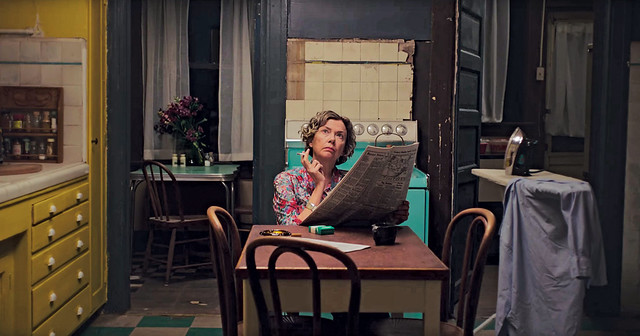
Though still (relatively) early in his feature filmmaking career, the filmography of Mike Mills has come to exemplify a fascinating exception to one commonly held truism about an artist's trajectory.

Like novelists, most directors tend to start their careers with an autobiographical work that is either about their childhood or their current romantic situation. Even the filmmakers who head straight into genre will undoubtedly still include a protagonist who parrots whatever he or she thinks about life, the universe and everything. Then, if that first film is good enough to be successful, it becomes imperative that the filmmaker does something different on their next go around. They have to turn their gaze outward at the wider world. Unless your name is Mike Mills.

With each successive film, Mills has opted to get more personal and to look deeper inward. Though he did not write the novel on which Thumbsucker was based, he clearly felt a kinship with its infantilized protagonist. As a follow-up, Mills dropped the surrogacy of adaptation and instead chose to make a film about his father's late in life coming out and the impact that had on his relationships with other humans. For 20th Century Women, he's gone even further into the past to examine his relationship with his mother and the other women who shaped him.

Though each film is even more autobiographical than the last, rather than coming off as naval-gazey, the overwhelming feeling imparted by these films is one of intimacy. The more specific he gets about the granular details of these lives that are under examination, the more universal the overall work becomes. We might not be able to relate to the specifics of the narrative, location, time period, song choices, etc., yet I'm certain that somewhere in this film's lazy rhythms you will find something to love. Who doesn't love a great Annette Bening performance?

Monday, December 12, 2016

Little Women (1994)


Adapting classic literature can be challenging. In addition to the normal problems that come with adapting a novel, there is the added complication of the fact that lots of early novels were pretty weirdly structured. Though the "hero's journey" is as old as time, I'm pretty sure Louisa May Alcott was not consulting Aristotle's Poetics as she was crafting her touching tale of the March Family. From the limited research I've done, the novel we think of as Little Women is actually the fusion of two shorter works. In spite of all of this, the adaptation that director Gillian Armstrong, writer Robin Swicord and editor Nicholas Beauman were able to put together is pretty great. They were able to successfully include numerous, smaller, side stories from the book(s) without losing the overall thrust of Jo's journey of actualization. It is somehow simultaneously loose and tight. Few films are able to hit that sweet spot so squarely. It should be studied in schools.

Monday, September 19, 2016

The Man Who Wasn't There (2001)


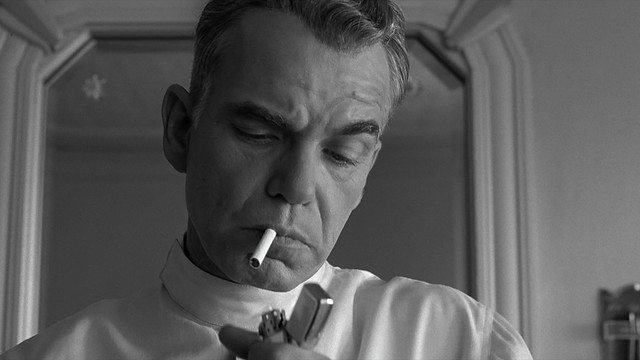
Somewhere among the masterpieces, the failures and the crowdpleasers, this film tends to get forgotten in the Coen Brothers oeuvre. Even though it shared Best Director at Cannes with the newly ordained "Best Film of the Millennium" Mulholland Drive, The Man Who Wasn't There has become a bit of a phantom film. Sometimes I even wonder if it actually exists. But there it is on my self. It's almost too perfect that this film about an extremely passive and forgettable schlub, has itself become forgotten. And just like its protagonist, the film also holds surprising depth. That's the sort of extra-textual synthesis that you simply cannot plan. Or maybe the Coen's can?

Thursday, September 8, 2016

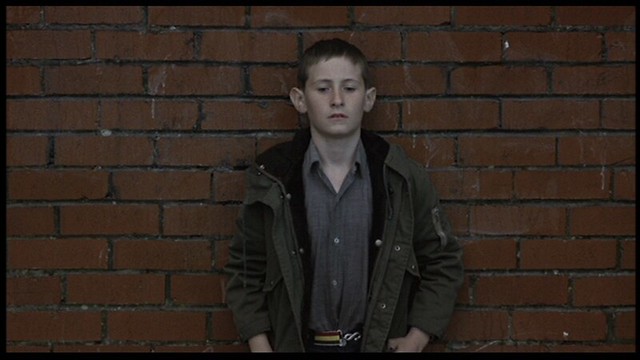
Ratcatcher (1999)


Since I recently became a father, I've been thinking a lot about motivation. I find myself staring at my daughter as she plays with her toys and I wonder how she decides what to do with which toys? What synapses are firing when she decides to smash two hunks of plastic together? What makes her suddenly decide to lick one item rather than another? Those same thoughts came to me as I was re-watching Ratcatcher.

At first I chocked it up to the fact that I am not Scottish and therefore am missing a lot of cultural nuance. But then there would be moments where Lynn Ramsay's camera is clearly suggesting that these characters don't know why they are doing things either. Why lie about not seeing someone's glasses when they are clearly right there? Why get on a bus when you have no idea where you are headed? Is all the trash around them affecting them like in an Antonioni film? So many questions and I love pondering every one of them. Such a beautiful film.

Monday, August 22, 2016

The Wanderers (1979)


Seeing as The Right Stuff and the 1978 incarnation of Invasion of the Bodysnatchers are two films that I hold in extremely high regard, it's a wonder that I waited so long to see the film that Philip Kaufman made in-between those two. But it's also a kind of hard film to track down, so sue me! Anyway, though it comes nowhere close to the perfection of its predecessor and descendant, it's quite a good little picture. You can see elements of Bodysnatchers in a particular chase scene and the plotless focus on charismatic lunkheads clearly presages the Gemini astronauts of The Right Stuff. Sure things peter out a little after the second act climax, but it wins you back pretty easily. All in all it's a fun movie with a few actual thoughts on its mind and it deserves a wider audience. Perhaps the $49.99 price for the DVD on Amazon is holding people back? You can get the disc from Netflix. But like The Wanderers themselves, DVD's are a remnant of a bygone era that just doesn't know that it's time has passed.

Monday, July 11, 2016

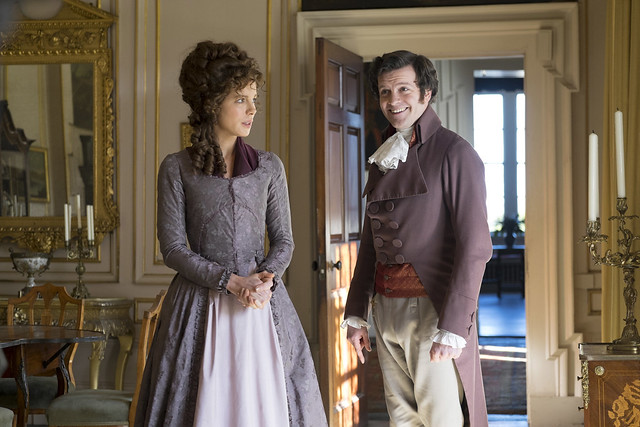
Love & Friendship (2016)


If I had to sum up acting and directing in a single word, that word would be "nuance." Words on a page can be delivered in so many different ways. This is why high school kids hate Shakespeare. Read alone for homework, Romeo and Juliet can be pretty dry stuff. With the right actors and directors it can become a laugh riot. The same goes for the work of Jane Austen. Throughout Love & Friendship I found myself imagining a David Mamet version of this same story with actors merely reciting the script and giving zero inflection. Thankfully, Whit Stillman and his actors chose to wring every possible drop of comedy out of this material. I predict this film will fast become a favorite for substitute teachers to show English classes.

Wednesday, July 6, 2016

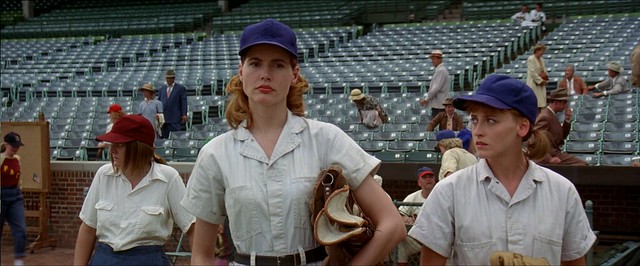
A League of Their Own (1992)

Pretty sure this was my first viewing in at least twenty years. The danger with such big gaps is that sometimes the film that is actually in front of you doesn't live up to the memory. Luckily for me, I remembered very little of this film. I remembered stuff like "No crying in baseball" and some of the Rosie O'Donnell goofing around (because that's the kind of stuff that appeals to a prepubescent boy who hasn't yet turned into a horn-dog) but much of the rest felt brand new to me. What I was really taken by was the extremely minimal plot. Essentially this is a hang-out movie. The film is enjoyable because we enjoy these characters and like spending time with them. It's also a great look at the gulf between image and reality. By contrasting how these women actually lived and behaved with the staged photos and newsreels that went out to the world, Penny Marshall and her collaborators are subtly chipping away at the conservative idealization of the past. It's not a film with a radical, feminist agenda, but it does have something to say, and it says it well.

Thursday, November 12, 2015

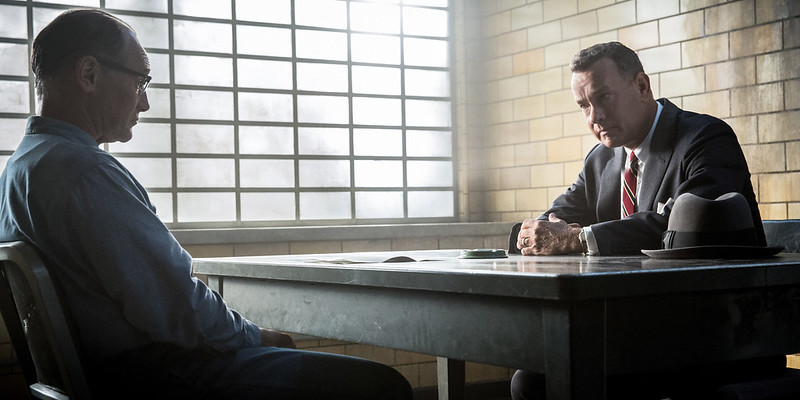
Bridge of Spies (2015)

The Internet is full of whiners and trolls, but once in a while you meet some truly awesome people. We met guest writer Njabulo Phungula through Instagram of all places (#johnwilliams haha!), but we recognized him as a kindred spirit with a passion for cinema and are proud to call him our friend. Hailing from Durban, South Africa, Njabulo shares his thoughts on Spielberg's latest film "Bridge of Spies."

Let's acknowledge just how versatile Spielberg is. This is the man who brought us The Adventures of Tintin, Jaws, E.T., Schindler's List, and everything in between (both good and bad). After thirty-something feature films, he shows not signs of ageing but of maturity.

Bridge of Spies gives us a glimpse of the Cold War, a time during which paranoia filled the air and tensions were high. Anyone who has some idea of the fear and paranoia that ravaged the people of that time, might have some idea of how this movie's first act is going to play out. James B. Donovan (Tom Hanks) is an insurance lawyer who has been appointed to provide 'capable defense' for Rudolf Abel (Mark Rylance), who has been accused of being a spy for the Russians. Much to the dismay of his superiors, his family, and his country, Donovan takes his duty seriously as he believes in a fair trial for his client despite the seriousness of the alleged crimes.

In the second act, the film moves to East and West Germany and the shift in atmosphere moves us into bleak territory. Spielberg achieves this shift without rocking the proverbial boat. Also, strewn across the many exchanges between our human subjects, is some light humor, so enjoy.

Every technical avenue of this movie is top-tier; cinematography, editing, music, costumes, and sound. What is remarkable though is that Spielberg continues to dazzle us with his remarkable camera moves. I don't think Spielberg receives enough credit for being highly visually literate. He certainly understands drama and how to convey his messages with the camera.

There was another element of this story that really caught me. Rudolf Abel, in one scene, compares Donovan to a man he once knew as a young boy. The 'standing man' as he calls him, would get knocked down and get up every time. There are obvious parallels in the film between this 'standing man' and Donovan but I kept thinking about Spielberg and the never-ending criticism he gets for making 'sentimental' movies. This is an issue that has been brought up for years. Sometimes it works for the movie (E.T., Close Encounters), but other times, not so (War Horse, Always). It is present in this movie, too. Make of that what you will. What is clear to me, that few people can deny, is that Steven Spielberg continues to set himself apart from the rest. He might not necessarily be the greatest film maker there ever was (those are impossible standards) but there's no denying his greatness.

This has been a remarkable year at the movies and Bridge of Spies is up there with the best of them.

Thursday, July 9, 2015

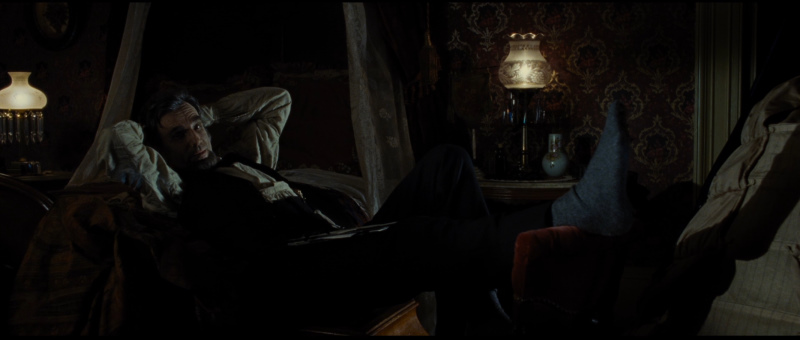
Lincoln (2012)

It's kinda fitting that this movie almost ended up on HBO. In many ways it is the ultimate HBO politics movie. Like Recount, Game Change and Too Big To Fail it's a film about the behind the scenes intricacies of politics and it's filled to the brim with major stars and recognizable character actors. But unlike those other films (which I actually did enjoy) this one actually knows what story it is telling.

Those other film love to go off on tangents and will often let a showboat performance draw attention away from both the narrative and the true protagonist. While Julianne Moore got all the awards and attention for Game Change, that movie is really Steve Schmidt/Woody Harrelson's story. Lincoln does not make that mistake. It's right there in the title.

Sure it's a story about a "team of rivals", but it's first and foremost a story about this odd man who saw the world a little differently than everyone else. Daniel Day Lewis expertly plays Honest Abe like some sort alien who nobody really understands and who constantly needs to explain himself. Like a filmmaker, he has a vision and it's his job to communicate that vision to all his collaborators so that it can become real. No wonder Steven Spielberg has such admiration for him.

Wednesday, April 8, 2015

Belle (2013)


Belle is the story of a young woman named Dido Elizabeth Belle, the daughter of Royal Navy Captain who grew up being raised by her aristocratic relatives. She is bright, wealthy, and beautiful, and by all rights should have the whole world open to her. The catch? She's illegitimate, and her mother is black. She finds herself caught between two worlds, facing prejudice from the ignorant world outside her door, and trying to follow her instincts to her ultimate happiness. 

Can we talk about how lovely Gugu Mbatha-Raw is for a second? I can't think of anyone else who would be better in this role. She has a spark that can't be denied. The rest of the cast is great too; familiar faces include Tom Wilkinson, Emily Watson, Draco Malfoy I MEAN Tom Felton (playing a racist a-hole, of course), Penelope Wilton, Miranda Richardson, and Matthew Goode. In addition to being a Jane Austen-esque love story (you know, stolen glances, verbal sparring that means they're obviously in love, all that stuff I can't get enough of), it's about social issues too, notably the Zong massacre of 1781. It's an interesting touch to what is otherwise a pleasant if unexceptional film. I really loved this movie and after watching it alone one night I watched it again the next day with my sister, and I kinda want to watch it again...

It's currently streaming on HBO, and if you're a fan of period films or love stories (or both!), I definitely recommend it. If nothing else, give props to Miss Mbatha Raw for her mirror scene. So moving, so powerful. I've definitely got my eye on her. 


Thursday, February 12, 2015

McCabe & Mrs. Miller (1971)


From the first strains of Leonard Cohen's song over the opening credits, you know that the characters in this story are doomed. A sense of fatalism permeates every grained-out frame of this film. But the hopeless love found in Cohen songs is only one level to this dirge of a film. On top of that lies an equally tragic tale about Capitalism and the American Dream. Because try as we might to make our fortunes and build something from nothing, we are merely playing at Capitalism. When the real guys come to town, it's all over. You might get in a few good shots here and there, but they will get you when all is said and done. And it won't end with a bang, but with a whimper.

Thursday, September 25, 2014

The Long Day Closes (1992)


Since The Godfather, most period films are shot with warm, amber tones to help romanticize the past. It's a sort of emotional shortcut which has gradually turned into a cliché. At first blush it might seem as though this is what Terence Davies was trying to do with his lushly photographed melodrama, The Long Day Closes. But as you watch the film, one quickly comes to realize that rather than a romantic look back at youth, Davies is instead giving an extremely accurate emotional depiction of his own childhood as he experienced it day by day.

Like a young Candy Darling who would put blue food coloring into his bath water so that it would more closely resemble the technicolor blue he saw every week at the local cinema, young Terence Davies was also cognitively reframing his harsh, working class childhood in cinematic terms. For movie people like them, the theater is not merely a temporary refuge. It's a not just a physical place where you can go for a few hours and everything is all right. For them, cinema is a way of life. It is something that lives inside of them. Things might get rough at times, but a sweeping camera move and yearning pop song is surely just around the corner.

Monday, June 30, 2014

Good Night, And Good Luck. (2005)


Is this movie a fluke? Of the four films in George Clooney's directorial filmography, this is the only one that can unequivocally be described as a success. Who would've thought that between Clooney and Affleck, Ben would be the bleeding-heartthrob with stronger cinematic chops? Everything about this film is so on the mark (acting, directing, writing, cinematography, music, costumes, editing, production design) that one would think it the harbinger of a seriously important career. Instead it has been followed by the wildly off the mark one-two punch of Leatherheads and Monuments Men. I guess it's at least admirable that he's tried something different every time out of the gate rather than just repeating a successful formula, but...maybe he should? Oh well, at least we have this one. Good night, and good luck.

Monday, March 24, 2014

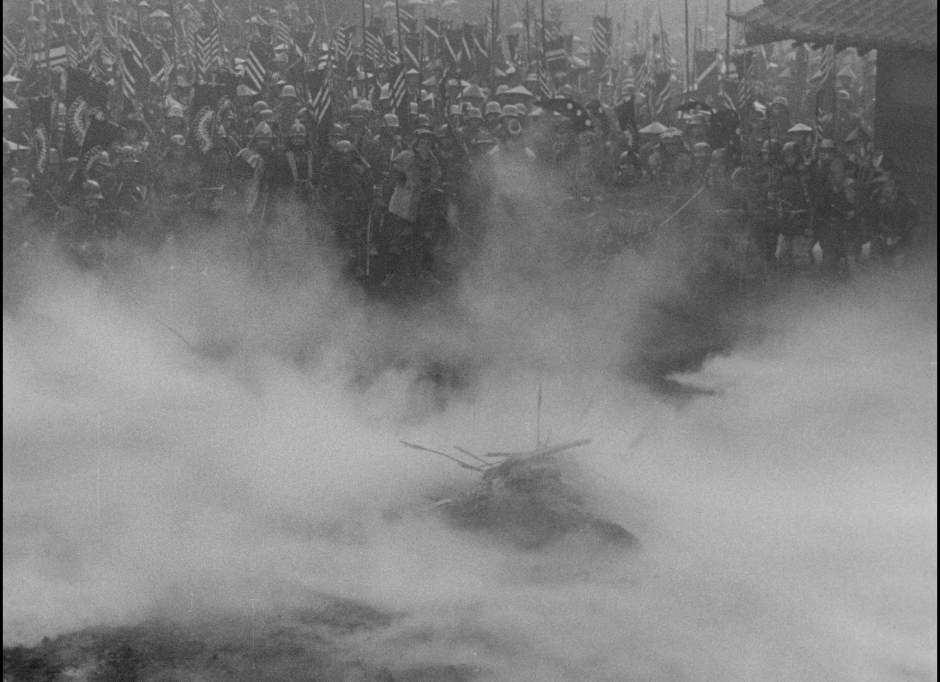
Throne of Blood (1957)


I think it would be interesting to see a sci-fi Macbeth. The inciting incident of the story already hinges on magic, so why not just replace that with science? When you really think about it, this is a time travel story, minus the time travel. It's about a character who is given insight as to what the future holds in store for him followed by his attempts to both embrace and counteract that future. That's why this story has stood the test of time. It's the eternal question of whether fate is malleable or written in stone. It's also Looper, Back to the Future and 12 Monkeys...among other things. If this story can work in feudal Japan and the current ganglands of Melbourne, why not try setting it in the not too distant future? Just gotta make sure you have a lead as badass as Toshirô Mifune. Good luck finding one.

Thursday, March 13, 2014

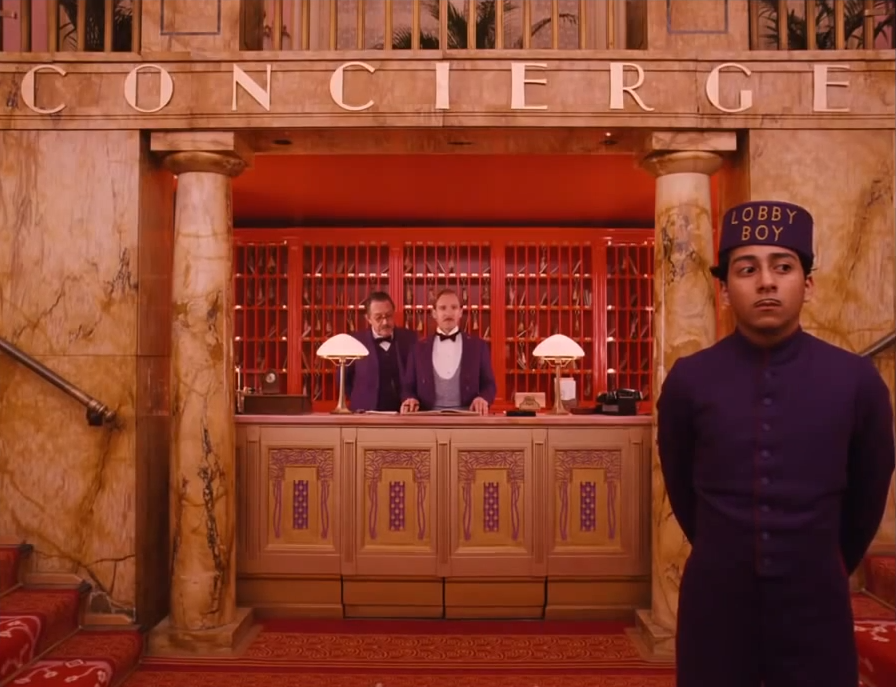
The Grand Budapest Hotel (2014)


I don't get how people can pigeonhole Wes Anderson as a one-trick pony. The distance between this film and Bottle Rocket is immense. Even the distance between this and The Royal Tenenbaums is huge. What I like most about his work is that it is a style that is constantly evolving. While the core remains the same, along the way he picks up new tricks (animation) and integrates them into his aesthetic while simultaneously tossing aside what is no longer working (Futura Bold). With Grand Budapest, everything is working: the acting is great, the sets are beautiful, the story is charming, the action is exciting, the comedy is funny and the tragedy is heartbreaking. It even serves as a comment on its own creation. I'm not overstating the matter when I say that this is honestly one of the most diverse experiences you can have in a cinema. Do yourself a favor and make a point of spending at least an evening in The Grand Budapest Hotel. You won't want to leave.

Tuesday, May 14, 2013

1920s Fever!


Are you, like the rest of the country, going through a Gatsby period? Does the thought of bobbed hair, bee-stung lips, pearls, and moonshine fill you with joy? Do you want more, more, more?? You could always watch some movies made in the 20s...anything with Clara Bow or Louise Brooks, for example. But if you want a sampling of more recent films set in the 1920s, look no further! There are a lot of fun ones out there!


The Cat's Meow (2001)
Partying, scandal, and murder on William Randolph Hearst's yacht, starring Kirsten Dunst as Marion Davies.


The Boy Friend (1971)
A stage director's assistant (Twiggy) must go on stage to understudy for the lead in an amateur stage production and impress a Hollywood director.


Mrs. Parker and the Vicious Circle (1994)
The story of writer/critic Dorothy Parker and the Algonquin Round Table, starring Jennifer Jason Leigh.


Midnight in Paris (2011)
A writer (Owen Wilson) finds himself magically transported to 1920s Paris, where he meets legends such as F. Scott and Zelda Fitzgerald, Ernest Hemingway, Gertrude Stein, Pablo Picasso, and Salvador Dali.


Chicago (2002)
Imprisoned for murder, Velma Kelly (Catherine Zeta-Jones) and Roxie Hart (Renee Zellweger) fight to keep their names in the paper and their necks out of the noose.


Singin' in the Rain (1952)
Movie star Don Lockwood (Gene Kelly) has trouble adjusting to the new developments in sound in the late 1920s.

Any other recommendations? Please share in a comment!

Thursday, May 9, 2013

Summer Of Sam (1999)

Tensions build across New York in the Summer of '77. It's hot, there's a power-outage, disco is king, punk has just been born and a serial killer is stalking the streets.

*      *      *

Auteurist critics love to look for recurring themes in a director's work. If you watch a lot of Hitchcock films you will find a lot of overbearing mothers and wrongly accused men, early Scorsese films feature a lot of men that are frightened by/can't deal with female sexuality and of course all Coen Brothers films exemplify their "much ado about nothing" worldview. In this way, a career is really one long film where particular philosophies and obsessions are continually addressed in (hopefully) different ways, from (hopefully) different angles and with (hopefully) varying emphasis. 

For example: In Do The Right Thing, Spike Lee chose to explore how warm weather was capable of exacerbating tensions and prejudices on one particular Brooklyn block on the hottest day of the year. Ten years later with Summer of Sam, Spike chose to examine this same phenomenon but from the perspective of an entire neighborhood (and city by extension) over the course of a whole summer. Though similar in some ways, the cinematography used to visually express the heat is different. Variations on a theme as they say. Summer of Sam is also notable for being a major work in Lee's continued anthropological examination of Italian-Americans that began with Do The Right Thing and Jungle Fever.

I'll take that over Michael Bay's recurring themes of hot women and loud noises any day of the week.