Showing posts with label france. Show all posts

Monday, April 18, 2016

Zazie dans le métro (1960)


Browse any account of the French New Wave's beginnings and you're sure to encounter some variation on the idea that these filmmakers were reacting against "a certain tendency of French Cinema" which inordinately favored prestigious literary adaptations commonly referred to as "The Cinema of Quality". They counteracted this "tendency" towards "quality" by making highly personal cinema which flouted all of the accepted rules of both filmmaking and screenwriting.

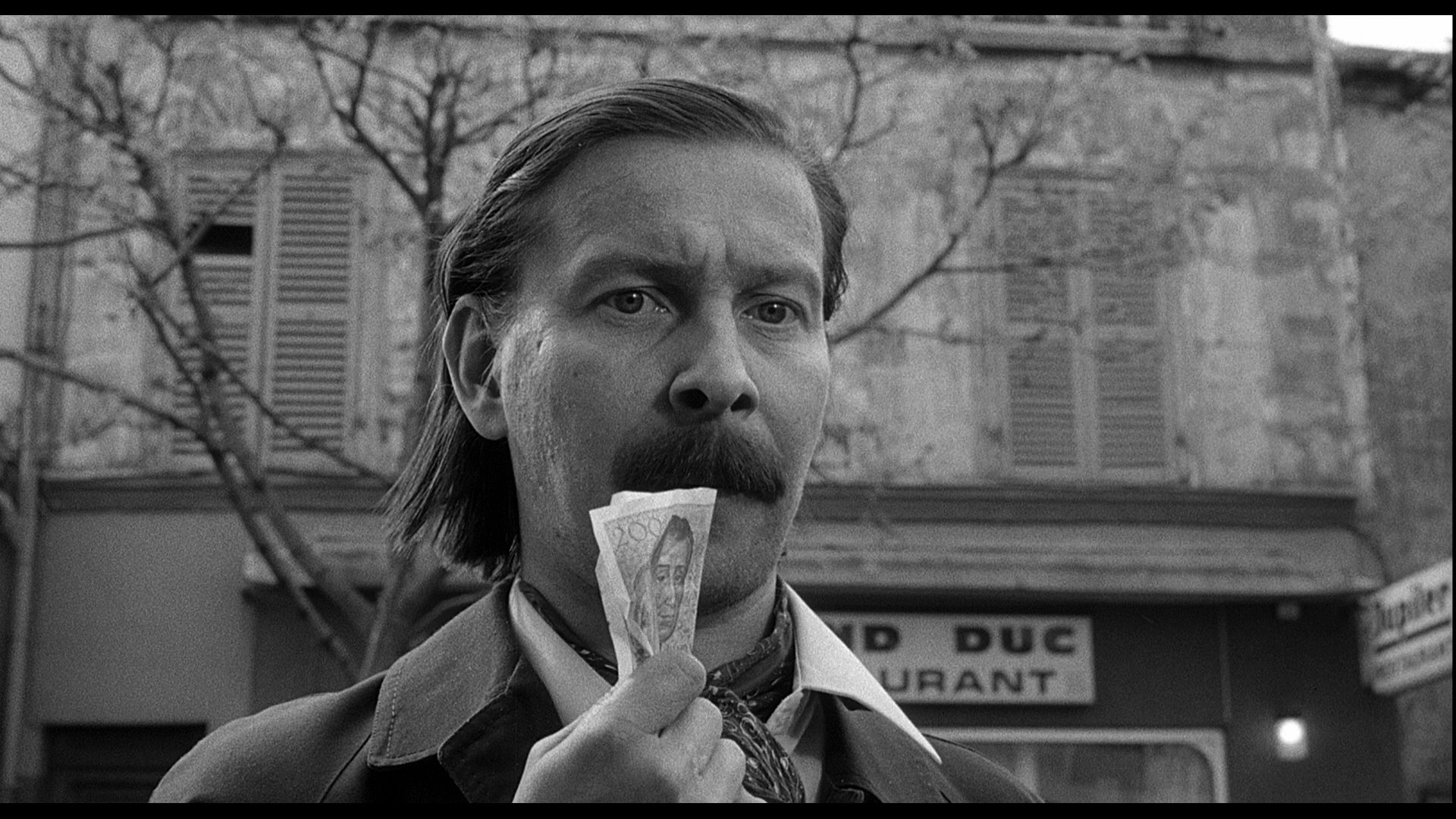
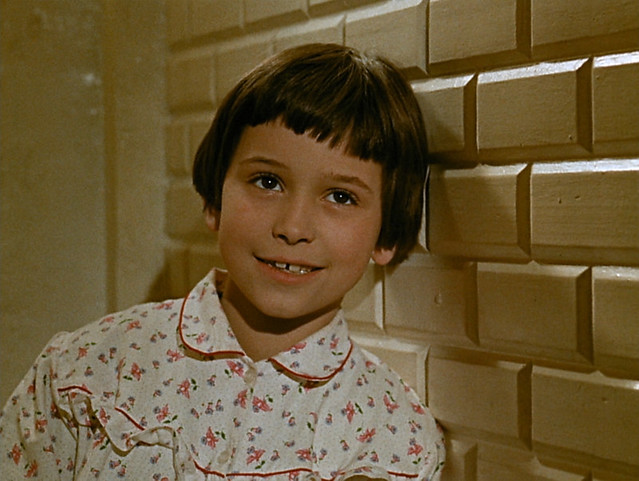
At roughly the same time, Raymond Queneau was in the process of flouting all of French Literature's established conventions via his colloquially written novel, Zazie dans le métro. The confluence of these two contrarian movements was inevitable. Regardless of whether or not you consider Louis Malle to be an official member of the Nouvelle Vague, the sheer energy of the Zazie film is undeniably New Wave. From start to finish, Malle was able to expertly match all of Queneau's clever verbal wit, with equally inventive visual wit. Moreso than even the cartoonish satires of Frank Tashlin and The Marx Brothers, this film was absolute cinematic anarchy. Zazie was punk before there was a word for it. Vive Zazie!

Thursday, November 5, 2015

The Suitor (1963)

Pierre Étaix deserves more respect in the film world. Of the various filmmakers from the mid-century period who specialized in physical comedy and Buster Keaton-esque formal experimentation (Frank Tashlin, Jacques Tati, Blake Edwards and Jerry Lewis leap to mind), I’d rank Étaix near the top. The fact that both Tati and Lewis saw fit to employ him as a gag writer on some of their own films should speak volumes. Of course his filmography isn’t impeccable (his 1971 documentary Land of Milk and Honey is an outright disaster) but even as early on as his admirably flawed first feature The Suitor, he was able to effortlessly pull off gags which lesser filmmakers would kill themselves trying to accomplish. Due to issues with rights, his filmography has been largely unavailable for years, but thanks to the Criterion Collection the name, “Étaix” is once again part of the cinematic conversation. Hop on the train now so that you can claim you were into him, “before it was cool.”

Monday, September 28, 2015

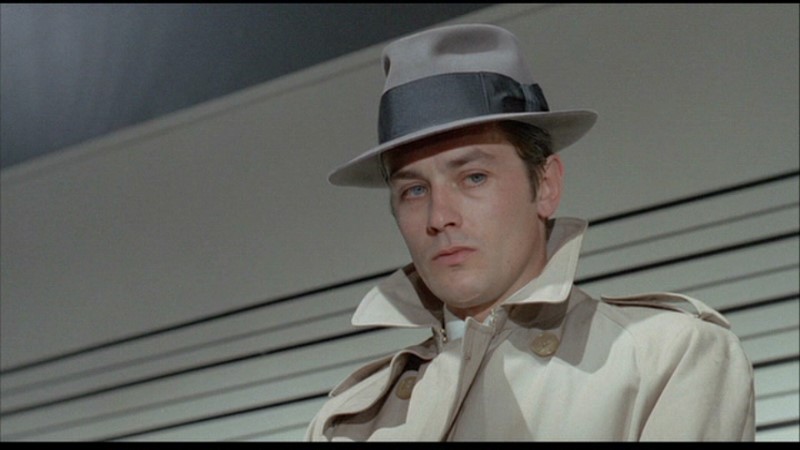
Le Samouraï (1967)

I miss how international the cinema was in the 60's and 70's. It's somewhat coming back with studios making an effort to appeal to foreign markets by inserting one or two international actors into some Tom Cruise super-production...as minor stooges. But back in the day you would have French actors turn up in Italian films, Italian actors turn up in French films and directors of any nationality were more than happy to go wherever the money was.

I know that the Italians and their love of dubbing played a huge part in this, but I also feel like there might have been a greater focus on visual storytelling back then. Filmmakers like Alfred Hitchcock, Bernardo Bertolucci and Jean-Pierre Melville made films that could easily be watched silently. The story is being told with camera movement, editing, color palette and costuming. In this approach, the actors are more akin to a blank canvas on which both filmmaker and audience can project whatever they need to. Alain Delon is the king of this blank canvas style of acting. And I mean that as a compliment.

Thursday, July 16, 2015

The Soft Skin (1964)


At the time of its release, The Soft Skin was viewed as bit of a letdown after the stylized sensation of Truffaut's Jules and Jim which had preceded it. Audiences at Cannes even booed it. I guess that's understandable. There's no freeze-frames or voiceover here. It's just a very simple story told extremely clearly. What makes The Soft Skin stand out all these years later, is how astoundingly personal it was to François Truffaut's life at the time.

Though based on an incident he had read about in the paper, it can be assumed that what really attracted Truffaut to the story was the fact that the director himself had been unfaithful to his wife Madeline Morgenstern. Within a year of the film's release Morgenstern and Truffaut were divorced. This was primarily due to numerous affairs François had engaged in over the course of their marriage. The most recent one had been with Francoise Dorleac who just so happened to have played the mistress in The Soft Skin.

Viewed through this lens the film becomes something altogether different. It's a confession. To get biblical with this, the film is an act of contrition. But should that matter? In order to really understand this work you have to know the intimate bedroom goings-on of its maker. Isn't that the stuff of the tabloids? Shouldn't a film be able to be understood and appreciated on its own terms and independent of external knowledge?

Part of me wants to say yes. We have no business involving ourselves in the private details of a filmmaker's life. But then there's the fact that this film's protagonist is a literary scholar who makes a living by using intimate details to illuminate the works of Balzac. It's almost as though Truffaut is begging us to look deeper, to really examine him and his life. He wants to be caught. He wants to be found out. Perhaps the whole thing was made so that he could show his wife and come clean?

Tuesday, March 3, 2015

A Town Called Panic (2009)


After doing our animated movies poll, I felt inspired to watch a bunch of new-to-me animated films that had somehow escaped my attention all these years. As a result, during a lazy Saturday spent in bed, I finally watched A Town Called Panic (Panique au village) and I have no idea why it took me so long to see this. 

Horse, Cowboy, and Indian live together in a little house. Cowboy and Indian have forgotten Horse's birthday, so they decide to build him a barbecue (a totally normal gift for a horse). They need about 50 bricks to build this barbecue, but accidentally order 50 million. And that's where their trouble begins. Before long they're encountering weird aquatic creatures, a snowball throwing robotic penguin, lava, and a number of other strange things. 

This movie is nuts. It's like watching an extremely hyper and imaginative child play with their toys. If you've ever wanted to watch two horses slow dance, or a donkey play the drums, or a card game happen on a rock plummeting to the center of the earth, this is your movie. Let's face it: this is everyone's movie. If you don't at least chuckle during this film, there's something wrong with your funny bone. It's currently streaming on Hulu Plus, so go check it out!


Thursday, April 24, 2014

La vie de bohème (1992)


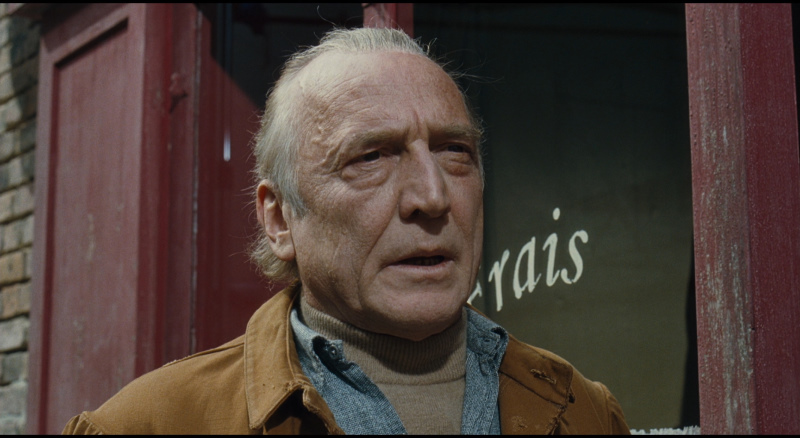
It was interesting watching this film after seeing La Havre. There are so many echoes between the films. It sort of makes me wonder: Was the more recent film always intended as a follow-up to this one? Perhaps while developing the second script, the parallels just became so apparent that the only way to deflect cries of repetition, was to just own it. By simply saying that André Wilms is playing the same character in both films, you find yourself paying more attention to the differences than the similarities. All the same narrative and thematic sign posts are there (suburban French setting, lovable bohemian protagonist with money problems, long-suffering love interest with health problems, immigration issues, Jean-Pierre Léaud, a dog, etc.) yet the approach seems wholly different. I don't want to say it's as simple as the difference between black & white and color, but it almost kind of is.Dare I say that Aki Kaurismäki has become a more optimistic man in the last twenty years? Regardless of what order you watch them in, the dialogue between these films is wonderful and fascinating. 

Thursday, April 18, 2013

Le Havre (2011)

A young African refugee (Blondin Miguel) hiding out in a small seaside town is befriended by an old Bohemian (André Wilms) who rallies the community to help the boy evade capture by the local immigration officials.


*      *      *

From the perspective of history, film is a fairly new art form. While painting, dance, music, etc. have all existed for millennia, cinema has been around for little more than a century. Back when the French New Wave critics were writing for Cahiers du Cinema in the 1950s, it was even conceivable for an individual to attempt to watch the entirety of film history. Nowadays this would be a fool's errand to even attempt. Film is no longer a rich man's game. Nearly anyone can make a movie and nearly every country has its own film industry with its own stars and auteurs. There is just so damn much to see. As a result, curators have become increasingly important in this day and age. Like many cineastes, one of the first places I go for an opinion on film worth watching, is The Criterion Collection. Sure there are some Criterion titles that have me scratching my head over their inclusion (Armageddon), but how else was I supposed to know that a charming French fable, directed by a Finn, with a rhyming name (Aki Kaurismäki) is worth my valuable time? And now it's my obligation to let you know that this film is worth your valuable time. See how this works?

Thursday, December 20, 2012

Holy Motors (2012)

A mysterious man (Denis Lavant) is driven around in a white limo to various "appointments". Inside the limo he applies makeup and prosthetics to become different people.

*      *      * 

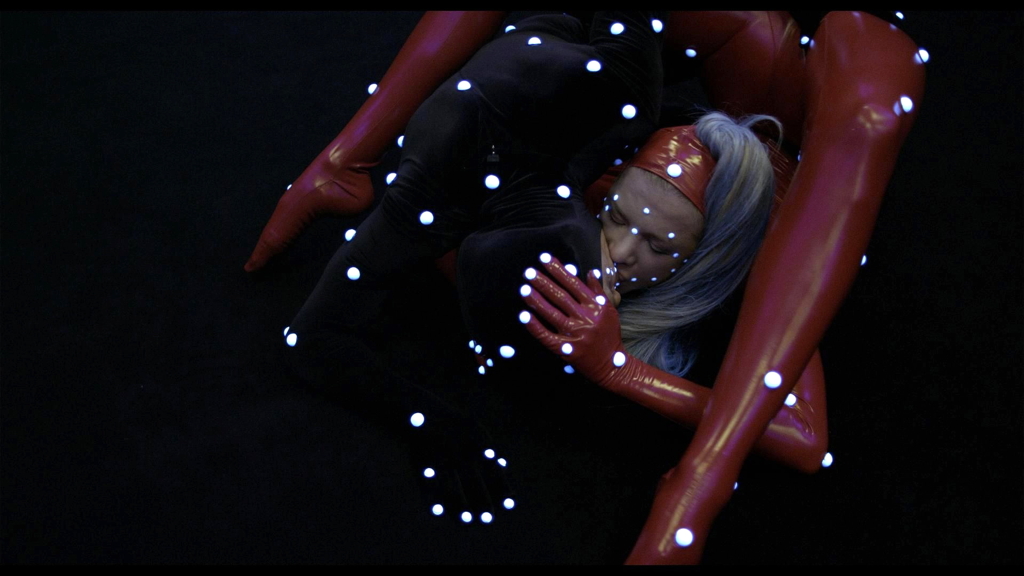
This film really reminded me of early (less misanthropic) Godard. From start to finish it is 100% a work of joyous provocation. In fact, it had me giggling and smiling more than most comedies. This may also have had something to do with the elderly couple I knew was a few rows behind me. You could hear a pin drop during the motion-capture scene. I think I would pay admission just to watch that couple for the film's entire run time.

While some parts went on a little too long or got a touch too maudlin, overall it was a wonderful experience. I appreciate when a filmmaker is able to make the medium do that which only it can. Holy Motors is a uniquely cinematic experience that could never exist as anything but as a film. In fact, it's so much a film that it is several films all at once. If this were a just universe, Denis Lavant would get an Oscar nomination for his chameleon-like performance. Too bad this universe is un-just. Perhaps Eva Mendes will get a supporting nod for being able to keep a straight face through that recreation of La Pietà. Vive la Cinema!

Friday, August 24, 2012

Listening to Amélie (2001)


Amélie is the tale of a sweet and quirky young woman living in Paris, who has recently decided to be a do-gooder and win the heart of a man she doesn't really know. The movie is colorful, whimsical, a bit like a fairy-tale, and it has a beautiful soundtrack to match (original music by Yann Tiersen).

The score to this film has a special place in my heart, because I actually bought the soundtrack before I had ever seen the film. When I was able to finally watch the movie it had a special sense of familiarity hearing the wonderful music again...it was like revisiting an old friend.

The music transports you right to a picture perfect ideal of Paris. You hear the accordions, and your mind's eye sees the little French cafes, the Eiffel Tower, the ferris wheels. Some of the tracks are upbeat, energetic, but my favorites are the piano pieces. They are truly gorgeous, melodic and more peaceful. I actually use a few of the pieces on a playlist I made for my job as a toddler teacher during naptime. The soundtrack also throws in a couple pre-1950s songs to add some vintage charm to the overall feel of the film. All in all it's a wonderful score that perfectly complements the film, but just as easily stands on its own.

I was going to find a youtube of a track from the film to share, and then I remembered that I uploaded a video of myself playing a piece from the film back in January! Pardon my slip-ups, and enjoy!


Thursday, February 9, 2012

Weekend (1967)

Corinne and Roland (Mireille Darc and Jean Yanne) set out on a quiet drive to the countryside. What they find is death, mangled cars, cannibalism and revolution.

*      *      *

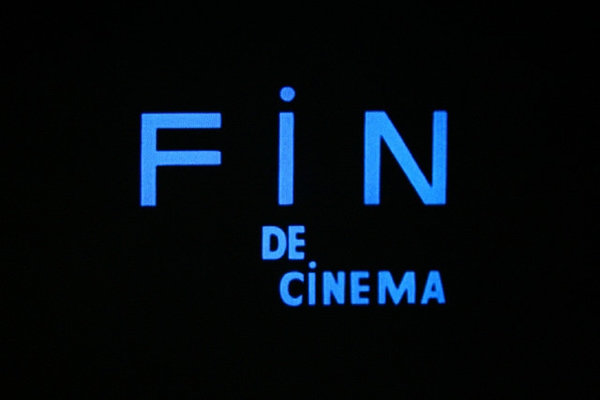
I honestly cannot watch modern Godard. I've tried. God help me I've tried. The visuals are still "perfect" and the ideas are as intriguing as ever, but there is little joy to be found. While his 1960s output never shied away from "serious" subject matter, there were always fun and human moments to break things up a bit: The Madison in Band of Outsiders, "Ploom ploom tra-la-la" in Pierrot Le Fou, "As Tears Go By" in Made in U.S.A., etc. These are the moments that mark the difference between first-rate cinema and the angry rantings of an old man who needs a hug. The latest Godard I can really stomach is 1967's Weekend, which you really have to admire for its commitment to unbridled cynicism and provocation. Everything I've attempted to watch beyond that is a beautifully-shot emotional flat-line. No heartbeat. I guess it makes sense that he ended the film with this title card:


Wednesday, May 18, 2011

Breathless (1960)


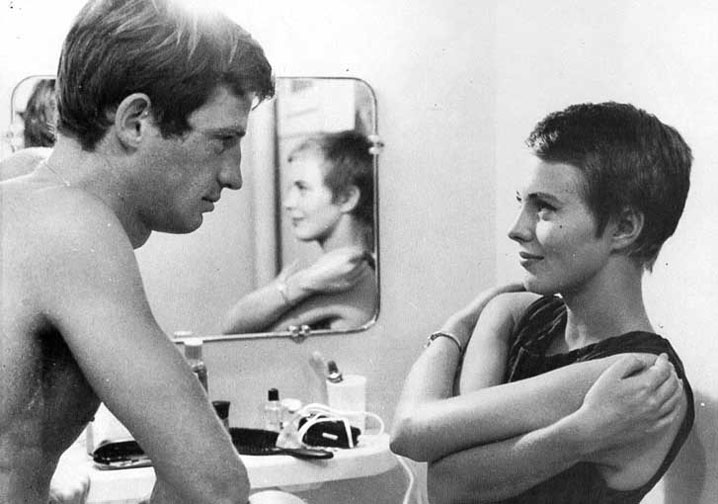
After stealing a car and killing a cop, Michel (Jean-Paul Belmondo) needs to lay-low. And lay he does, with the beautiful American newspaper girl Patricia (Jean Seberg), but can she be trusted?


*      *      *

Watching a Jean-Luc Godard film can be a challenge. Expressing how he was feeling  that day on set ALWAYS trumps plot. And as the 1960s progressed (war, riots, divorce) Godard's feelings and films became gradually more morose. This is why I recommend his first film, Breathless. The sheer energy of it is astounding. You can tell that Godard had a lot on his mind and was aching to get it all out at once. By the end of this cinematic tornado of staccato jump-cuts and free-wheeling camera moves, you feel as though you've run a marathon. You find yourself literally...breathless.