Showing posts with label home school. Show all posts

Thursday, August 23, 2012

Home School: The Sundance Kids

With the invention of home video in the late 70s/early 80s, the course of film history was irrevocably changed. Film lovers no longer needed expensive prints and cumbersome projectors in order to own their favorite films. Practically the entire history of film was at their fingertips and they could watch it whenever they wanted, as often as they wanted. This is the generation that for better or worse, turned filmmaking into a rockstar profession.
*      *      *

For a broad overview of the period I'd recommend both Peter Biskind's Down and Dirty Pictures: Miramax, Sundance and the Rise of Independent Film AND James Mottram's Sundance Kids: How the Mavericks Took Back Hollywood. Though they cover a lot of the same people and films they are radically different books. While Biskind's principle concern is the drama and battles behind the scenes, Mottram seems more content to discuss the aesthetic values of the films in question. Two great tastes that taste great together.

If you want a more personal and ground-level look at the period, Spike, Mike, Slackers & Dykes: A Guided Tour Across a Decade of Independent Cinema by John Pierson is the book for you! As a producer's rep, Pierson helped filmmakers like Jim Jarmusch, Spike Lee, Roger Moore and Richard Linklater to get their careers moving. This man saw it all. Also - the little interview fragments with Pierson and Kevin Smith that are peppered throughout the book, are priceless.

Though slightly dated (in that the all of the practical filmmaking tips are pre-digital), the journals kept by Robert Rodriguez (Rebel Without a Crew: Or How a 23-Year-Old Filmmaker with $7,000 Became a Hollywood Player) and Spike Lee (Spike Lee's Gotta Have It: Insider Guerrilla Filmmaking) while making their first films are indispensable tomes for any aspiring filmmaker.

The British Film Institute's American Independent Cinema: A Sight and Sound Reader is a great resource of criticism on and of the period. Any book that collects the writings of Amy Taubin, Manohla Dargis and J. Hoberman is worth the price of admission.

For a little visual stimulation, check out the amusingly titled The Snowball Effect. Regardless of what you think about Kevin Smith, this documentary chronicling the making of Clerks serves as a great analogue for the story of many other Gen X auteurs. All the sign posts are there: raised on movies, video store regular,  maxed out credit cards, etc. This doc will also absolutely make you want to make a movie. Find it on the 10th anniversary Clerks DVD or the Blu-ray.

Celine Danhier's film Blank City is a wonderful chronicle of the New York indie scene from the late 70s to the early 80s. It's on Netflix Instant and will surely add a couple new titles to your queue.

Lastly, we'll end with the cautionary tale that is Overnight. What begins as a behind-the-scenes doc on the making of Boondock Saints quickly devolves into a fascinating study of the havoc that fame, ambition, and ego can wreak on a friendship. This is the dark side of Sundance. Check it out from Netflix. Disc only though...

Thursday, August 16, 2012

Home School: New Hollywood


The late 60s and early 70s was a wild time in the world of film. All the original studio bosses were dead and their studios were now in the hands of corporations who knew absolutely nothing about filmmaking. Add to this the fact that "traditional" genres like musicals and the westerns were on their last legs as the younger more radical yearned for films that spoke to them. In desperation, the powers that be gave a bunch of young filmmakers the keys to the kingdom, and nothing was ever the same again. This is the era that gave us Scorsese, Coppola, Spielberg, Lucas, et al and boy has it been thoroughly documented!
*      *      *

Read
Making Waves: New Cinemas of the 1960s by Geoffrey Nowell-Smith gives a great look at what was going on in the rest of the cinema world during these heady times. America was actually pretty late to the game. Learn about the films and filmmakers that inspired our revolution.

Many of the greatest filmmakers of the so-called "New Hollywood" got their start making cheap genre pictures for legendary producer Roger Corman. Check out his autobiography How I Made A Hundred Movies In Hollywood And Never Lost A Dime for a look at some of the down and dirty techniques imparted by Corman to his young proteges. There's also a great documentary available called Corman's World: Exploits of a Hollywood Rebel which features some amazing interviews with the likes of the late Dennis Hopper and an emotional Jack Nicholson.

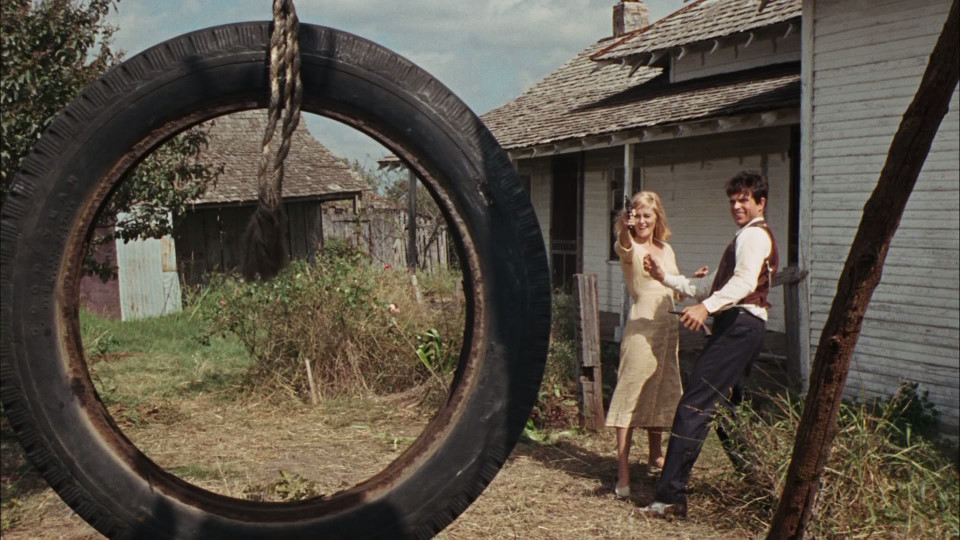
Mark Harris' Pictures At A Revolution: Five Movies And The Birth Of The New Hollywood gives a fascinating look at the precise moment when the lunatics took over the asylum by following each of the five  films which were up for best picture 1967 as they made their way from script to screen. Quite a diverse slate: In The Heat Of The Night, Guess Who's Coming To Dinner, Bonnie and Clyde, The Graduate and...Dr. Doolittle.

The Dream Life: Movies, Media, And The Mythology Of The Sixties by J. Hoberman is a thoroughly engrossing and well-researched examination of the ways in which politics influenced media and vice versa. I'm really eager to check out the prequel he recently published on film and politics in the 1950s.

Probably the most essential book on the period is Peter Biskind's Easy Riders, Raging Bulls: How The Sex-Drugs-and-Rock 'n' Roll Generation Saved Hollywood. Though many involved have taken issue with Biskind's tendency to linger on who was screwing whom while on what, the book itself is still a treasure trove of insight into what made these young guns so great, and what eventually brought some of them crashing down. A documentary of the same name was made and is worth a watch, but it is by no means the definitive document that the book is.

Watch
If you want the definitive documentary on the era, look no further than Ted Demme and Richard LaGravenese's three-hour opus, A Decade Under The Influence: The 70's Films That Changed Everything. So many great interviews and film clips. This is one of those films that will cause you to max out your Netflix queue.

Xan Cassavetes' Z Channel: A Magnificent Obsession is also an amazing chronicle of this era shrunk down into the microcosm of one man, the cable channel he programmed and his descent into madness. It's so good I even reviewed it a while back.

Though it's a bit more expensive than anything else on this list, I highly recommend you pick up the Criterion boxed-set America Lost And Found: The BBS Story. In addition to the 7 wonderful films included, this set also features a treasure trove of interviews and commentaries with seminal figures of the time including the awesome Bob Rafelson. The booklet that comes with the box is also invaluable featuring essays by the likes of J. Hoberman and Kent Jones.

Lastly, let me end this post the way that the era ended, with Heaven's Gate. Michael Cimino's epic western went so far over budget that United Artists went belly-up effectively ending the era of the director in America. For insight into how such a debacle could happen, please check out either Stephen Bach's book Final Cut: Art, Money, And Ego In The Making Of Heaven's Gate, The Film That Sank United Artists or the documentary adaptation that is available on Youtube. Sadly this doc will not be included with the upcoming Criterion release of the film which seems intent on glossing over the films notorious legacy.

Thursday, August 9, 2012

All That Jazz


I kind of let my Soundtracks Of My Life series fall by the wayside as I became fixated on my Home School series. Sorry. Don't know if/when I'll get back to that. In the mean time, please enjoy this little piece which is kind of a hybrid of the two columns in that it attempts to educate AND features some great recommendations for film scores that also work as great albums. Enjoy!

*      *      *

Picking music for a film is a very delicate process. Film music has gone through so many different phases over the years. It has evolved from simple piano accompaniment for silent films to soaring orchestral pieces and pop music collages. The right choice can make an average film into something more and the wrong choice can make a great film a chore to sit through. Though I am a big fan of properly used source music, my favorite scores tend to be jazz scores.

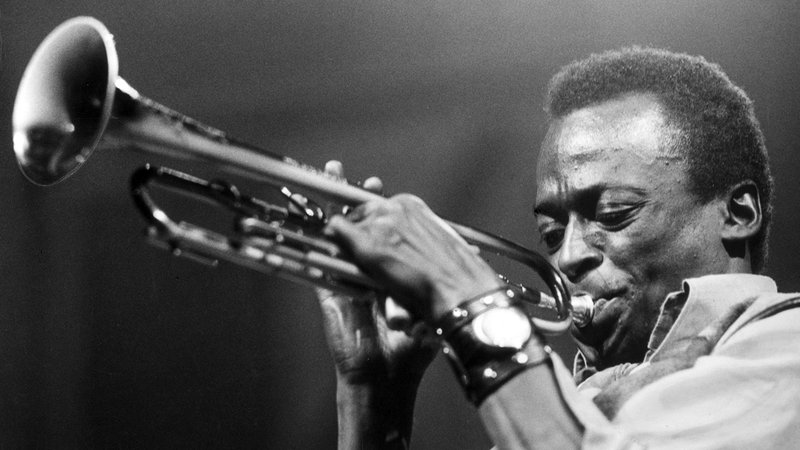
Whether performed by a large ensemble or by a single musician, Jazz has the ability to stir a wide range of emotions. It is incredibly diverse and workable music. It can be loud and bombastic for an action sting or it can be barely perceptible for a scene of deep introspection. However it is used, jazz can give most any film a real pulse.

Sadly not many filmmakers today are taking the jazz route. The only two that leap immediately to mind are Woody Allen and Spike Lee. Allen uses songs from his personal record library and Lee employs scores composed by skilled trumpeter Terrence Blanchard. Though both of these filmmakers have at times made period pieces, the bulk of their output is contemporary. Jazz does not have to be exclusively for period films.

Perhaps the days of jazz in film has simply passed. Hollywood is a notoriously fickle industry. But who knows? Perhaps the pendulum could swing back the other way. I can tell you one thing though: If I ever get the chance to make a film, you can bet your ass there will be some jazz in there.

Here are some of my favorite jazz scores:

Do The Right Thing by Bill Lee
Bamboozled by Terrence Blanchard
Taxi Driver by Bernard Herrmann
Alfie by Sonny Rollins
Blow Up by Herbie Hancock
Anatomy Of A Murder by Duke Ellington
The Pawn Broker by Quincy Jones

Thursday, August 2, 2012

Home School: Queer Studies


Though I'd been planning to do this post eventually, I decided that in light of insane Ukranian bills and all things Chick-fil-A, now was the time. Minority voices in film are important. Our world is more than straight, white males and our art should reflect that. Film in particular is important because it has the power to expose a wide audience to a perspective they might never have considered. No I'm not saying that movies are able to turn your kids gay (though if a movie does cause your son or daughter to realize that they are gay or lesbian, I'm 100% in support of that) what I am saying is that by honestly depicting homosexuals in film, viewers of all ages will hopefully come to the startling realization that gay people are...well...people.

*      *      *

The most important queer cinema resource is, without a doubt, Vito Russo's seminal text The Celluloid Closet. In this meticulously researched book, Russo examines the history of homosexuality on film from the early days of the minstrel-like "sissy", to the (then) present where gay and lesbian characters were regularly depicted as miserable charity cases who often ended their own lives. Though there's still a way to go with our media's depictions of gays and lesbians, I really wish Vito had lived to see the flourishing of what film critic B. Ruby Rich labeled, "New Queer Cinema".

Speaking of New Queer Cinema, another great book to check out is Matthew HayesThe View From Here. This easy to read book of interviews features conversations with filmmakers ranging from elder statesmen Kenneth Anger and John Waters, to young upstarts like Gregg Araki and John Cameron Mitchell

Reading isn't your bag? You can always check out Rob Epstein & Jeffrey Friedman's excellent film adaptation of Celluloid Closet! It's filled with amazing clips dating back to the turn of the century.  The DVD even features a "commentary track" comprised of the audio from a lecture Russo delivered at San Francisco's Castro Theatre in 1990 shortly before his death. Also worth checking out is Jeffrey Schwarz's wonderful documentary Vito which recently aired on HBO, and if you're a subscriber it's available through HBOGo.

And if listening is your bag, I highly recommend you check out the Criterion DVD of Gus Van Sant's My Own Private Idaho which features a fascinating audio-only conversation between Van Sant and director friend Todd Haynes. The disc also features an audio conversation between Tarnation director Jonathan Caouette and author JT LeRoy (who was later revealed to be a fictional character created by writer Laura Albert!) on My Own Private Idaho's influence.

While I'm sure that there are many wonderful books and films on the subject that I am leaving out, these are the ones I am familiar with and am confident in recommending. I'm also well aware that lesbians are drastically underrepresented in this post. And yes I know there was unfortunately not a single mention of the bisexual and transgender community. Hopefully in a few years I will be able to recommend a whole new slew of resources. Cut this breeder some slack!

Thursday, July 26, 2012

Home School: Commentary Master Class


If you're reading this blog, I feel safe assuming that at some point in your life you've listened to a DVD or Blu-ray audio commentary track. As such, you are well aware that these tracks can range from the incredibly insightful (any Guillermo Del Toro film), to the incredibly boring (any Tim Burton film), to the incredibly hilarious (any Kevin Smith film). But for my money, the best commentary tracks are the ones where a highly respected filmmaker gets to interview one of their filmmaking buddies/heroes. Think of these as the  Master Class seminars your film school could never afford.

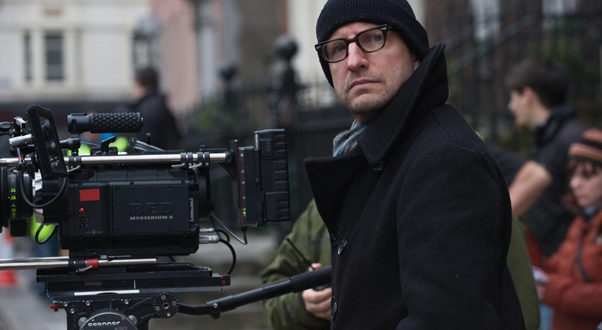
Steven Soderbergh is arguably the king of this type of commentary. He and Mike Nichols have done tracks for Who's Afraid of Virgina Woolf?, The Graduate and Catch-22. Steven has also interviewed John Boorman about Point Blank as well as his friend Gary Ross for Seabiscuit. In a slight switch on the formula, writer/director Neil LaBute can be found interviewing Soderbergh about Sex, Lies and Videotape. And for a completely meta experience, listen to Soderbergh interview Soderbergh on the Criterion edition of Schizopolis.

Next up is Quentin Tarantino who refuses to do commentary on his own directorial efforts, yet loves talking to other filmmakers about their films (most of which he had some sort of hand in). Check him out on the discs for From Dusk 'til Dawn and Sin City (Robert Rodriguez), Switchblade Sisters (Jack Hill), Hostel and  Hostel Part II (Eli Roth) and Hot Fuzz (Edgar Wright).

Lastly there's the latest edition of Chinatown. This film has been released so many times before, but this edition is absolutely worth a re-buy  simply for the commentary track of David Fincher discussing his love of the film with screenwriter Robert Towne. Fincher's solo tracks for his own films aren't too shabby either. The Panic Room set even includes a discussion between the film's writer David Koepp and screenwriting legend William Goldman!

HONORABLE MENTIONS: The new Criterion disc for Being John Malkovich inexplicably features commentary on select scenes by Michel Gondry. Part of the way through the film Gondry runs out of things to say and calls up the film's director Spike Jonze to help him make it to the finish line. Also check out Allison Anders chit-chatting with Monte Hellman on the Criterion disc for Two-Lane Blacktop!

Thursday, July 19, 2012

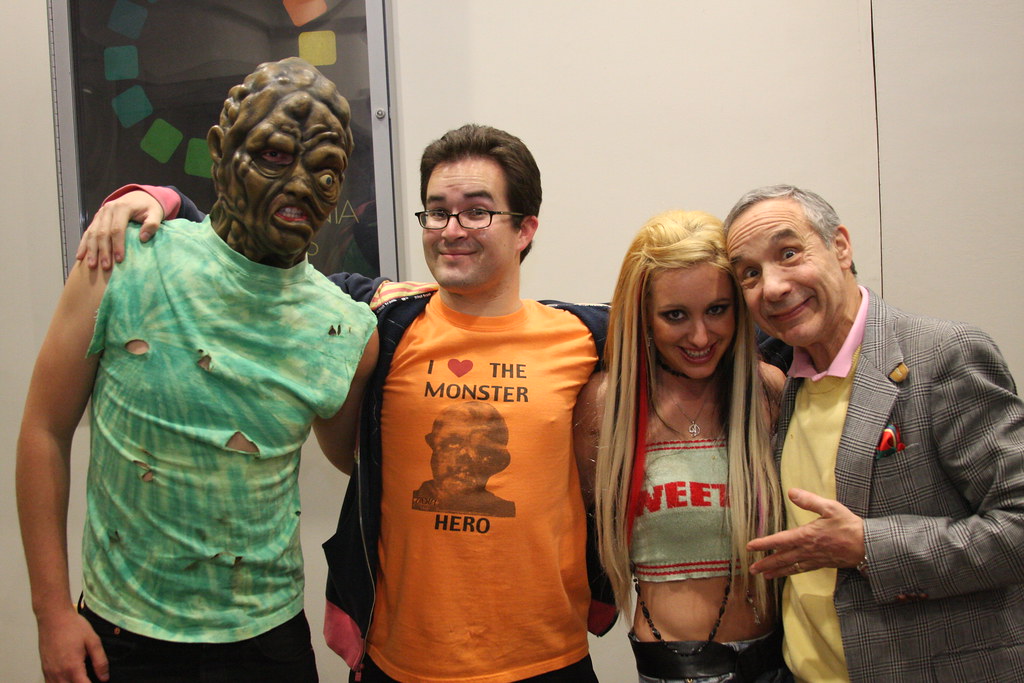
Home School: Troma


Yes you read that title right. I'm honestly saying that the schlockmeisters at Troma can teach you a thing or two about filmmaking. Actually they can teach you a LOT about filmmaking.

To begin with, there are the books written by Lloyd Kaufman and various co-writers. All I Need To Know About Filmmaking I Learned From the Toxic Avenger, Make Your Own Damn Movie, Direct Your Own Damn Movie, Produce Your Own Damn Movie, and Sell Your Own Damn Movie are all hilarious, easy to read and filled with tons of handy tips accumulated over 30+ years of truly independent filmmaking. These  useful tomes cover everything from how to write a script to how to ensure your lead actress won't back out of her topless scene. As a bonus, most of these books also feature added advice from Troma sympathetic filmmakers like Eli Roth and Whit Stillman!

And since there is always a drastic difference between theory and practice, there are several documentaries  available which allow you to watch the Troma gang in action! Farts of Darkness: The Making of Terror Firmer, Apocalypse Soon: The Making of Citizen Toxie and Poultry in Motion all succeed in capturing the unique chaos that is life on a film set. The fights, the food, the accidents, the waiting around. You go through the wringer right along with the cast and crew. And when it comes time to sell your movie, there is All The Love You Cannes which chronicles one of Troma's annual guerrilla marketing campaigns at the prestigious Cannes Film Festival.

All of these documentaries are feature-length and can be found through Netflix either on their own or as part of the bonus material to the film they are documenting. Oh and don't forget the commentary tracks too!

And so, as Lloyd would say...LET'S MAKE SOME ART!

Sunday, July 8, 2012

Home School: Professor Scorsese

When film schools first came about in the 1960s, they served three main functions:
  1. They gave students access to the expensive equipment necessary to make a film
  2. They routinely showed lots of movies
  3. They gave students a chance to meet each-other and form a community
Cut-to the Present: 
  1. Equipment is no longer expensive
  2. Nearly any movie is available for instant downloading right to your computer
  3. The internet is littered with numerous forums designed to bring like minded people together
So this begs the question - What is the point of film school in the new millennium? As someone who attended four years of film school in the early 2000s, I can authoritatively say, "Not much." Want to learn how to use a camera? Pick one up and start using it! Want to learn how to edit? Start cutting! Practically every computer these days has some sort of editing program built into it. Well what about the history and theory you say? Well that's where this (recurring?) column comes into play. I maintain that with nothing more than a Netflix subscription and a few used books from Amazon, you can be well on your way to revolutionizing the film world in no time!

I now leave you in the more than capable hands of our special guest professor...


I don't think anyone in this world is more passionate about film than Martin Scorsese. He lives and breathes cinema. It simply emanates from him. Need proof? Check out his documentaries A Personal Journey With Martin Scorsese Through American Movies and My Voyage To Italy. As both titles indicate, the films covered in these docs are highly personal to him. Hearing him narrate clip after mesmerizing clip, you find yourself in a trance. It doesn't matter that you've probably never heard of most of the films he's discussing, his passion reaches through the screen, grabs you, and doesn't let go. I guarantee that after watching these two films, your queue will have doubled in size!